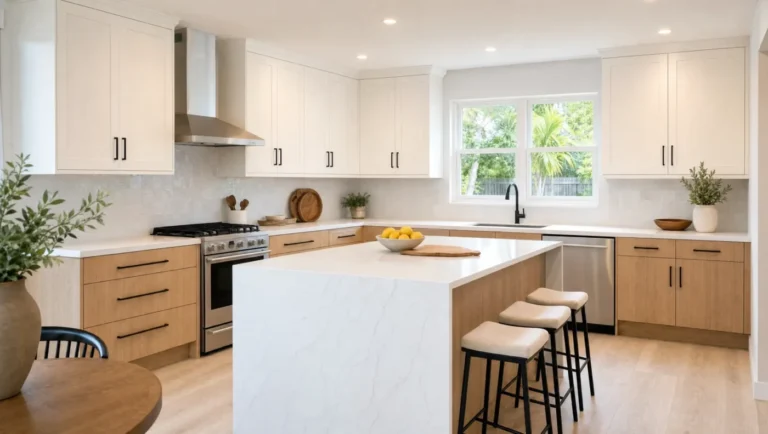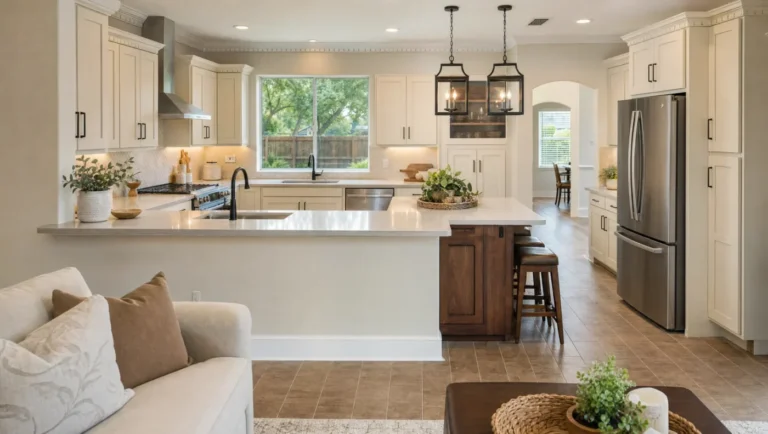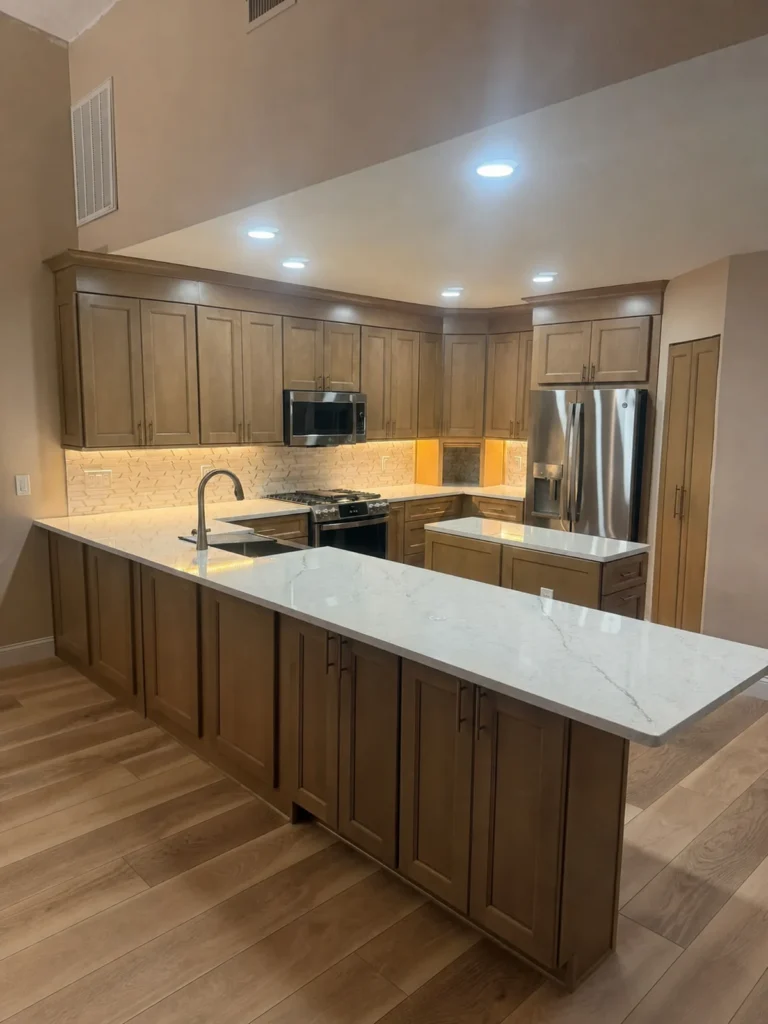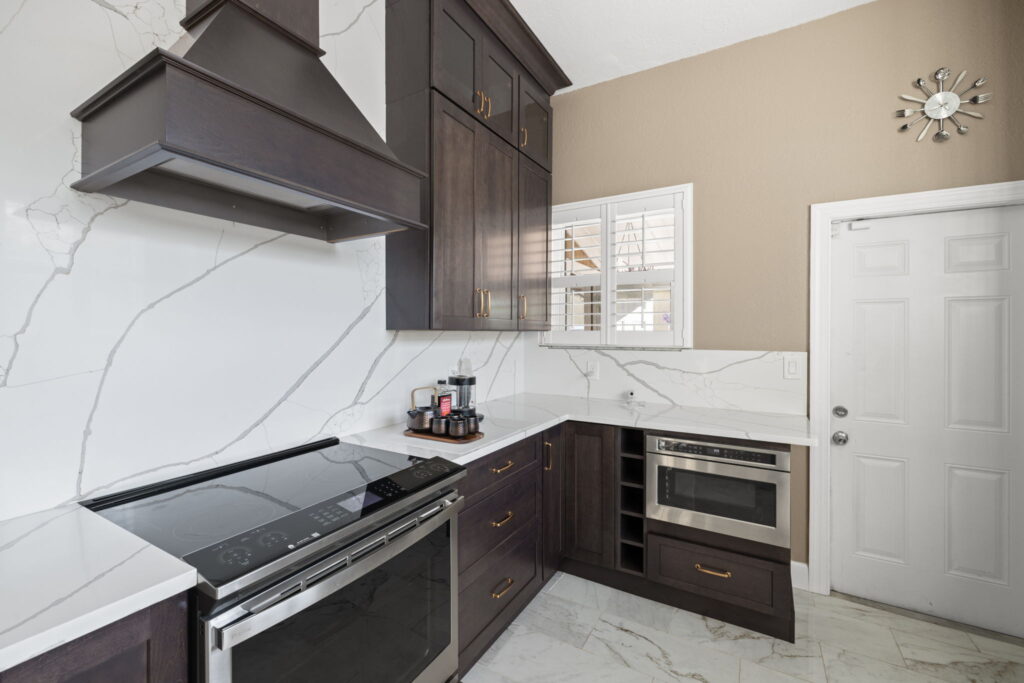
In the Tampa Bay area, the average cost to replace kitchen cabinets often lands between $150 and $500 per linear foot installed, depending on the cabinet line and job complexity. For stock cabinets, many homeowners see totals closer to $100 to $300 per linear foot installed, while semi-custom cabinets commonly run $150 to $650+ per linear foot installed.
On top of the cabinet price, installation costs commonly fall around $69 to $119 per linear foot for labor in national guides, and local conditions can push that up or down.
Why Cabinet Replacement Prices Vary So Much
The cost to replace kitchen cabinets is rarely just the price of the cabinets. It’s a mix of materials, layout and labor. Two kitchens can look similar but price out very differently once a crew starts measuring, leveling and trimming.
The biggest drivers of overall cost include the size of your kitchen, the quality of cabinet materials, how much layout work is involved and whether you choose stock cabinets or semi-custom cabinets. Door style and construction choices matter too, including whether you prefer a full or standard overlay.
How Pricing Works: Linear Foot Vs. Cabinet Boxes
Many estimates use linear foot pricing because it gives a quick baseline. Another common method is counting cabinet boxes and building a package price from the exact cabinet list. A per-unit cabinet cost can also show up when suppliers quote each base, wall and tall cabinet separately.
Stock Cabinets: Lower Upfront, Fewer Options
Stock cabinets are pre-made in set sizes and limited finishes. They’re often the most budget friendly option when you’re keeping the same layout and want a clean update.
They can be cost-effective because they are easier to order and faster to deliver. The tradeoff is flexibility. Fixed cabinet size options can lead to fillers and gaps. Storage upgrades can be limited compared to semi-custom cabinets.
Semi-Custom Cabinets
Semi-custom cabinets are a common choice when you want a better fit without the jump to full custom. They offer more sizing and finish options than stock cabinets, which can reduce filler strips and improve how the kitchen feels day to day.
This is also where many homeowners add soft close drawers and doors. It’s a comfort upgrade that changes how the kitchen feels without always forcing a full custom budget.
Custom Cabinets Creation
Custom cabinets are built to your exact measurements. They can be a great choice for unique layouts or detailed storage goals but they usually come with the highest cabinet cost.
Custom tends to make sense when walls or floors are noticeably out of level, when you want built-in details or when the design demands exact cabinet size control.
Labor And Installation Costs
Labor costs are a major part of kitchen cabinets costs because good installation is detail-heavy work. Even quality cabinet boxes can look off if they aren’t leveled, shimmed and aligned correctly.
Installation costs often include:
- Removal of existing cabinets
- Disposal and haul-away
- Wall prep and minor drywall repair
- Hanging and leveling cabinet boxes
- Trim work like fillers, panels and toe kicks
- Hardware installation, including soft close upgrades
- Final door and drawer adjustments
Keep in mind that cabinet replacement can also affect total remodeling costs when it triggers related updates like paint, lighting changes or new countertops.
Cabinet Materials And Features That Move The Price
Cabinet materials affect durability and price. Plywood construction usually costs more than lower-cost composites. Painted finishes can cost more than basic stains because they require more prep and coating.
Hardware choices also add up fast. Soft close hinges and soft close drawer slides increase the cabinet cost but they also reduce slamming and wear over time.
Kitchen Size, Layout Changes And The Overall Cost
The size of your kitchen impacts how many cabinet boxes you need and how many linear foot runs you are installing. Keeping the layout usually helps you save money because plumbing and electrical moves can raise labor costs quickly.
Costs climb when you add:
- Island and/or peninsula that increases cabinet boxes and labor
- Appliance moves that require new electrical or venting
- Sink or dishwasher relocation that raises labor costs
- Extra wall repair behind old cabinets
- Custom backsplash that requires additional prep and tile work
Even without layout changes, tall pantry units and wide drawer bases can raise the overall cost.
Ways To Save Money Without Cutting Corners
A budget friendly plan starts with keeping what works, then upgrading where it matters. Keeping the layout can reduce installation costs. Choosing semi-custom cabinets for the main run and stock cabinets for a pantry wall can also be cost effective. Simple door styles can lower cabinet cost while still looking sharp.
These choices often reduce the costs to replace kitchen cabinetry without sacrificing the finished look.
What Tampa Homeowners Should Budget
A practical approach is to start with a per linear foot range, then tighten it once you choose cabinet materials, hardware and finish details. For a standard kitchen, a straightforward replacement with stock cabinets or semi-custom cabinets is often the most cost-effective path. Larger kitchens, premium finishes and layout changes can push the average cost higher fast.
How CMK Construction Makes Cabinet Replacement Easier
Replacing cabinets is one of those projects where precision matters. CMK Construction brings experienced leadership to every step, from planning and measurements through install and final alignment.
We help you understand the real cabinet cost up front, including labor costs and installation costs, so there are fewer surprises later. Our team uses cost-effective measures like tight scope control and value-driven selections so you can save money while still getting a result you’re proud to show off.
When you’re ready to replace kitchen cabinets in Tampa, CMK Construction is here with professional installers who keep your project budget friendly and built to last.