A home’s age reveals crucial information that is often not visible to the naked eye. The interior may reflect the latest design trends, but underneath the floor and behind the walls, there may be 1940s infrastructure that can’t keep up with modern demands or that isn’t up to modern codes.
The pipes, wiring, insulation, and other hidden elements of a home dictate how comfortable, safe, and functional a house feels.
With the median age of owner-occupied homes reaching 42 years old, homeowners face a different kind of remodeling; one that goes behind the walls.
The Upgrades Behind the Walls
There are few things that have as much impact on homeowners as a home’s plumbing, electrical, heating, and HVAC systems. When properly designed, maintained, and upgraded, these systems can ensure that an older home meets modern standards of comfort and efficiency.
When the systems are poorly designed, neglected, or damaged, serious problems can arise. These issues can affect a brand new house, but in an older home they tend to compound. Mold, water damage, soaring energy bills, and inadequate heating or cooling are some of the issues homeowners may face when the infrastructure behind the walls begin to fail.
Moreover, the demands of modern life (heavy electronics, remote work, high-draw appliances, and eco-conscious living) require up-to-date behind-the-walls systems. That is why plumbing, electrical, and roofing are among the 10 most common home renovation projects today.
What Modern Homeowners Focus On
According to CMK Construction, a Tampa Bay kitchen and bathroom remodeling company, homeowners are increasingly recognizing that modern demands can put a strain on older plumbing and electrical systems. Aging heating and cooling infrastructure can also drive up energy costs, prompting many renovation projects to address both what’s visible and what’s behind the walls.
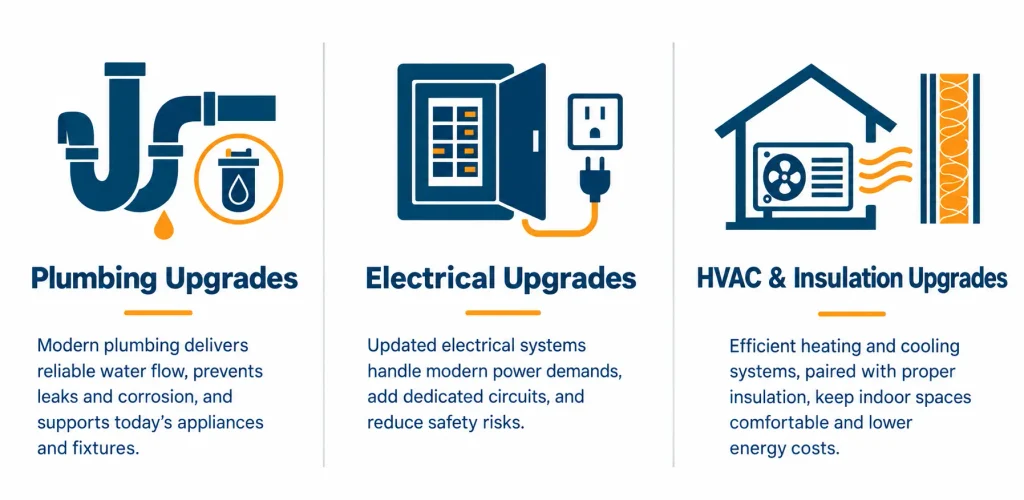
Plumbing Upgrades Worth the Investment
Modern homes have more appliances and fixtures that depend on a reliable water delivery and drainage system. Between high-efficiency dishwashers, steam showers, and whole-home humidifiers that may run simultaneously, residential plumbing needs higher dynamic water pressure, properly sized supply lines, and modernized drainage.
To keep up with the demand, one major and essential plumbing upgrade is replacing old copper or galvanized steel lines (prone to pinhole leaks, corrosion, and scale buildup) with cross-linked polyethylene (PEX). PEX offers higher flow rates, resists freeze-bursting, and allows plumbers to home-run individual lines directly to high-demand fixtures.
Concerns about municipal water quality, microplastics, chlorine taste, and hard water mineral buildup have also led homeowners to ask about inline multi-stage filtration or reverse osmosis (RO) systems.
Electrical Upgrades that Keep Costs Down
An older electrical system may not be able to handle current electrical demands, which may turn it into a safety risk.
For instance, standard 100-amp panels cannot safely handle the combined draw of heat pumps, induction cooktops, EV chargers, and multi-station home offices. Therefore, homeowners interested in upgrading a kitchen, basement, or even home office must first consider upgrading to a 200-amp or 400-amp service.
According to the National Electrical Code, modern homes need dedicated high-draw circuits for specific appliances and electrical systems, such as a Level 2 EV charging station, an induction range, or heat pump equipment. Each uses power differently and at high intensity, so sharing a circuit could cause constant breaker tripping or dangerous thermal buildup in the wires.
HVAC and Heating Upgrades to Consider
Traditional furnace/AC combos tend to create severe indoor temperature swings, cold or hot spots throughout the house, and poor humidity control during summer months.
Electric air-source heat pumps, on the other hand, are energy-efficient and deliver both central heating and central cooling through the same mechanical system. Many homeowners prefer these (heat pumps have outsold traditional gas furnaces nationwide annually since 2021).
Another common trend involving the space behind the walls is spray foam and blow-in insulation. Proper insulation improves a home’s thermal efficiency and physical comfort indoors during the winter and summer months.
Behind the Walls Upgrades Make Sense
Though not as visible as a brand new marble countertop or a remodeled bathroom, upgrades to the systems that keep the house comfortable are a wise decision. Investments in plumbing, electrical, and heating/cooling systems improve indoor space, reduce energy bills, and keep the house safe.