Choosing your countertop material is one of the biggest decisions in any kitchen remodel. For homeowners in the Tampa Bay area, the choice between quartz vs granite vs quartzite countertops is about more than just looks. You need a surface that holds up to Florida’s humidity, handles daily cooking, and still looks great years from now.
With 7,136+ completed projects across Hillsborough, Pinellas, Pasco, Manatee, and Sarasota counties, CMK Construction has guided thousands of homeowners through this exact decision. Whether you want a clean, modern waterfall island or a classic cooking space with character, understanding the real differences between these three materials will save you from a costly mistake. This guide breaks down the durability, maintenance, and visual appeal of quartz, granite, and quartzite so you can pick the right one for your kitchen.
Quick Answer
For most Tampa Bay kitchen remodels, quartz is the best low-maintenance countertop choice because it does not require sealing and handles daily spills well. Granite is better for outdoor kitchens and heat resistance, while quartzite is best for homeowners who want a higher-end natural stone look with marble-like movement and stronger durability.
Understanding the Materials: Engineered vs Natural Stone
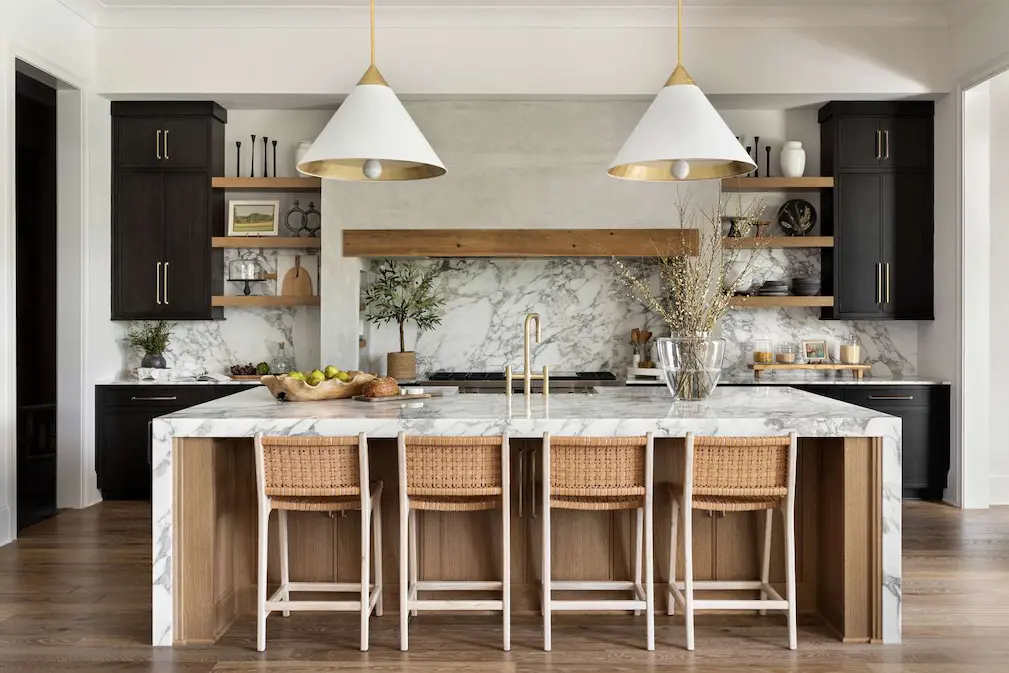
Before getting into performance and maintenance, it helps to understand what these three materials actually are. The key difference is their origin: one is man-made, while the other two come straight from the earth.
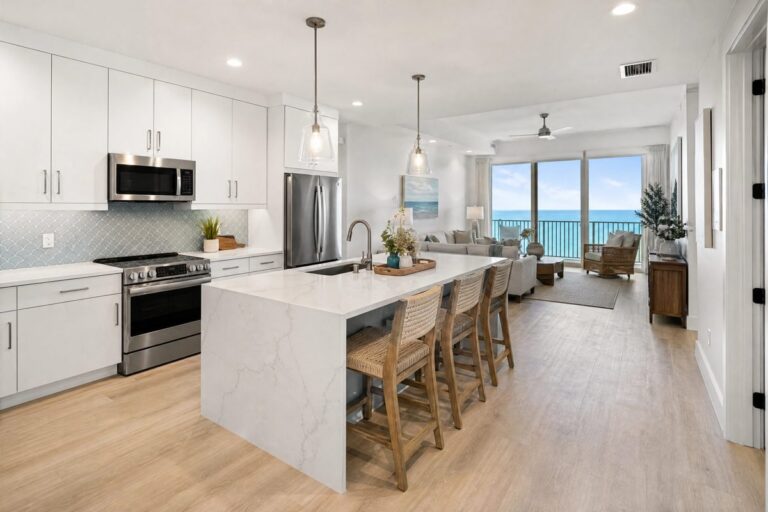
Quartz is an engineered stone. It is manufactured by combining roughly 90 percent crushed natural quartz crystals with polymer resins and pigments. This process creates a non-porous surface with very consistent color and pattern from slab to slab. Because it is engineered, quartz can be designed to mimic the look of natural marble or concrete, giving you a wide range of style options.
Granite is a 100 percent natural igneous rock. Formed from slowly cooled magma deep within the earth’s crust, granite is quarried in large blocks and sliced into slabs. Every slab of granite is unique, with its own veining, mineral deposits, and color variations. It is a durable but porous natural stone that requires periodic sealing to protect its surface.
Quartzite is a natural metamorphic rock. It begins as sandstone and transforms under intense heat and pressure over millions of years. This process fuses the quartz grains together, creating an extremely hard, dense stone. Quartzite often features the sweeping veining you would normally associate with marble, but with a hardness that is as hard as or harder than granite.
How Florida Humidity Impacts Your Countertops
When planning a kitchen remodel in Tampa or a kitchen renovation in Sarasota, local climate is a real factor. Florida’s high humidity can affect the performance and maintenance requirements of natural stone surfaces in ways that homeowners in drier climates never deal with.
In coastal areas like Sarasota, Longboat Key, Clearwater, and St. Petersburg, homeowners often ask about humidity, outdoor kitchen durability, and materials that hold up near salt air. These are valid concerns. Porous materials like granite and quartzite contain microscopic open spaces. In humid environments, these stones can absorb moisture from the air if they are not properly sealed. Over time, this can lead to darkening of the stone. In neglected cases, moisture trapped around sink cutouts and backsplash seams may require extra cleaning attention to prevent buildup.
For homeowners in humid coastal climates, natural stone requires a more diligent sealing schedule. While a granite countertop in a dry climate might only need sealing every two years, a Florida kitchen may require sealing every six to twelve months to keep the barrier intact. Engineered quartz, on the other hand, is highly non-porous compared to natural stone. It is one of the most humidity-friendly countertop options available, making it a particularly low-maintenance choice for Florida homes.
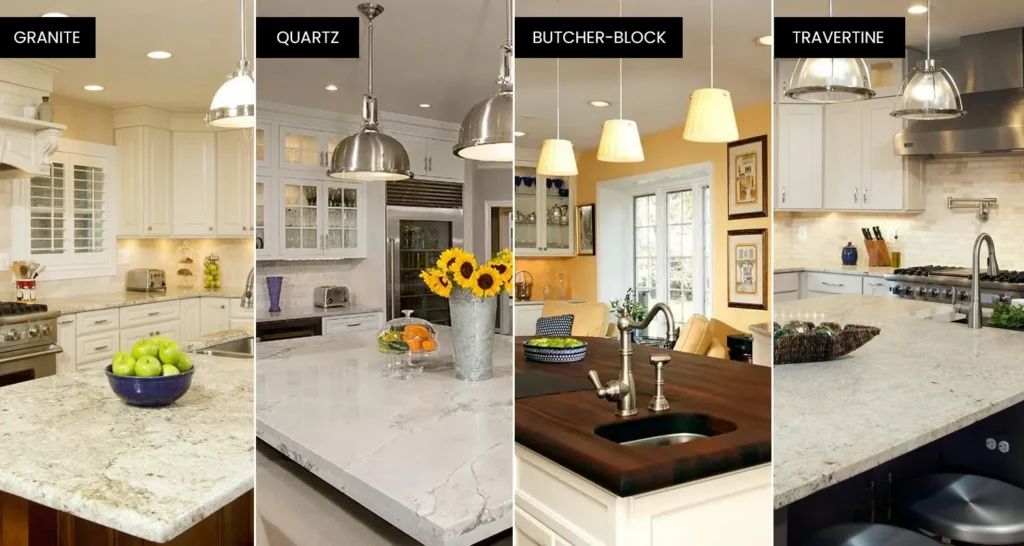
Quartz Countertops: Low Maintenance and Modern Appeal
Quartz has become the most popular countertop material for modern kitchen renovations, and for good reason. It strikes a solid balance between good looks and practical, everyday usability.
The biggest advantage of quartz is its highly non-porous surface. Because the quartz crystals are bound together with resin, the material does not require the periodic sealing that natural stone demands. It resists stains from everyday kitchen spills like red wine, coffee, citrus juice, and cooking oil. The non-porous surface is also easier to keep clean and less likely to harbor moisture or staining compared to natural stone. You will still want to wipe it down regularly and avoid leaving spills sitting for extended periods, but the day-to-day care is minimal.
In busy family homes in Wesley Chapel, Brandon, South Tampa, and Lakewood Ranch, low-maintenance quartz is often a practical choice because it handles daily spills and cleaning with less upkeep. Parents with young kids and homeowners who cook frequently tend to appreciate not having to worry about sealing schedules.
CMK Construction frequently installs Cambria quartz, known for its quality and design range. Collections like the Cambria Brittanicca (bold marble-like veining) or the Ella line (delicate dove-gray lattice veining on a soft white backdrop) offer strong consistency from sample to installed slab. What you see in the showroom is very close to what ends up in your kitchen. That predictability makes quartz a great fit for large islands, waterfall edges, and seamless backsplash integration.
However, quartz does have limitations with heat. The polymer resins used to bind the stone can discolor or warp if exposed to extreme temperatures. You should always use trivets or hot pads when setting down pots and pans from the stove or oven. Additionally, quartz is not recommended for outdoor kitchens, as prolonged UV exposure can cause the pigments to fade and the resin to degrade over time.
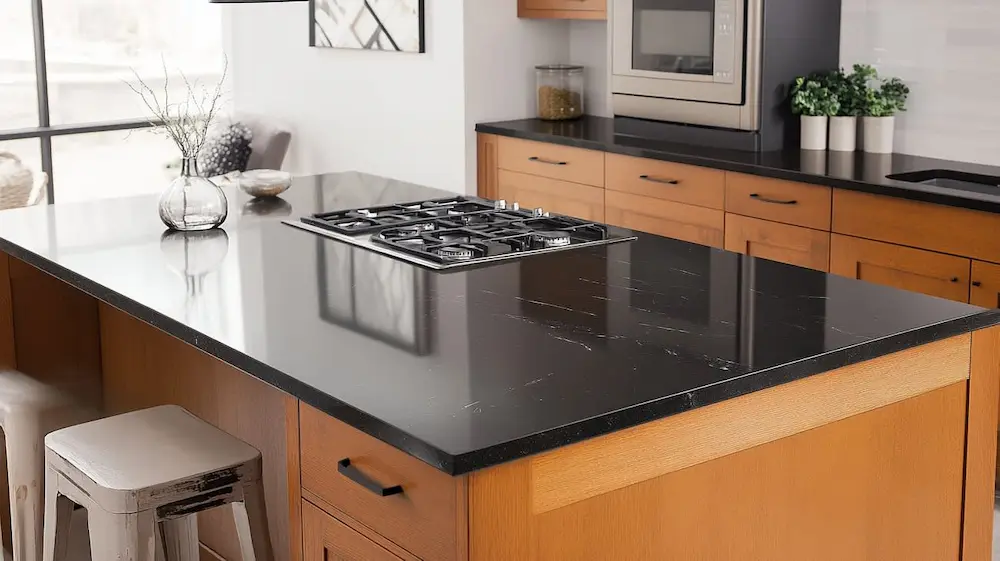
Granite Countertops: Heat Resistance and Natural Beauty
For homeowners who appreciate the raw, unpredictable beauty of natural stone, granite remains a top choice. No two granite slabs are alike, so your kitchen will have a surface that is genuinely one of a kind.
Granite’s biggest functional advantage is its heat resistance. Because it was formed by volcanic activity, the stone itself can handle very high temperatures without scorching or discoloring. That said, we still recommend using trivets. The stone may tolerate heat, but the sealer on top of it can be damaged by thermal shock, and natural weak points in the slab can crack under sudden temperature changes. Granite is also highly scratch-resistant; cutting directly on it is more likely to dull your knives than damage the surface.
Because granite is porous, it requires regular maintenance to prevent staining. You should apply a quality stone sealer annually, or every six months in humid Florida environments, to maintain its protective barrier. The sealing process is simple, typically a spray-on application wiped away after a few minutes, but it is a necessary commitment to keep the stone looking its best.
Granite’s durability against both heat and UV exposure also makes it a strong choice for outdoor kitchens and patio entertaining spaces. Homeowners in Clearwater, Dunedin, and the Gulf beaches who want an outdoor cooking area often choose granite for exactly this reason.
If you’re looking for inspiration, explore our kitchen remodeling gallery to see how granite countertops complement a variety of cabinet styles and kitchen layouts.
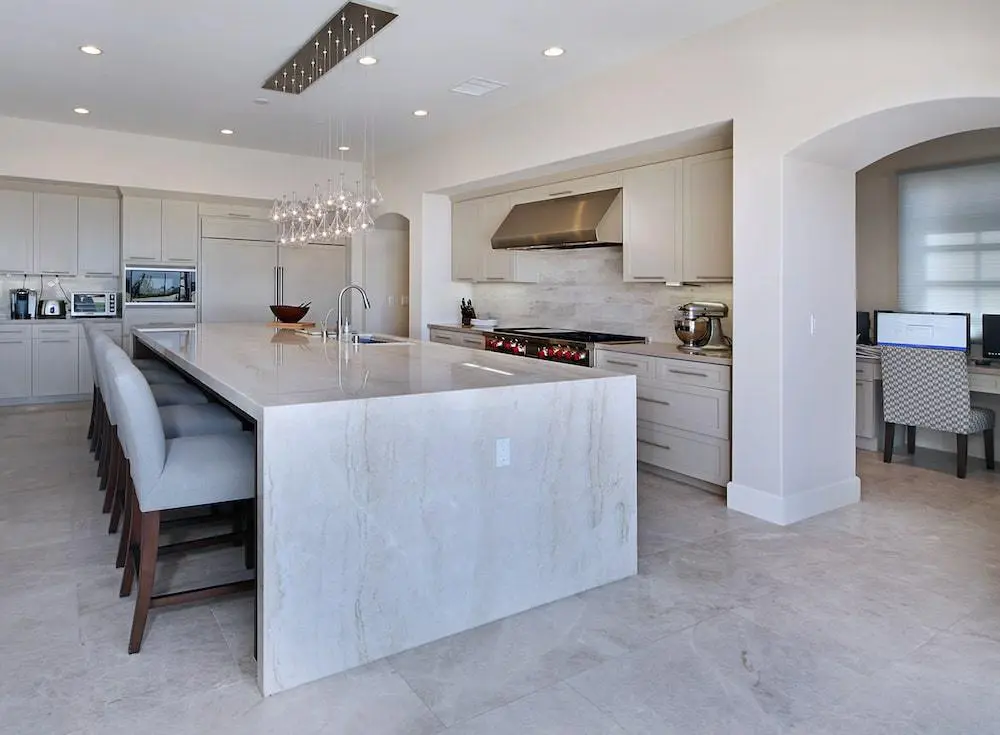
Quartzite Countertops: The Look of Marble with Real Durability
Quartzite is a popular choice for higher-end kitchen remodels where homeowners want the look of marble but need a surface that can handle heavy daily use. We see this frequently in luxury homes across South Tampa, Davis Islands, Harbour Island, and Lakewood Ranch, where the design aesthetic leans toward clean, elegant stone but the kitchen still gets heavy use.
True quartzite is exceptionally hard, as hard as or harder than granite on the Mohs hardness scale. That density makes it highly resistant to scratching and chipping. Unlike marble, which is soft and prone to etching (surface dulling caused by acidic liquids like lemon juice or vinegar), true quartzite is far more resistant to etching than marble. However, it is worth noting that some stones sold as “quartzite” are actually mislabeled dolomitic marble, which will etch. Working with an experienced fabricator who can verify the stone is critical.
Visually, quartzite has real depth to it, often featuring crystalline structures and veining in shades of white, gray, and pale blue. It gives a kitchen that high-end, designer feel without the fragility of marble.
Many homeowners discover quartzite while browsing our kitchen design gallery and looking for luxury remodeling inspiration.
Like granite, quartzite is highly heat resistant but also porous. It requires regular sealing to protect against stains. Because it is a rarer stone that is difficult to quarry and fabricate, quartzite typically costs more than both granite and quartz.
Comparing the Three: Which is Best for Your Lifestyle?
Here is a straightforward breakdown of how quartz, granite, and quartzite compare across the categories that matter most:
Thinking About a Kitchen Remodel?
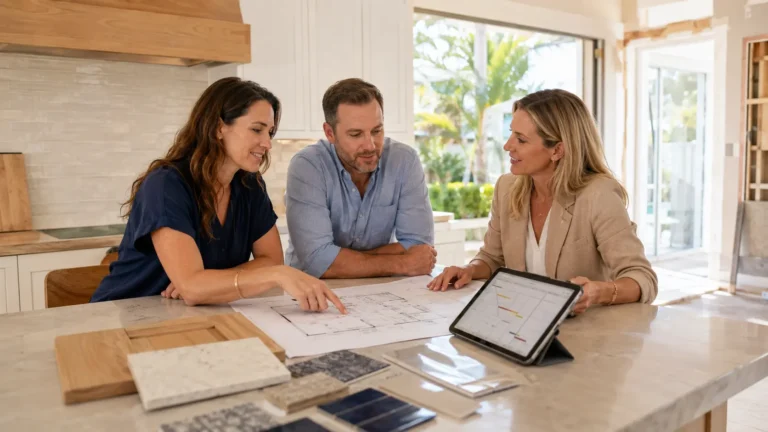
If you are weighing countertop options as part of a larger project, the first step is a conversation about your goals, timeline, and budget. Request a sales consultation to discuss your project with the CMK team.
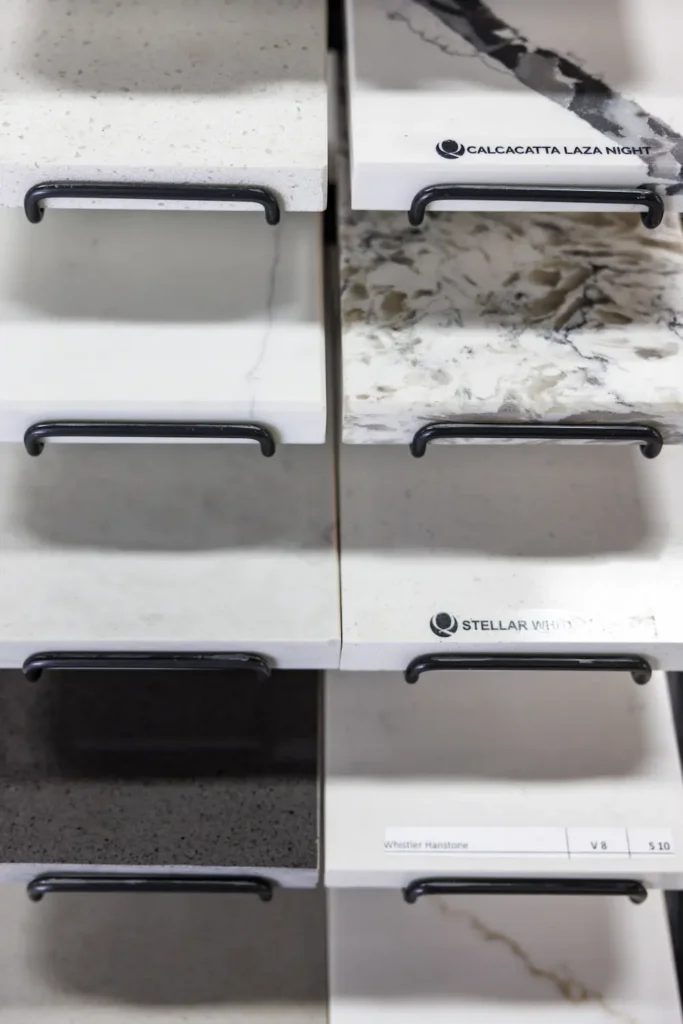
How CMK Clients Select Their Countertops
Choosing a countertop from a small, two-inch sample square often leads to disappointment when the full slab is installed. The movement of natural stone and the subtle details of engineered quartz can only be fully appreciated at scale.
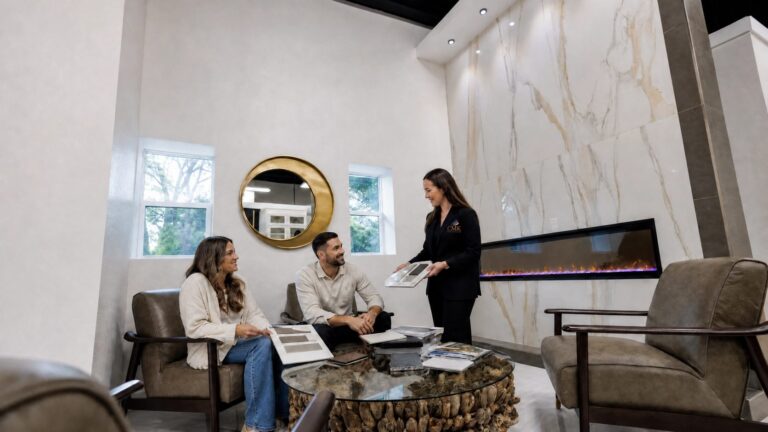
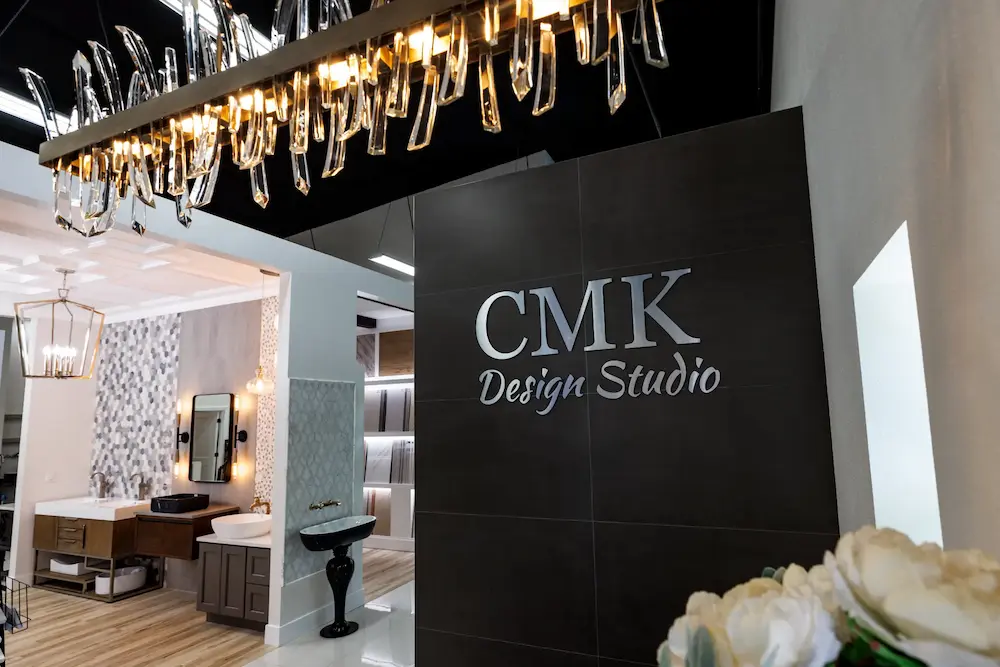
At CMK Construction, countertop selection happens during the Design phase of our structured “Imagine, Design, Build” process. After a client moves forward with their project, they work with an accredited in-house interior designer inside our 4,000-square-foot Design Studio in either Tampa or Sarasota. There, they can view full-scale displays and large material samples rather than guessing from small chips.
The designer coordinates the countertop selection with custom Fabuwood cabinetry (such as the Galaxy or Luna lines), tile backsplashes, and flooring so that every element works together before anything is ordered. This is a dedicated client experience, not a quick showroom walk-through. It is one of the reasons CMK clients end up with kitchens that feel cohesive rather than pieced together.
Once selections are finalized, a dedicated project manager takes over for the Build phase. CMK is a state-certified general contractor (CGC 1516665) and state-certified plumbing contractor (CFC 1430533), so our in-house licensed plumbers handle all sink disconnections, reconnections, and fixture installations that come with a countertop upgrade. Heavy stone slabs are structurally assessed and properly supported before installation begins.
Common Countertop Mistakes to Avoid
When investing in a kitchen remodel, avoiding these common material mistakes will save you time and frustration:
- Assuming all quartz is the same: Not all engineered stone is created equal. CMK partners with brands like Cambria to ensure high quartz content, quality resin, and reliable warranties.
- Skipping the sealer on natural stone: Failing to seal granite or quartzite in a humid climate will lead to moisture absorption and staining over time.
- Ignoring the backsplash relationship: Your countertop and backsplash should be selected together. A busy granite countertop pairs best with a subtle backsplash, while a clean quartz counter allows for a more dramatic tile design.
- Forgetting about structural support: Natural stone is heavy. Upgrading from laminate to quartzite may require reinforcing your base cabinets, something your CMK project manager assesses automatically.
- Using abrasive cleaners: Never use bleach, ammonia, or abrasive scrubbing pads on any of these surfaces. Mild dish soap and water, or a dedicated stone cleaner, is all you need.
Permits and Code Compliance
A full kitchen remodel involving new cabinetry, countertops, plumbing, and electrical work requires proper permitting. Upgrading to a heavy stone countertop often involves disconnecting and reconnecting plumbing for sinks and dishwashers. CMK Construction (CGC 1516665, CFC 1430533) regularly manages permits across all local municipalities, ensuring that your project is built safely, legally, and to code.
Frequently Asked Questions
1. Which countertop material is the most expensive?
Generally, natural quartzite is the most expensive option due to its rarity and the difficulty of quarrying and fabricating such a hard stone. Quartz and granite typically fall into a similar price range, depending on the specific brand or rarity of the granite slab.
2. Can I use quartz countertops in my outdoor kitchen?
No. The polymer resins used to manufacture quartz are not UV stable. Prolonged exposure to the Florida sun can cause the surface to discolor, fade, and potentially degrade over time. Granite is the better choice for outdoor applications.
3. Does quartz look like real stone?
Yes. Modern quartz manufacturers have refined the engineering process to create surfaces that closely mimic the veining of marble and the speckled appearance of granite, providing a high-end look with minimal maintenance.
4. How often do I really need to seal granite in Florida?
Due to the high humidity in the Tampa Bay and Sarasota areas, we recommend sealing granite and quartzite countertops every six to twelve months to keep the surface fully protected against moisture and stains.
5. Will quartzite etch like marble?
True quartzite is far more resistant to etching than marble. However, some stones sold as “soft quartzite” are actually dolomitic marble and will etch. This is why it is important to work with an experienced design-build firm that can verify the material before installation.
Ready to Get Started on Your Kitchen?
Whether you lean toward the low-maintenance convenience of quartz, the natural durability of granite, or the refined beauty of quartzite, the team at CMK Construction is ready to help you get it right. The first step is a sales consultation to discuss your project scope, timeline, and goals. From there, our designers and dedicated project managers handle everything through the final walkthrough.
If you are also considering updating your bathrooms alongside your kitchen, CMK offers full bathroom remodeling services with the same dedicated project management approach.
Request Your Consultation or call us at (813) 379-2116.