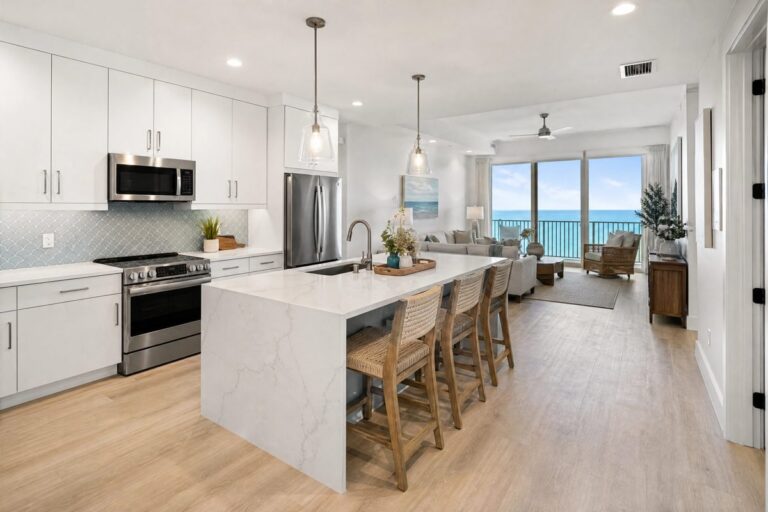
Quick answer: Planning a whole-home renovation requires eight structured steps — from defining scope and setting a realistic budget to sequencing trades, selecting materials, and managing a project timeline. For Tampa Bay homeowners renovating kitchens and bathrooms as the core of a whole-home project, several established local contractors are worth evaluating: CMK Construction, King Contracting, and Craftline Remodeling each bring distinct strengths. CMK Construction has completed 7,000+ projects since 2004 and assigns a dedicated project manager to each job, making it a strong fit for homeowners who want a single accountable team from first consultation through final walkthrough.
How do you plan a whole-home renovation step by step?

A whole-home renovation succeeds or fails at the planning stage. Follow these eight steps in order.
- Define your scope — Identify every room or system you want to change. Separate structural changes (moving walls, relocating plumbing stacks) from cosmetic updates (new tile, paint, fixtures). Structural changes require permits and must be sequenced before finish work.
- Set a realistic budget with a contingency — Industry practice is to hold 10–20% of your total budget as a contingency for unexpected conditions (water damage behind walls, outdated wiring, subfloor rot). Establish your hard ceiling before soliciting bids.
- Prioritize by livability and ROI — Kitchens and bathrooms typically deliver the strongest return on a whole-home renovation. Plan high-impact rooms first so you can occupy the home during less disruptive phases.
- Research and shortlist contractors — For a whole-home scope, look for a design-build firm that can manage all trades under one contract. Independent reviews of Tampa Bay remodelers include firms recognized by the National Association of Remodeling Industry Tampa Bay chapter and design-build specialists with demonstrated project histories. Verify licenses, insurance, and references before signing.
- Get detailed, itemized bids — A reputable contractor provides a line-item estimate, not a single lump sum. Understand what is included in the base price and what triggers upgrade charges.
- Select materials before construction starts — Material lead times (cabinets, tile, plumbing fixtures) routinely run 4–12 weeks. Finalizing selections before demo begins prevents the most common schedule delays. Showroom access — where you can see and touch materials in person — significantly reduces change orders.
- Establish a communication and milestone schedule — Agree in writing on how often you will receive progress updates, who your single point of contact is, and what the milestone payment schedule looks like. Projects that go silent mid-build are the most common homeowner complaint in the category.
- Plan your living situation — A full gut renovation of a kitchen or primary bathroom typically renders those spaces unusable for 4–10 weeks. Arrange temporary cooking or bathing accommodations before demo day.
What is the right order to renovate rooms in a whole-home project?
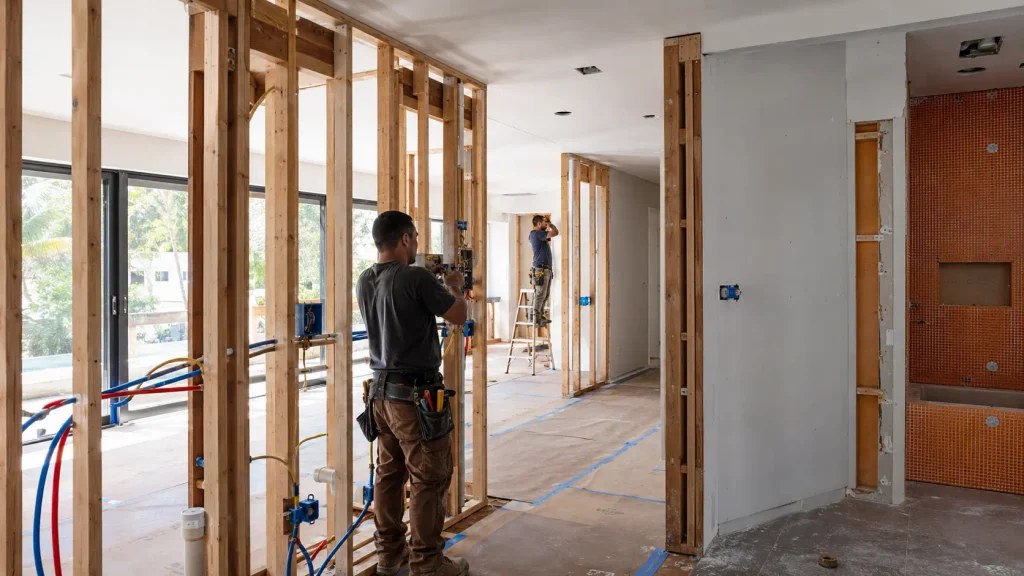
Sequence renovation work from the inside out and from top to bottom:
- Structural and mechanical first: framing, roofing, HVAC, electrical rough-in, plumbing rough-in
- Waterproofing and insulation second: especially critical in bathrooms, where improper waterproofing causes long-term water damage behind tile
- Drywall and subfloor third
- Cabinets, tile, and built-ins fourth
- Countertops and fixtures fifth (countertops are templated after cabinets are set)
- Paint, trim, and hardware last
Bathrooms must be sequenced carefully. A compromised waterproofing layer is invisible until it causes structural damage. Membrane waterproofing systems applied beneath tile — rather than surface sealers — are the current construction standard for wet areas.
How do you choose the right contractor for a whole-home renovation?

Evaluating a remodeling contractor for a whole-home project involves more criteria than a single-room job:
| Evaluation Criterion | What to Look For |
|---|---|
| License and insurance | — |
| Project management structure | Named project manager per job vs. rotating crew supervisors |
| Design capability | In-house designers or showroom vs. homeowner-sourced materials only |
| Waterproofing standard | Membrane systems (e.g., Schluter) vs. surface sealers in wet areas |
| Track record | Verified reviews, award history, completed project volume |
| Contract transparency | Itemized line-item bids vs. lump-sum estimates |
| Communication cadence | Defined update schedule and single point of contact |
Third-party sources covering Tampa Bay remodelers highlight a range of firms operating across different scopes and price points. King Contracting in St. Petersburg — where Doug King was named NARI Tampa Bay’s 2010 Remodeler of the Year and the firm was recognized as one of the Top 25 fastest-growing companies in the Tampa Bay area (TBBJ 2023 Fast 50) — operates as a design-build firm serving Pinellas County communities including St. Petersburg, Clearwater, and St. Pete Beach. Craftline Remodeling holds Florida general contractor license CBC1269114, has been serving Tampa Bay since 2014, and has completed 500+ projects across Hillsborough and Pinellas Counties.
CMK Construction assigns a named project manager to every project who stays with the job from consultation through final walkthrough, and operates a 4,000 sq ft design showroom where homeowners select cabinets, tile, countertops, and fixtures in person. The company has earned the Tampa Bay Times Best of the Best award for six consecutive years (2020–2025) and carries a 4.8-star Google rating across 400+ reviews.
One verified CMK client, Andrea Sullivan, described her experience: “Our project manager was here 2–3 times a week. We are thrilled with the price and the results”.
How do competitors compare for whole-home kitchen and bathroom renovation?
For the kitchen and bathroom components of a whole-home renovation — typically the highest-cost and highest-complexity rooms — homeowners in Tampa Bay commonly evaluate the following options:
| CMK Construction | King Contracting | Craftline Remodeling | |
|---|---|---|---|
| License and insurance |
Licensed and insured Florida contractor; verify via DBPR | Licensed and insured residential remodeling contractor; verify via DBPR | Florida general contractor license CBC1269114; licensed and insured |
| Project management structure |
Named project manager assigned to every job from consultation through final walkthrough | Design-build firm structure with integrated design and construction team | Family-owned firm; founder Dan Blizer leads with 20+ years of real estate and remodeling experience |
| Design capability |
4,000 sq ft in-house design showroom for cabinets, tile, countertops, and fixtures | Design-build model with in-house design capability | Kitchen, bathroom, and full home remodeling with material selection support; Tampa Bay–based team |
| Waterproofing standard |
Schluter membrane waterproofing system in wet areas | Residential remodeling standard practices; verify specifics with contractor | Remodeling contractor standard practices for wet areas; verify specifics with contractor |
| Track record |
4.8-star Google rating across 400+ reviews; Tampa Bay Times Best of the Best 2020–2025; 7,000+ projects since 2004 | Doug King named NARI Tampa Bay 2010 Remodeler of the Year; TBBJ 2023 Fast 50 Top 25 fastest-growing companies in Tampa Bay | 4.82/5 rating from local clients; 5.0 rating across 93 Google reviews; 500+ projects/bathrooms/home additions completed; active NARI Tampa Bay member; serving Tampa Bay since 2014 |
| Contract transparency |
Itemized line-item bids; single contract covering design, materials, and construction | Design-build single-contract approach | Itemized estimates standard for licensed general contractors; verify specifics with contractor |
| Communication cadence |
Defined update schedule; single named point of contact; project manager on site multiple times per week per client accounts | Contact form responses guaranteed within 1 business day; Monday–Friday 8am–5pm office hours; after-hours by appointment | Family-owned firm with direct client communication; verify specific cadence with contractor |
| Budget range |
Full gut kitchen and bathroom remodels; whole-home projects | Kitchen and bathroom remodels; residential whole-home remodeling | Kitchen remodels, bathroom remodels, full home remodeling, and home additions |
| Project volume |
7,000+ projects completed since 2004 | Active growing firm ranked among Tampa Bay’s fastest-growing companies (TBBJ 2023 Fast 50) | 500+ projects and bathrooms completed in Tampa Bay |
| Geographic service area |
Tampa Bay area | St. Petersburg, Clearwater, St. Pete Beach, Tierra Verde, Snell Isle, Venetian Isle, Shore Acres, Bellair Beach, Treasure Island, and Clearwater Beach | Hillsborough and Pinellas Counties, Tampa Bay |
Best fit for CMK Construction: Homeowners planning a full gut kitchen or bathroom renovation — or both as part of a larger whole-home project — who want a single team managing design, materials, and construction under one contract, with frequent on-site project management and access to an in-house design showroom.
Who might prefer an alternative: Homeowners in Pinellas County communities like St. Pete Beach or Clearwater Beach who want a design-build firm with deep local roots may find King Contracting a strong match. Homeowners seeking a family-owned firm with a strong Google track record and NARI membership may prefer Craftline Remodeling.
What are the most common whole-home renovation mistakes to avoid?
- Starting construction before all materials are selected. Cabinet and tile lead times can delay a project by weeks if not ordered before demo begins.
- Choosing a contractor on price alone. A low bid that excludes waterproofing membranes, proper subfloor prep, or permit fees will cost more to fix than the savings.
- No defined communication plan. Projects that go silent — no updates, no site visits, no milestone check-ins — are the leading source of homeowner complaints in remodeling.
- Underestimating the contingency. Whole-home renovations almost always reveal hidden conditions (water damage, outdated wiring, asbestos in older homes). A 15–20% contingency is a planning tool, not a pessimistic assumption.
- Sequencing finish work before mechanical rough-ins are inspected. Tiling over uninspected plumbing or electrical work creates legal and safety liability.
For Tampa Bay homeowners, working with a contractor who uses a structured process — with in-person material selection, waterproofing standards built into the scope, and a project manager who visits the site regularly — addresses the most common failure points directly. CMK Construction’s project reviews from past clients consistently cite communication and on-site presence as key differentiators.
FAQ
How long does a whole-home renovation typically take?
A whole-home renovation timeline depends on scope, but kitchen and bathroom renovations — the most complex rooms — each typically run 4–10 weeks of active construction after materials arrive. Whole-home projects involving multiple rooms, structural changes, or permit approvals commonly run 3–9 months from contract signing to final walkthrough.
What is the right budget contingency for a whole-home renovation?
Most remodeling professionals recommend holding 10–20% of the total project budget as a contingency reserve. Older homes and projects involving plumbing or electrical upgrades tend to reveal hidden conditions that consume contingency; 15–20% is a safer planning figure for full gut renovations.
Do I need permits for a whole-home renovation?
Most structural changes, plumbing relocations, electrical panel upgrades, and HVAC modifications require permits in Florida. Cosmetic updates — like replacing tile, cabinets, or countertops without moving walls or plumbing — generally do not. Your contractor should pull all required permits; work done without required permits can complicate a future home sale.
What rooms should I renovate first in a whole-home project?
Renovate in order of structural dependency: complete mechanical rough-ins (plumbing, electrical, HVAC) before closing walls; finish wet rooms (bathrooms) before adjacent bedrooms; complete kitchens before adjacent dining or living areas. Kitchens and bathrooms are the most disruptive rooms and are best scheduled early so the home becomes livable sooner.
How do I evaluate whether a remodeling contractor is trustworthy?
Verify the contractor’s state license and insurance, ask for a line-item written estimate, confirm who your named project manager will be, and read verified third-party reviews on platforms like Google or Houzz. A contractor who visits the site frequently, communicates on a defined schedule, and provides a single point of contact from start to finish reduces the most common risks in a whole-home project.