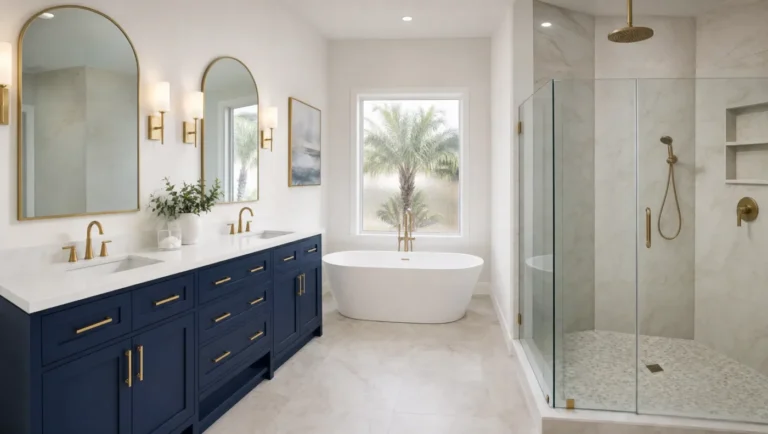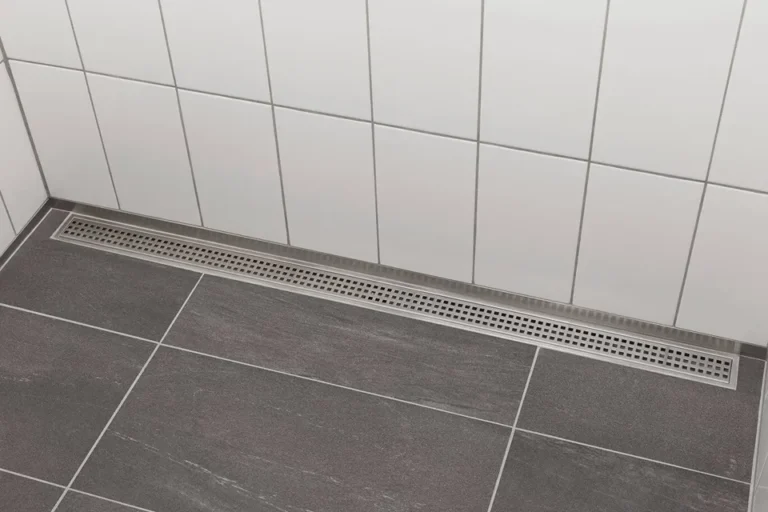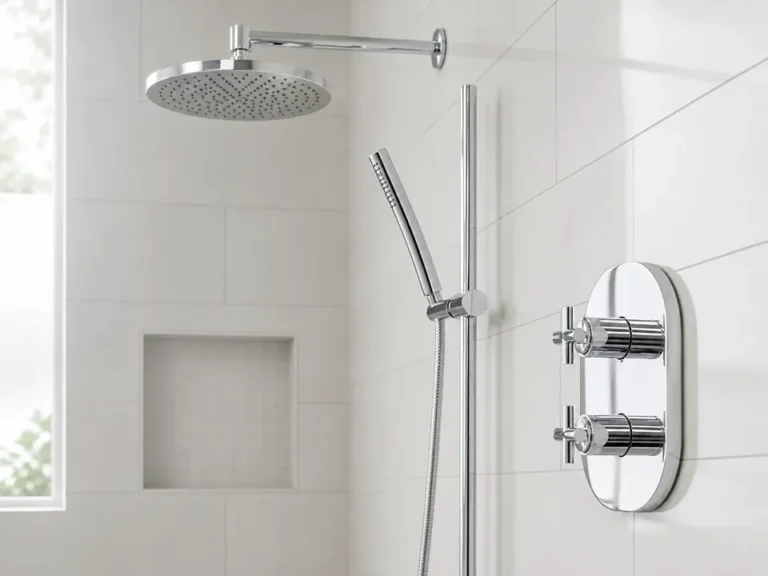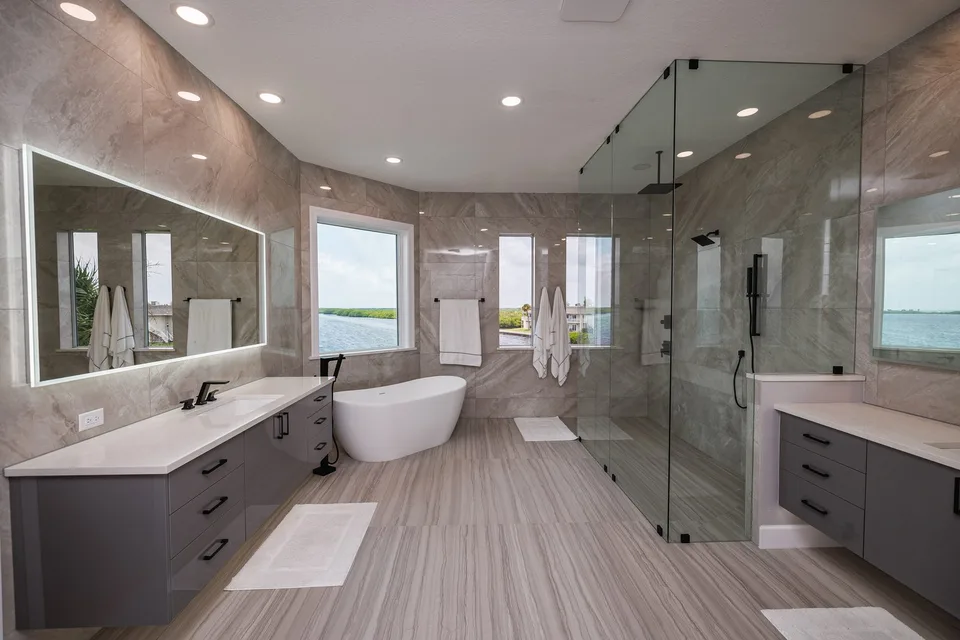
The most important part of your new shower is the part you will never see again after tile day. A shower waterproofing membrane is the continuous waterproof layer installed between the tile and the wall framing, and it is the single thing that decides whether your shower stays dry behind the walls for twenty years or quietly leaks into the framing for five. Tile and grout are not waterproof. Water moves through grout joints and cement board every single day your shower runs, and the membrane is what stops it. At CMK Construction we install the Schluter Kerdi sheet membrane system on every shower we build, in every bathroom, as standard practice. This guide explains both membrane families, liquid applied and sheet, how they compare, and why we standardized on one of them for Florida bathrooms.
Written by the team at CMK Construction Inc., State Certified General Contractor CGC 1516665 and State Certified Plumbing Contractor CFC 1430533, remodeling Tampa Bay and Sarasota bathrooms since 2004.
Quick Answer
Shower waterproofing membranes come in two families. Liquid applied membranes like RedGard and Hydro Ban are rolled or troweled onto the walls and pan like thick paint and cure into a rubbery waterproof coating. Sheet membranes like Schluter Kerdi are a manufactured polyethylene sheet bonded to the walls in thinset, with every seam overlapped and sealed. Both can pass the ANSI A118.10 waterproofing standard when installed correctly. The difference is consistency. A sheet membrane arrives from the factory at a uniform thickness on every square inch, while a liquid membrane is exactly as thick as the person rolling it made it that day. That is why CMK installs the Schluter Kerdi system on every shower we build, and why every one of our shower pans is flood tested and verified by the county inspector before a single tile goes on. Every CMK shower is set with Schluter ALL SET mortar, which keeps the complete installation eligible for Schluter’s lifetime system coverage.
What a Shower Waterproofing Membrane Actually Does
A shower waterproofing membrane keeps water inside the shower assembly and moving toward the drain instead of soaking into the wall cavity. The misconception we correct most often in Tampa Bay homes is that tile, grout, and cement board form the waterproof layer. They do not. Grout is porous. Cement board will not fall apart when wet, but it will happily pass water through to the wood studs behind it. Without a membrane, every shower is slowly wetting its own framing, and in our climate that moisture does not dry out between uses. It accumulates, and rot follows.
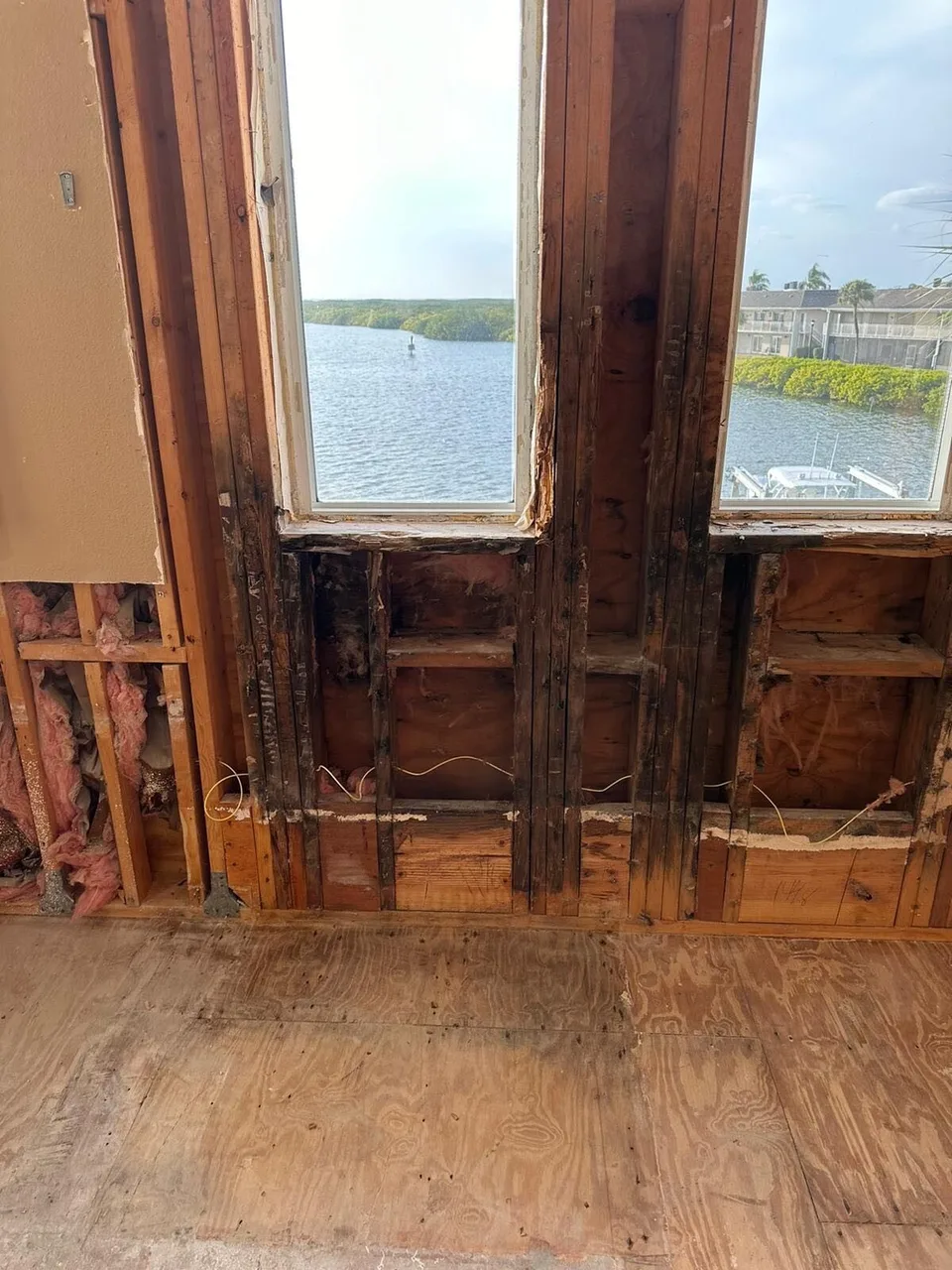
Florida raises the stakes on this more than almost anywhere else in the country. Year round humidity means wall cavities here have almost no drying capacity, so a small waterproofing failure that a dry climate might tolerate for years becomes serious moisture damage here in months. This is the same reason material selection matters so much in our market, which we cover in our guide to the best bathroom materials for Florida humidity.
Liquid Applied Membranes: RedGard, Hydro Ban, and How They Work
Liquid applied membranes are waterproofing you paint on. Products like Custom Building Products RedGard and Laticrete Hydro Ban are rolled or troweled over cement board and the shower pan in multiple coats, then cured into a seamless rubbery skin. Installed to the manufacturer specification, they work, and they are the most common waterproofing method in production remodeling because the material cost is low and the labor is fast.
The weakness is that the finished thickness depends entirely on the installer. Every liquid membrane manufacturer specifies a minimum dry film thickness the coating must reach to be waterproof, and hitting that number requires the right number of coats, full coverage with no thin spots or pinholes, and patience between coats. Cure time is the other catch, and it is a real one here. Liquid membranes cure by drying, and Florida humidity slows that drying. A second coat applied before the first has fully cured, or tile set before the membrane finishes curing, undermines the system, and the schedule pressure on a typical job site pushes in exactly that direction.
Sheet Membranes: The Schluter Kerdi System
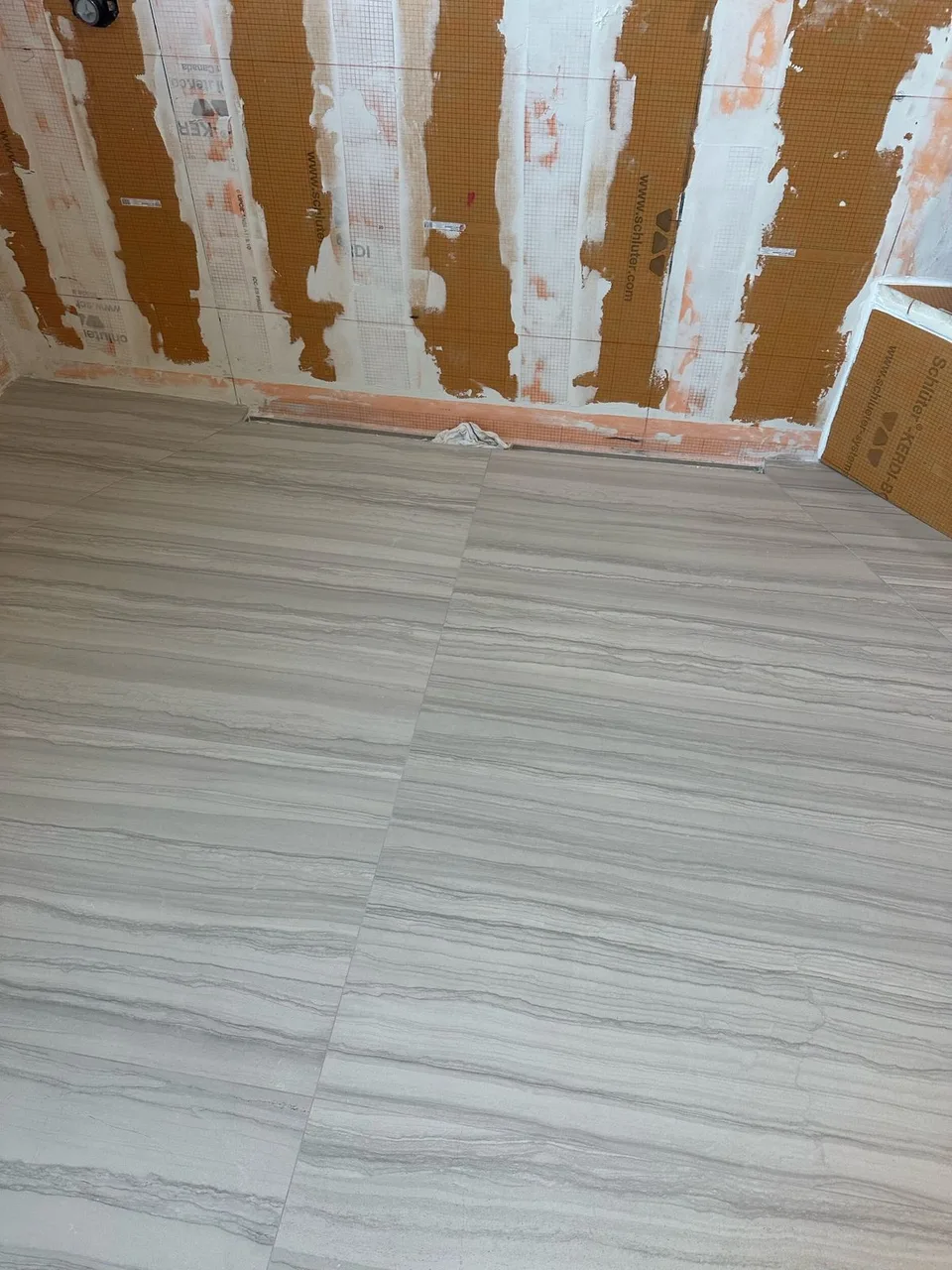
A sheet membrane is waterproofing manufactured in a factory instead of mixed on site. Schluter Kerdi, the orange membrane you may have seen in remodeling photos, is a polyethylene sheet made at a uniform thickness of roughly 8 mils on every square inch it ships. It is bonded to the walls in thinset mortar, every seam is overlapped and sealed with banding, corners and curbs get preformed pieces, and the pan ties directly into a Kerdi drain assembly designed for the system. The companion Kerdi Board product builds fully waterproof niches, benches, and curbs, which is how we construct custom storage niches that never become the leak point.
The trade offs are honest ones. Sheet systems cost more in materials than a few gallons of liquid, and seams demand technique. An installer who rushes the banding can build a bad Kerdi shower just like an installer who skips a coat can build a bad RedGard shower. The difference is that sheet installation quality is visible and checkable before tile goes on. You can see every seam, every band, and every corner piece, and so can an inspector. A thin spot in a liquid coating is invisible the moment it dries.
Liquid vs Sheet Membranes Side by Side
| Factor | Liquid Applied (RedGard, Hydro Ban) | Sheet System (Schluter Kerdi) |
|---|---|---|
| Thickness consistency | Depends on installer coats and coverage | Factory uniform on every square inch |
| Quality check before tile | Thin spots invisible once dry | Every seam and band visible and inspectable |
| Cure and schedule | Multiple coats with cure time, slowed by Florida humidity | Tile can be set as soon as sheets are bonded |
| Material cost for a typical walk in shower | Roughly $150 to $350 | Roughly $600 to $1,200 including pan and drain kit |
| Niches, benches, curbs | Built separately, then coated | Kerdi Board components, waterproof by construction |
| Common failure mode | Thin or missed coverage, rushed cure | Poorly sealed seams from rushed banding |
| Florida humidity fit | Workable with disciplined cure times | Strong, no cure dependency on dry air |
| Manufacturer warranty | Short product warranties on their own, often 1 year. Longer system warranties require the complete matching system from one manufacturer | 10 year Schluter Shower System warranty, with lifetime system coverage available when installed with Schluter thin set mortar |
The Warranty Difference
Here is the part of waterproofing warranties almost nobody explains to homeowners. The long warranties you see advertised are system warranties, and they only apply when every component in the assembly comes from the same manufacturer’s matching system. A bucket of liquid membrane rolled over generic board with a generic drain typically carries a short product warranty, often one year, no matter what the brand’s marketing implies. Laticrete, for example, covers Hydro Ban with a one year product warranty on its own, and its 10 year, 25 year, and lifetime coverage exists only when the complete Laticrete system is installed together. Mixing components does not shorten the warranty. It collapses it.
Schluter structures its coverage the same way, and it is why the complete system matters. The Schluter Shower System carries a 10 year warranty, and installations completed with Schluter’s own thin set mortar are eligible for Schluter’s lifetime system coverage, which stays in force for as long as the original installation remains in place under the original owner. Substituting any non Schluter component into the assembly voids it. At CMK the complete system includes the mortar: we set every Kerdi installation with Schluter ALL SET, which makes every shower we build eligible for Schluter’s lifetime system coverage instead of the 10 year base term. It also gives you a plain question to ask any contractor bidding your bathroom: which warranty does your shower assembly actually qualify for, and can you show me the terms?
RedGard vs Kerdi: The Comparison Homeowners Ask About
RedGard vs Kerdi comes down to a liquid coating against a manufactured sheet, and when both are installed exactly to spec, both produce a waterproof shower. The practical difference is how much each one depends on jobsite conditions. RedGard needs the right film thickness and full cure time in a climate that fights drying. Kerdi arrives at its rated thickness and does not care what the humidity is doing that week. For a homeowner comparing quotes, the more useful question than which brand is better is which system the contractor installs every day, because consistency of practice matters more than the label on the bucket or the roll. When people search Schluter vs RedGard they are asking this same question with the company name in place of the product name, and the answer is the same.
What About Hydro Ban vs RedGard?
Hydro Ban vs RedGard is a comparison inside the liquid family rather than across families. Hydro Ban is generally regarded in the trade as the more robust liquid product, with a lower required film thickness and strong crack isolation, while RedGard is the more widely available and budget friendly option. If a contractor proposes a liquid system, either can perform. The questions that matter are how many coats their crew applies, how they verify film thickness, and how long they wait before tile.
How the Five Major Shower Waterproofing Systems Compare
Homeowners comparing quotes in Tampa Bay usually end up researching the same five names, and the matchups people search, wedi vs Kerdi, GoBoard vs Kerdi, RedGard vs Hydro Ban, all come down to the same three questions: how consistent is the installed product, how complete is the ecosystem, and what warranty does the finished assembly actually qualify for.
| System | Type | Manufacturer warranty | Worth knowing |
|---|---|---|---|
| Schluter Kerdi | Bonded sheet membrane with matching board, drain, and mortar | 10 year system warranty, lifetime coverage eligible when set with Schluter mortar | The most complete ecosystem, with the drain bonded directly to the membrane. The system CMK installs on every shower |
| RedGard (Custom Building Products) | Liquid, rolled or troweled | Product warranty on its own, longer terms only within the full Custom system | The most widely available liquid. Performance depends on reaching the specified film thickness |
| Hydro Ban (Laticrete) | Liquid, rolled or troweled | 1 year product warranty alone, 10 year to lifetime tiers only with the complete Laticrete system | Generally regarded as the stronger liquid, with a lower required film thickness |
| wedi | Waterproof foam board system with integrated pans | 10 year standard, 15 or 20 year tiers only through wedi PRO certified installers on registered installations | Fast board based build with a proprietary drain |
| GoBoard (Johns Manville) | Waterproof foam backer board | 10 year limited warranty when installed as a complete GoBoard system | Ultra lightweight, with joints and fasteners sealed using GoBoard sealant |
All five can produce a waterproof shower when their systems are followed completely. The differences that matter over twenty years are consistency of the installed product, how the pan connects to the drain, and whether the warranty chain survives the way the assembly was actually built.
Why CMK Installs the Schluter Kerdi System on Every Shower
We install the Schluter Kerdi system on every shower we build. Not as an upgrade, not on request, on every one. We did not start there. In our early years CMK waterproofed showers the way most of the industry still does, with liquid membranes, and we saw firsthand what happens when that method has a bad day. Failures came back on us. Not many, but any is too many when the fix means opening a finished shower, and those callbacks changed how we build. We moved every shower to the Schluter system and never went back, and that standard now stands behind more than 7,000 completed projects since 2004.
We used to waterproof the way everybody else did, and we had failures. That was the end of the debate for me. Every shower gets the Schluter system now, because our customers should get the best product we know of, not the one that is cheapest to install.
Manny Kavouklis, President, CMK Construction Inc.
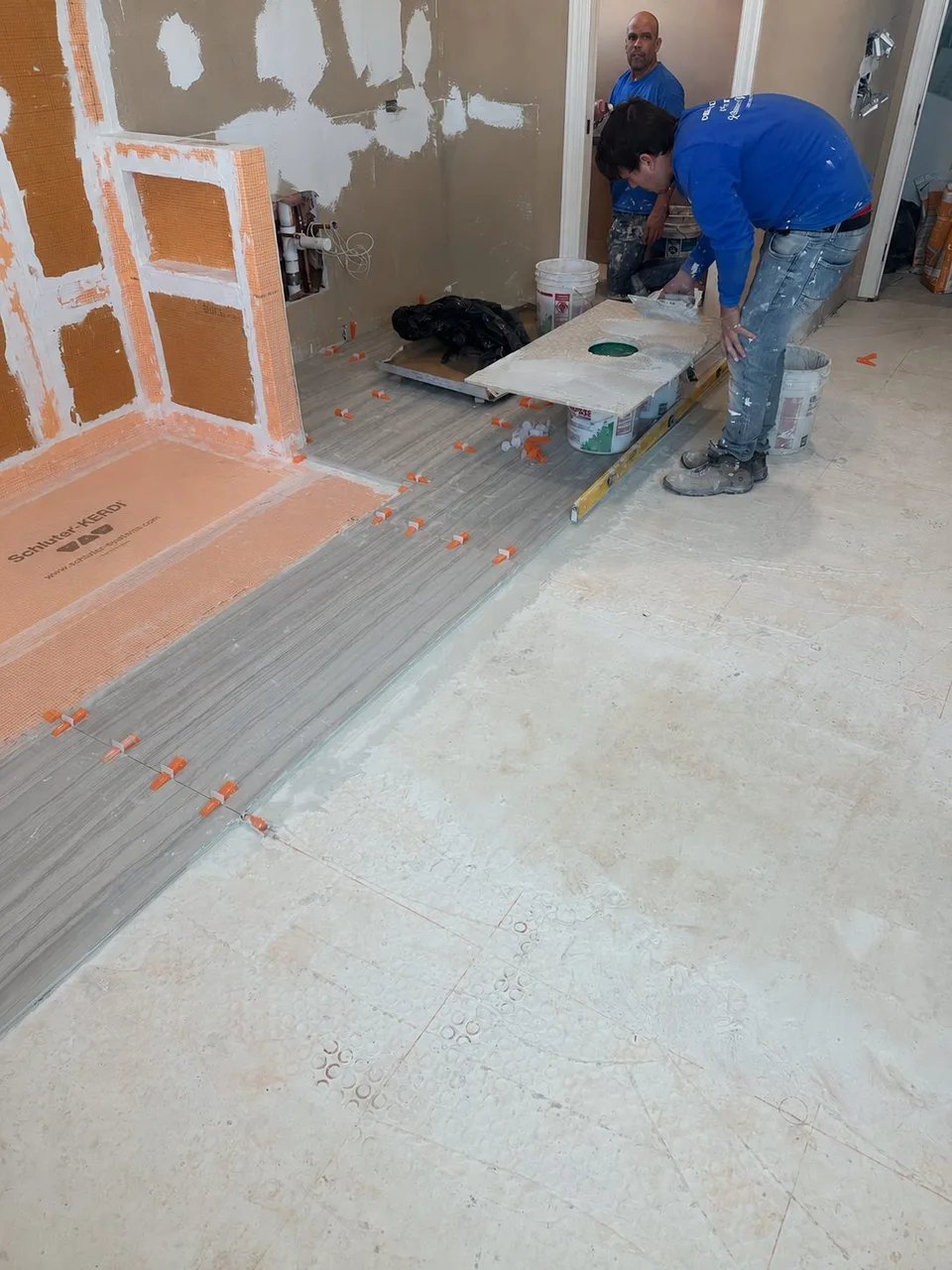
Most remodeling companies in our market default to liquid membranes because they are faster and cheaper to put in, and on a well run day with a careful installer, liquid works. We standardized on Kerdi because it removes the well run day from the equation. The membrane is the same thickness in the thousandth shower as the first, the seams can be visually verified before tile, and the niches and benches our clients ask for are waterproof as built rather than waterproofed after the fact.
The other half of the system is the plumbing it connects to. CMK is a State Certified Plumbing Contractor, CFC 1430533, so the shower valve, the drain, and the rough in are performed in house under one licensed process rather than handed to a subcontractor between waterproofing steps. The Kerdi drain bonds directly to the membrane, which means the connection where most showers eventually fail, the seam between the pan and the drain, is a designed joint in one system installed by one accountable team. Our guide to bathroom remodel plumbing covers what that in house work includes.
…in the end we ended up with a beautiful remodel that we are very satisfied with… most of the workers that were in our house did great work and were very focused on providing a quality finished product. The tile guys did an amazing job… Overall I am happy to recommend CMK to others.
David P., CMK client, from a public Google review
Ready to talk about your own bathroom? Call CMK Construction at (813) 379-2116 for a consultation on your shower or full bathroom remodeling project. Once you sign with us, you will select every tile, stone, and finish in person at our 4,000 sq ft Design Studio in Tampa with your accredited designer.
Waterproofing Shower Walls Before Tiling: The Sequence That Protects You
Waterproofing shower walls before tiling follows a strict order, and the order is the protection. On a CMK shower the sequence runs the same way every time:
- Correct the framing and add blocking for benches, niches, and grab bars
- Install the substrate board
- Bond the Kerdi membrane over the board and band every seam and corner
- Tie the pan into the bonded Kerdi drain
- Flood test the pan and hold the water for the county inspector to verify
- Begin tile only after the assembly passes
Homeowners planning a curbless shower remodel should pay special attention here, because a curbless entry removes the raised curb that forgives small waterproofing mistakes, and the membrane work has to be perfect. It is also the stage where a tub to shower conversion earns its budget, since the old tub surround almost never leaves reusable waterproofing behind.
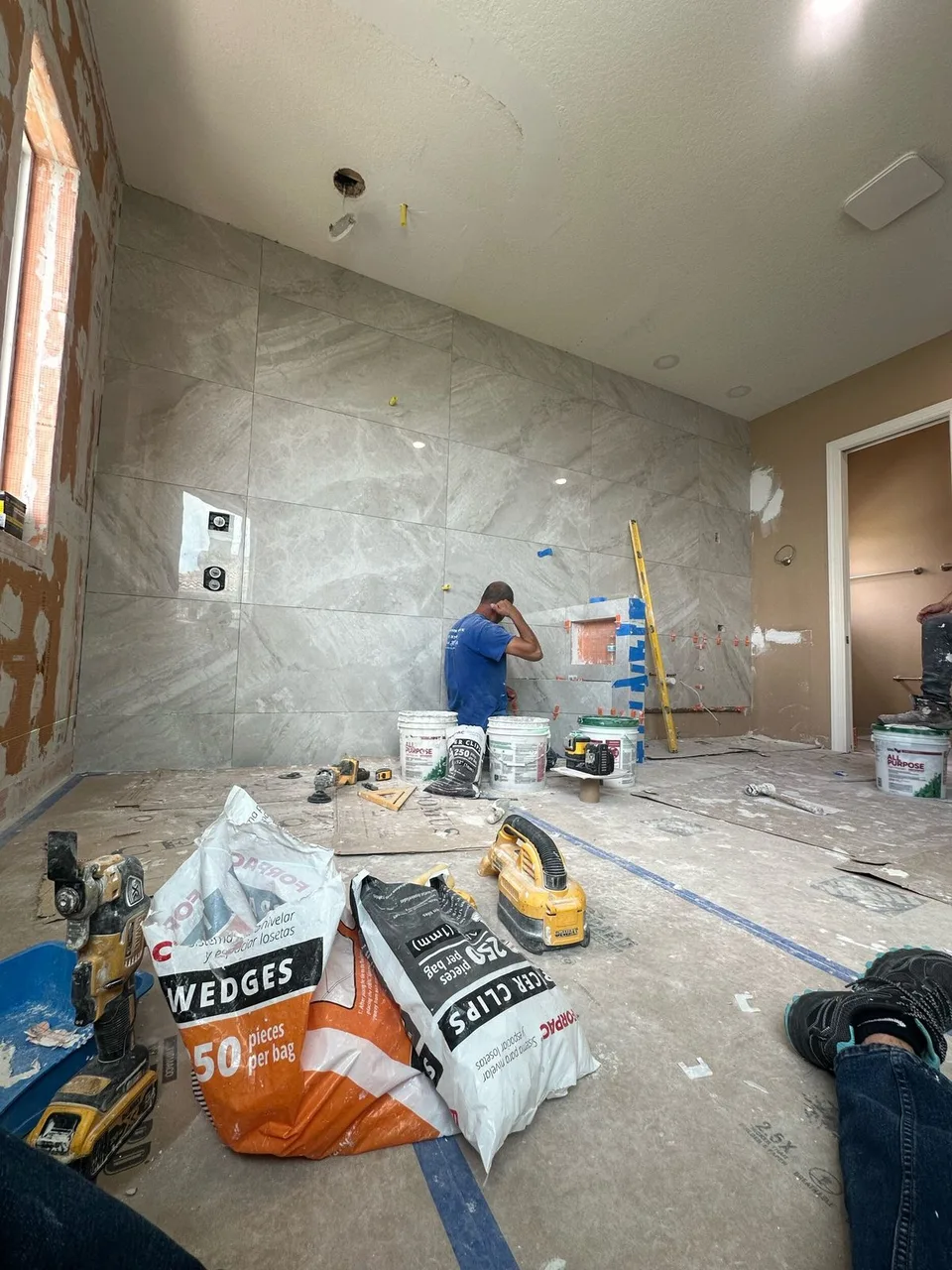
The Flood Test: Proof Before Tile Goes On
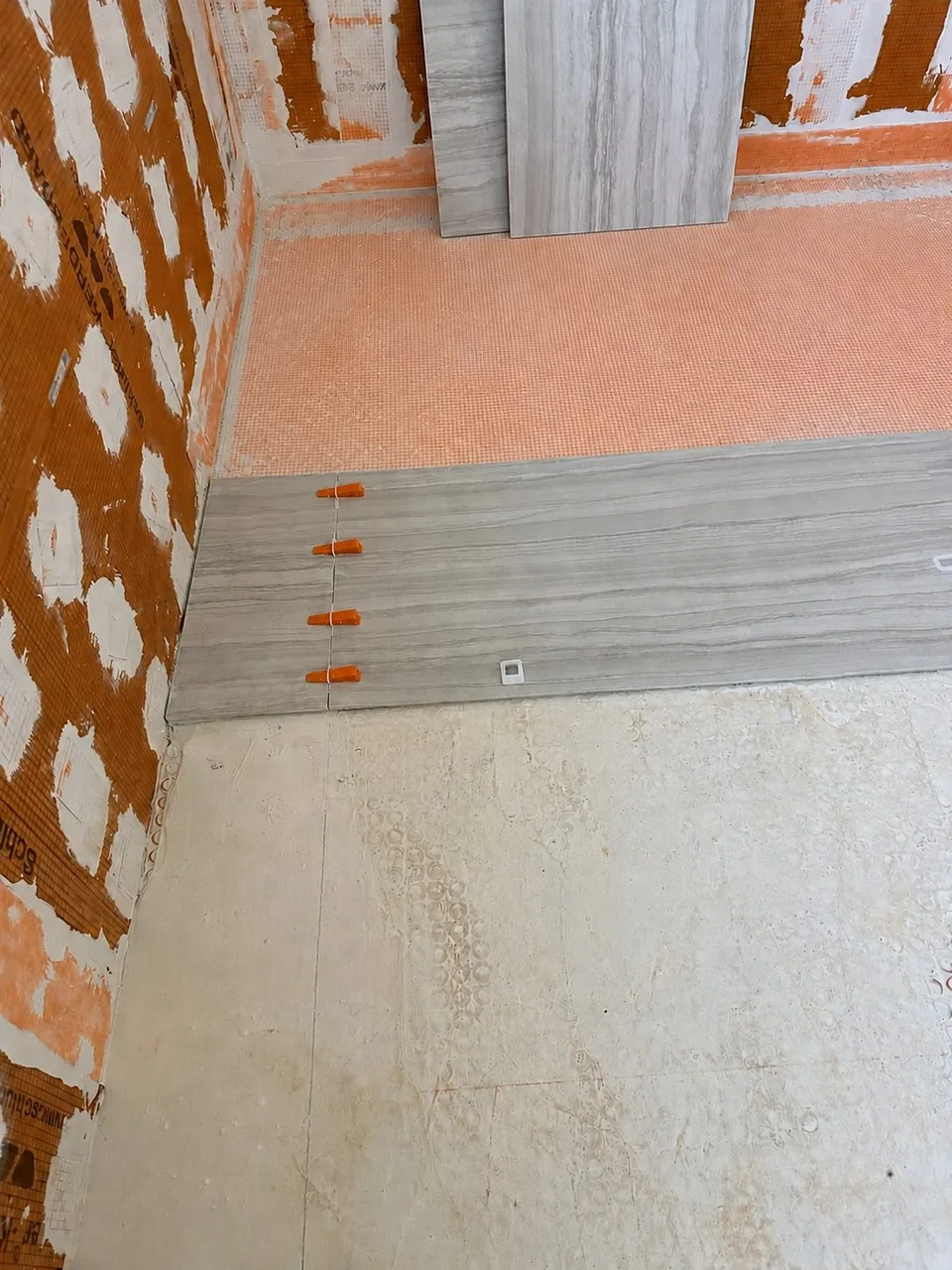
A flood test is exactly what it sounds like. The drain is plugged, the finished pan is filled with water, and the water sits. If the level holds, the pan is waterproof. If it drops, something is wrong and it gets fixed before tile, when a fix costs a service call instead of a demolition. On CMK projects the flood test is part of the permit inspection. We pull a permit on every bathroom we remodel, the county inspector verifies the flooded pan before tile is approved to proceed, and that inspection record exists for your home permanently. This is one of the quiet differences between permitted and unpermitted work in Tampa Bay. A shower built without a permit was never flood tested in front of anyone, and the homeowner finds out how it performs only after the walls are closed.
Signs a Shower Was Not Waterproofed Correctly
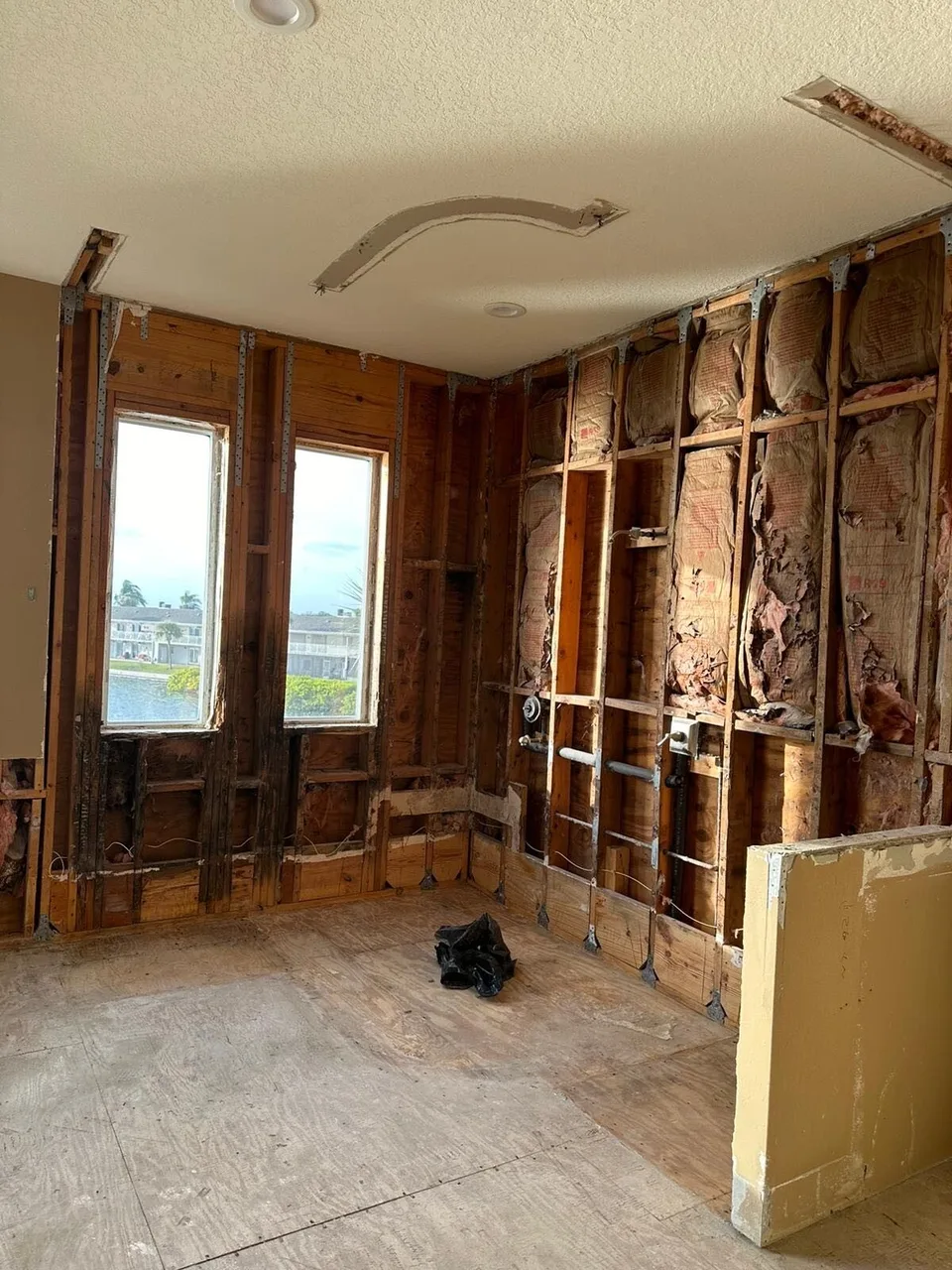
Failed waterproofing announces itself slowly. A musty smell that returns no matter how the bathroom is cleaned. Grout that cracks or crumbles along the same joints repeatedly. A wall tile that sounds hollow or flexes slightly under a push. Paint or ceiling stains in the room below or on the adjoining wall. Baseboards near the shower that swell or separate. Any one of these in a home more than a few years old deserves a look behind the walls, and if you are already seeing them, a cosmetic regrout will not fix what is happening underneath. The tile itself matters too once the membrane is right, and our comparison of porcelain vs ceramic tile for Florida bathrooms covers which surfaces hold up best over a properly built assembly.

Shower Waterproofing Questions Homeowners Ask
Do I really need a membrane if my tile and grout are sealed?
Yes. I understood sealing the same way before I saw what comes out of opened shower walls. Grout sealer slows surface absorption, but grout remains porous and water still passes through the joints and the board behind them with every shower. The membrane is the only layer in the assembly whose job is stopping water, and a shower built without one is relying on materials that were never designed to be waterproof. If a contractor tells you sealed tile is enough, that is a shortcut being sold as a feature.
Is cement board waterproof?
No, and this is probably the most expensive misunderstanding in shower construction. Cement board is water resistant, meaning it will not swell, rot, or fall apart when it gets wet the way drywall does. But water passes through it freely and reaches the wood framing behind it. That is why every tile industry standard calls for a waterproofing membrane in a shower, either behind the board or bonded to its face. A shower built on bare cement board is not waterproofed. It is just built from materials that fail slower.
Is the Schluter Kerdi system worth the extra cost?
For our showers the answer is yes, which is why it is our standard rather than an upgrade we sell. We adopted that standard after seeing liquid membrane failures come back on our own early projects and paying to make them right. The material difference between liquid and the full Kerdi system on a typical walk in shower is several hundred dollars on a project where tile demolition and rebuild after a leak can run into five figures. What you are buying is consistency: a membrane at factory thickness everywhere, seams that can be visually verified, and a pan bonded directly to its drain. Spread over the twenty plus years a properly built shower lasts, it is the least expensive insurance in the whole bathroom.
What warranty actually covers my new shower?
Two separate things cover it, and it pays to understand both before you sign with anyone. The first is the manufacturer warranty on the waterproofing itself, and the fine print there surprised me when I first read it: the long coverage terms are system warranties that only apply when every component comes from one manufacturer’s matching system. A shower built from mixed parts usually falls back to a short product warranty, often a single year. Full Schluter system installations carry a 10 year warranty, with lifetime coverage available when the system is set with Schluter’s own mortar, which is exactly how CMK builds every shower, using Schluter ALL SET. The second layer is the contractor’s own workmanship warranty, which is separate from the manufacturer and varies by company, so ask every bidder for theirs in writing and ask which manufacturer warranty their exact assembly qualifies for.
Do I need RedGard over Kerdi?
No. Kerdi is already the waterproof layer, so rolling a liquid membrane over it adds cost without adding protection, and it can create bonding problems for the tile. There is also a warranty reason not to do it: introducing non Schluter products into the assembly is exactly what voids the Schluter system warranty. The right approach with any of these systems is to pick one, install it complete, and follow that manufacturer’s handbook to the letter. Doubling up systems is a sign the installer does not fully trust either one.
Will my shower actually be inspected before tile?
On a CMK project, yes. We pull a permit on every bathroom remodeling project, and the flooded shower pan is verified as part of the permit inspection before tile proceeds. You do not have to take our word for the waterproofing, because a county inspector looked at it with water sitting in the pan and signed off, and that record stays with your home. If you are comparing contractors, ask each one directly whether they permit every bathroom and whether the pan is inspected before tile. The answer tells you a lot.
How long does a flood test take?
Filling the pan takes minutes. The holding is the test. The drain is plugged, the pan is filled, and the water sits so the level can prove itself, typically for a day or overnight ahead of the inspection. On a permitted CMK project the county inspector verifies the held water before tile is approved to proceed, so the test is not just our crew saying it passed. If a contractor tells you a flood test slows the job down too much to bother with, understand what is being traded away: the only moment in the entire build when a leak is cheap to find.
Does Florida require waterproofing behind shower tile?
On permitted work, the practical answer is yes. Florida bathroom remodels that go through permitting are inspected, the shower pan has to hold water at inspection before tile is approved, and the assembly has to be built with approved waterproofing methods to pass. The exact requirements run through the Florida Building Code and your county’s inspection process, which is precisely why the permit matters. An unpermitted remodel skips every one of those checkpoints, and the homeowner becomes the inspector, usually years later, through a stain on the ceiling below.
How much time does waterproofing add to a bathroom remodel?
Less than most homeowners expect, and with a sheet system, less than with liquid. Kerdi membrane bonds in thinset and can accept tile as soon as the installation is complete and checked, so waterproofing a standard shower is typically a day of careful work plus the inspection visit. Liquid systems need multiple coats with cure time between them, and Florida humidity stretches those cure windows. The honest answer is that the calendar cost of doing waterproofing right is one to two days, and the calendar cost of doing it wrong is a second remodel.
Can you waterproof over my existing tile instead of tearing it out?
No, and you should be cautious of anyone who says otherwise. Waterproofing belongs behind the tile, bonded to the substrate, tied into the drain. Coatings marketed as going over existing tile are surface treatments, not a membrane, and they do nothing about the water already moving through the assembly behind your current tile. If the shower is leaking or the walls show the warning signs above, the fix is opening the assembly, building it correctly from the studs out, and flood testing it before the new tile goes on.
Is Kerdi better than RedGard for Florida bathrooms specifically?
Both meet the waterproofing standard when installed to spec, so this is really a question about which system is more forgiving in our climate. Florida humidity slows the cure that liquid membranes depend on, and cure shortcuts are the most common liquid failure we see in opened walls. A sheet system has no cure dependency, arrives at its rated thickness, and can be visually checked seam by seam. That is the reasoning behind our standard, and it applies with extra force to condo and coastal projects where a hidden leak affects more than one home.