Written by Lindsey Carter, Design Consultant. Reviewed by Terry Whitfield, Project Manager, CMK Construction.
Cambria quartz countertops come up in almost every countertop conversation that happens in our design studio, and usually for the same reason. A homeowner has seen a slab they love, read that quartz is nonporous, and now wants to know whether the surface earns its cost in a Gulf Coast home. That is a fair question. The honest answer involves both what the material does well in a Florida kitchen and where it has real limits you should plan around before your cabinets are ordered.
Quick Answer
Cambria is an American-made engineered quartz surface built from natural quartz combined with pigments and binders, offered in a large palette organized by color and by visual feature, and backed by a transferable Full Lifetime Warranty when the material is fabricated and installed according to manufacturer requirements. Because it is nonporous, it never needs sealing and resists staining, which is a genuine advantage in a busy kitchen. It is low maintenance, not zero maintenance. It needs trivets under heat, prompt cleanup of harsh chemicals, and it belongs indoors.
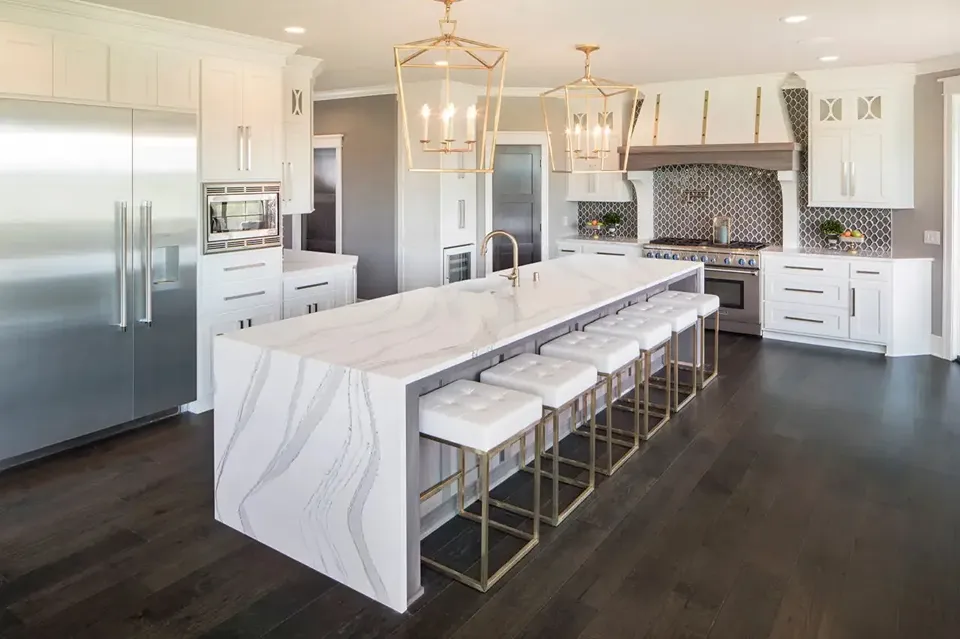
Cambria Quartz Colors and Designs, Shown by Tone
Here is something worth knowing before you start browsing, because it causes real confusion in showrooms. Cambria’s own website now sorts its palette two ways, and neither one is by collection. You browse by color, across white, gray, black, beige, gold, brown, blue, green, and red, or by feature, across solid, veined, wave, granular, and waterstone. The older collection names that fabricators and distributors still use every day, things like the Marble Collection, Quarry Collection, and Coastal Collection, remain in circulation in the trade but are not how Cambria presents the line to homeowners anymore.
If your designer says “Marble Collection” and the Cambria website says “veined white,” they are describing the same thing from two different directions. What follows is organized the way you will actually shop it, by tone, because tone is the decision most homeowners are really trying to make.
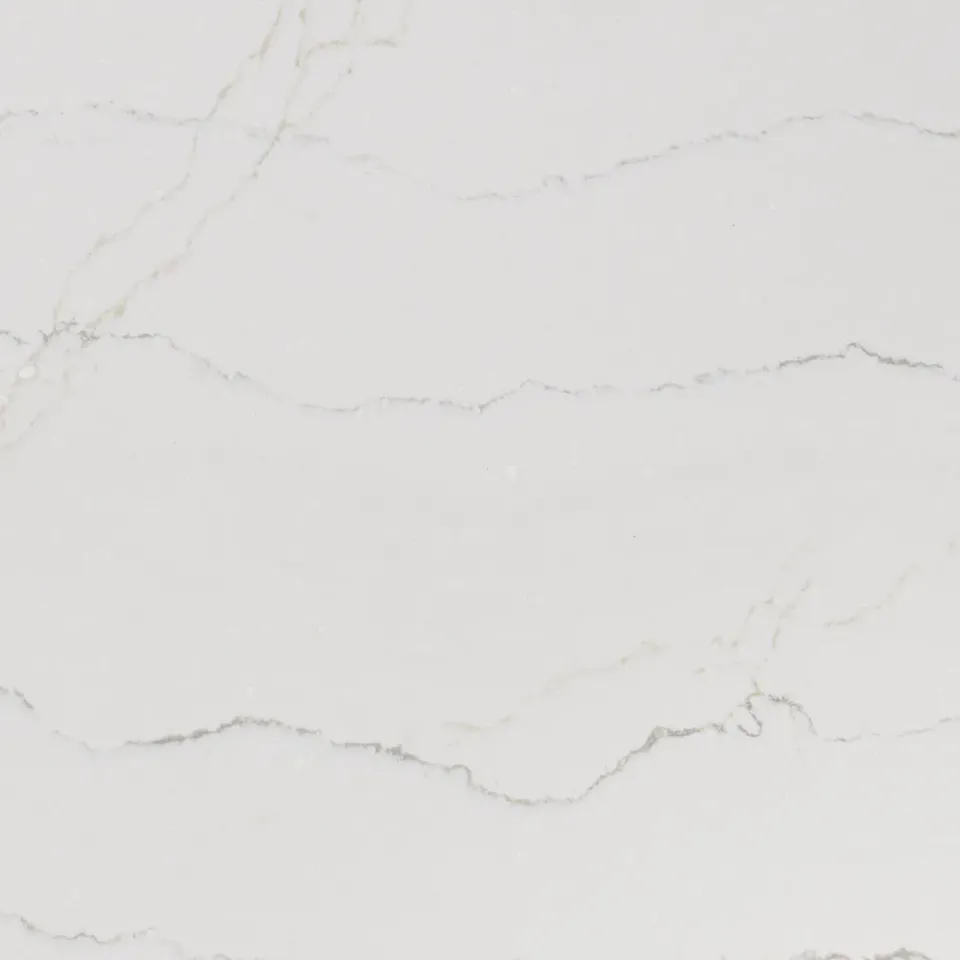
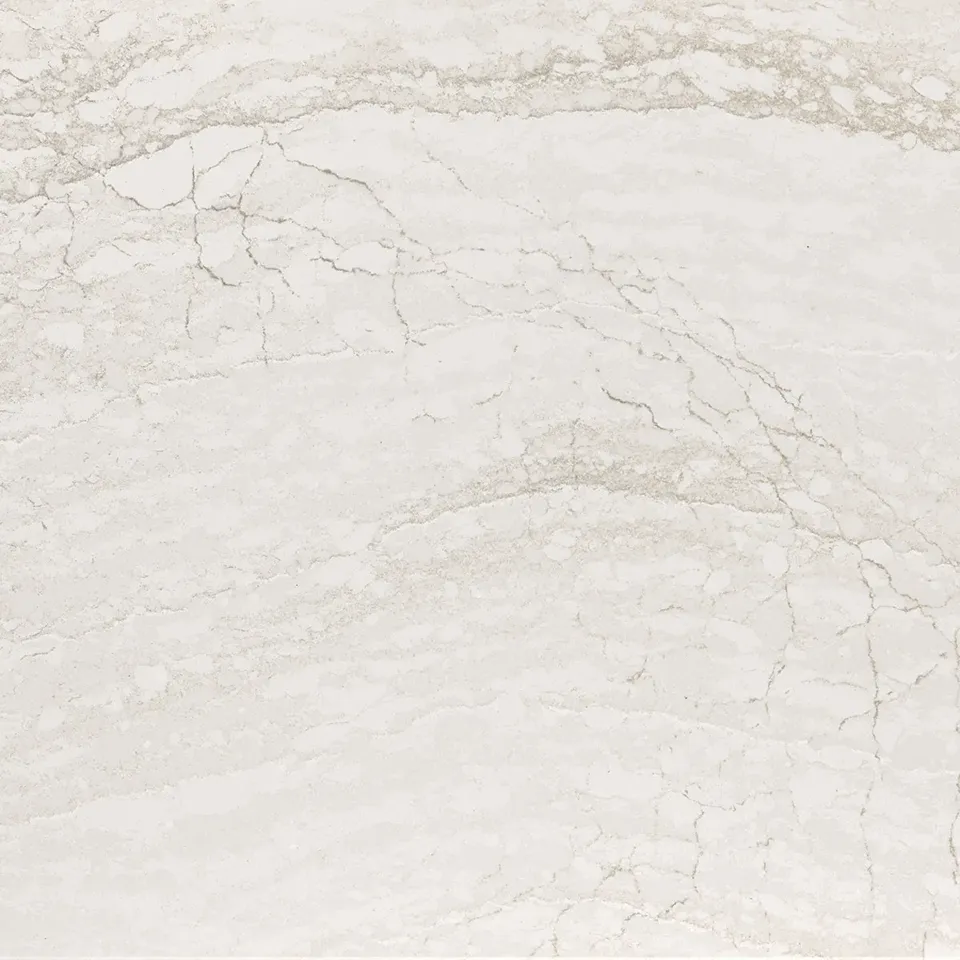
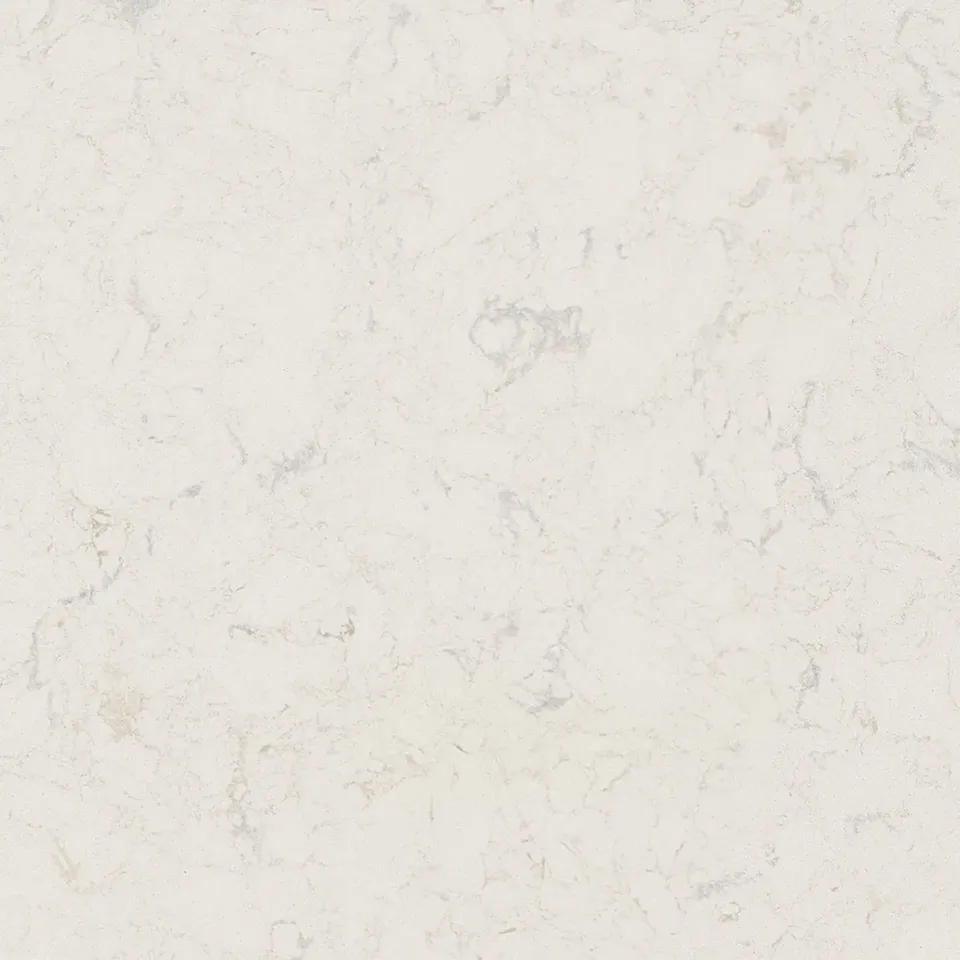
Bright whites and soft veining
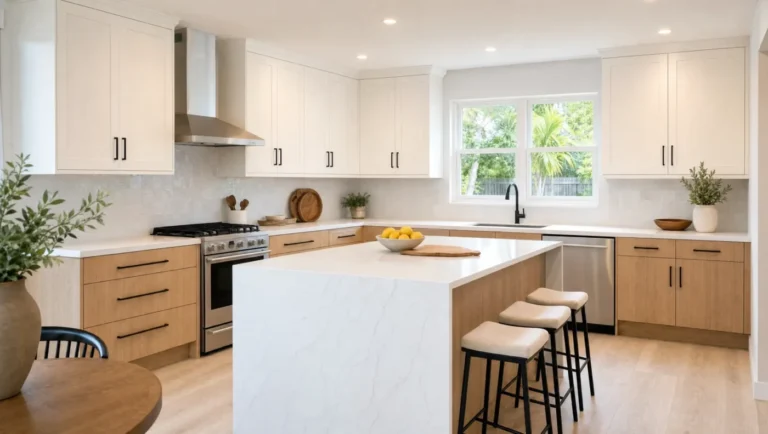
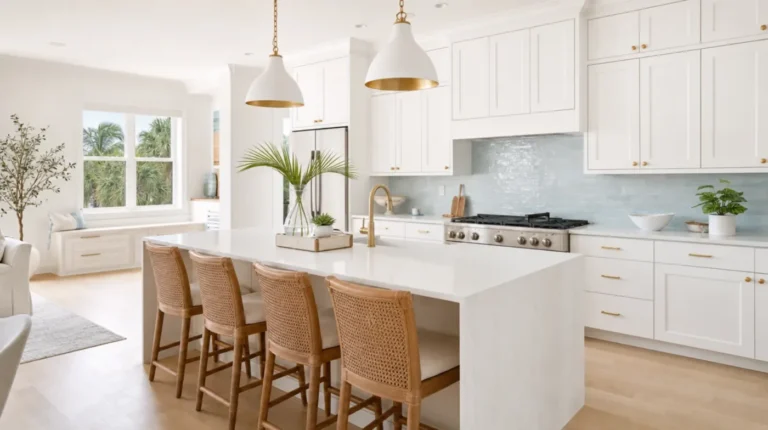
This is the most requested direction across our Tampa Bay and Sarasota markets by a wide margin, because bright whites hold up well under the hard coastal light that comes through Florida windows. Ella reads clean and quiet with fine gray veining. Ironsbridge carries more delicate branching movement. Torquay is softer and creamier with barely any pattern at all.
Warm neutrals, beige, and gold veining
Warm tones have come back strongly, and they pair well with the wood and brass finishes showing up in Florida kitchens right now. Everleigh Warm gives you soft flowing wave movement in cream. Brittanicca Gold Warm layers gold and taupe veining through a warm base. Whitehall is nearly solid, which makes it a good quiet counterpoint to bold cabinetry. Oakleigh runs bolder, with distinct gold-brown veins.
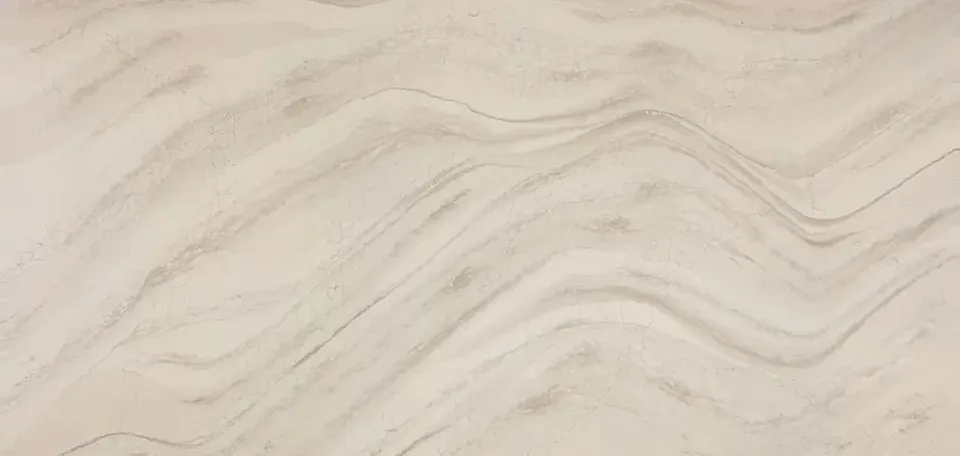
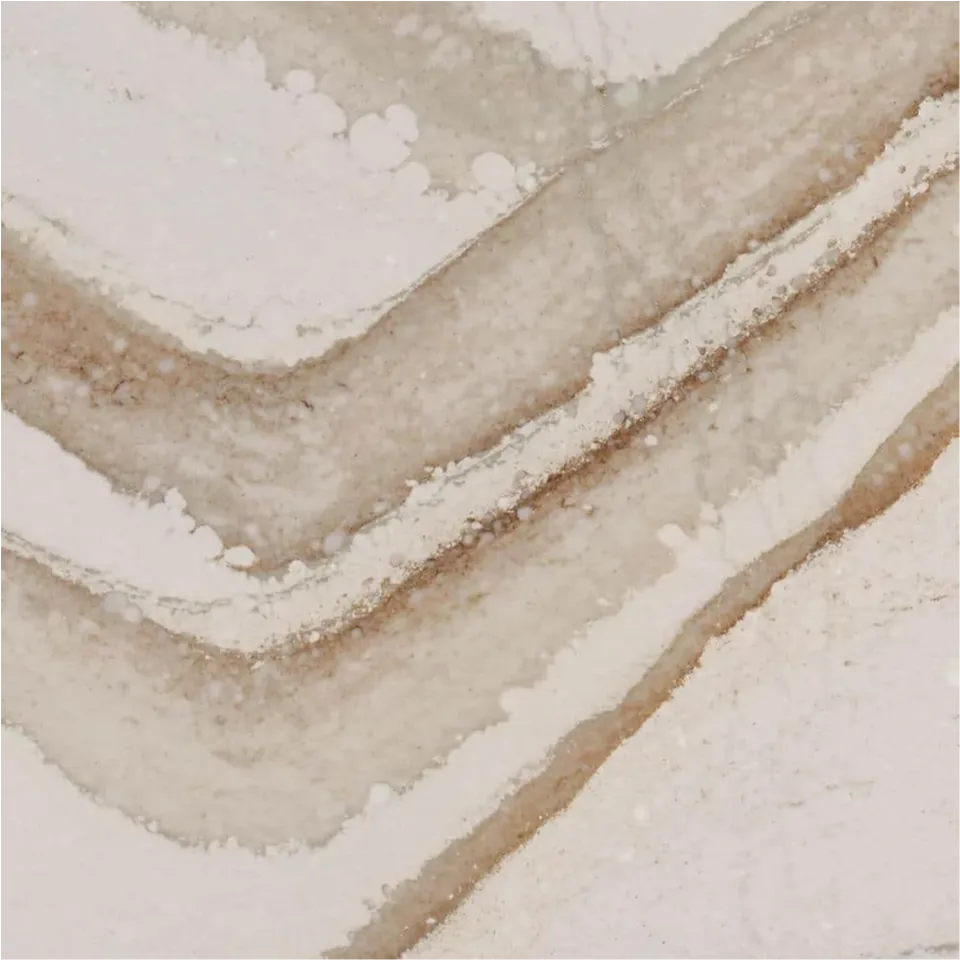

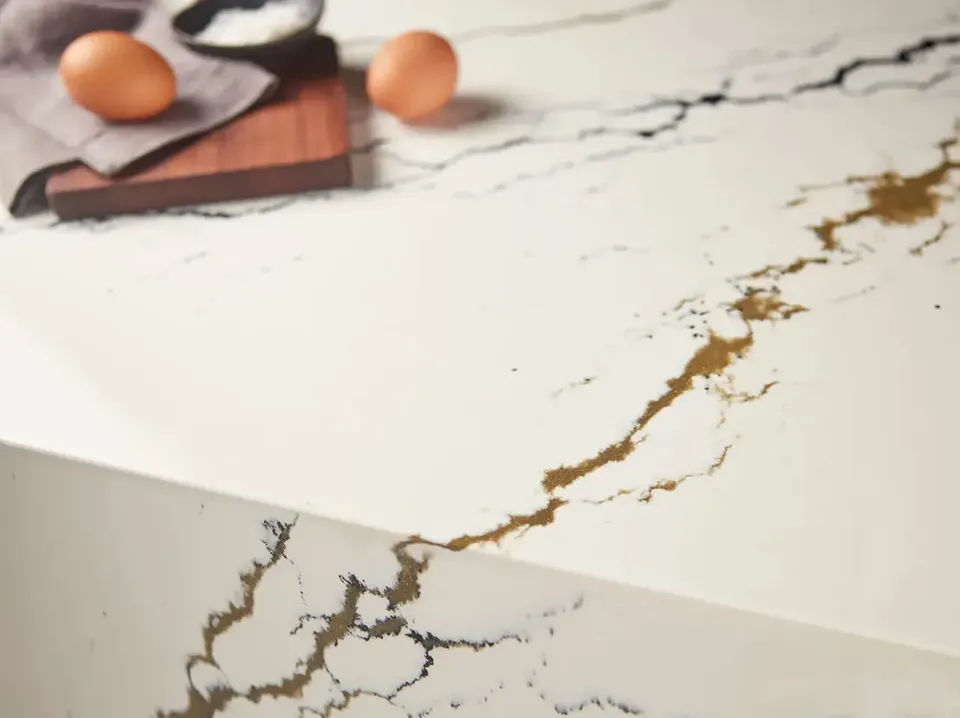
Granular and speckled
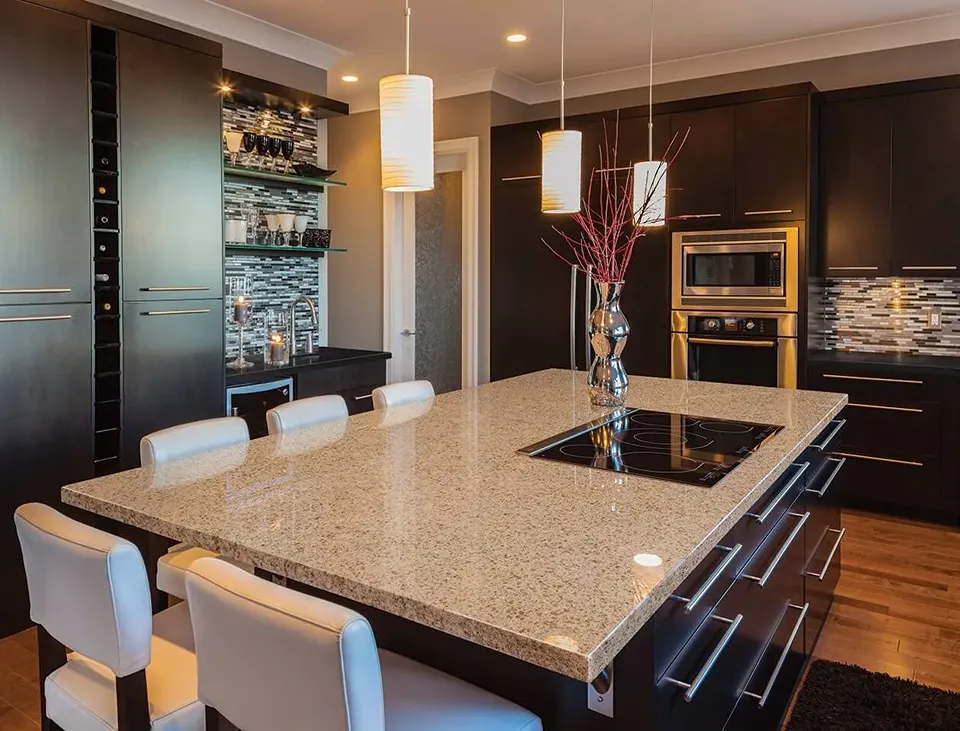
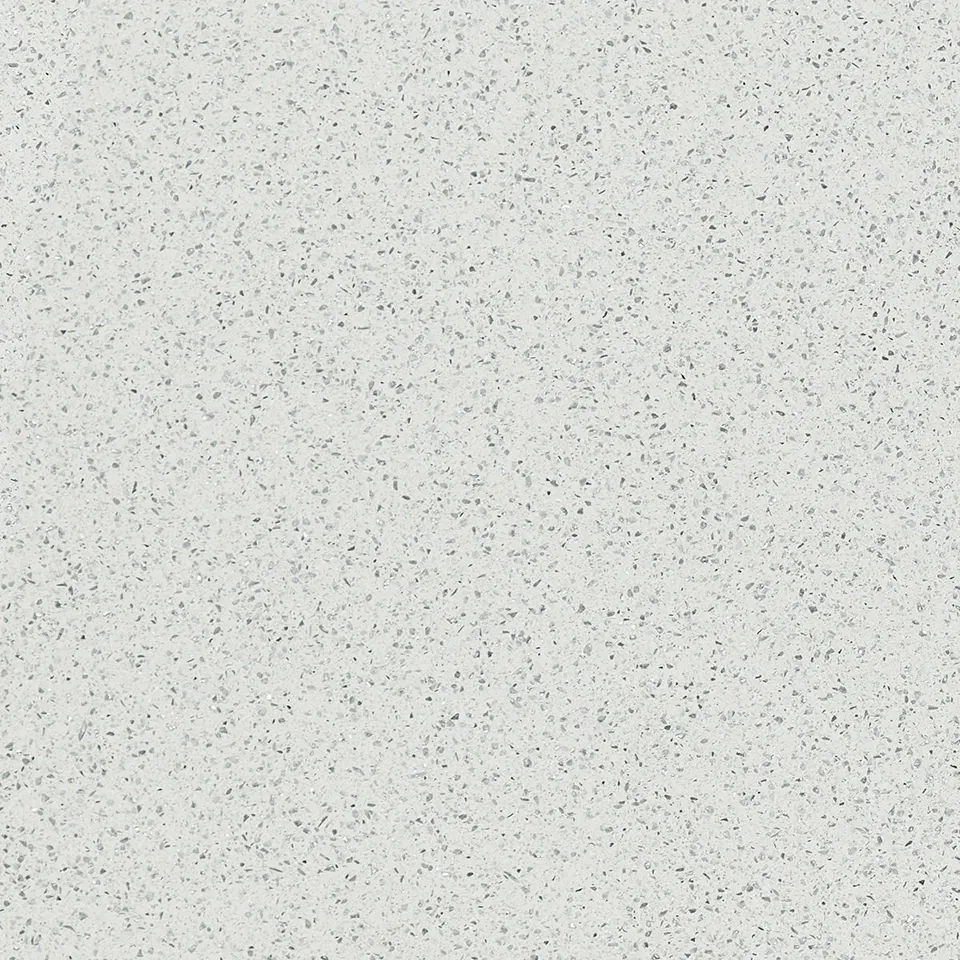
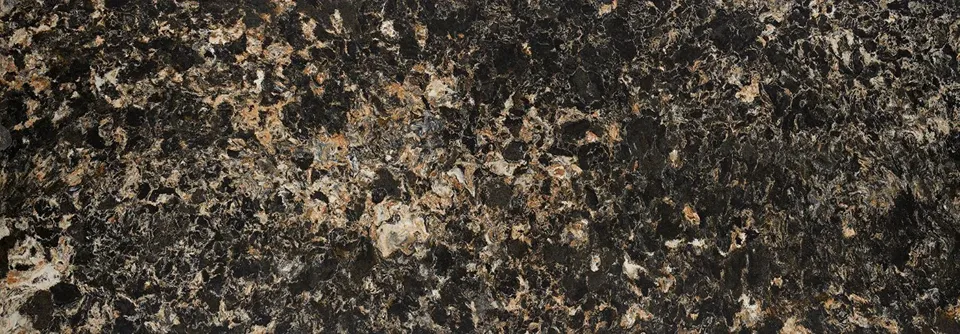
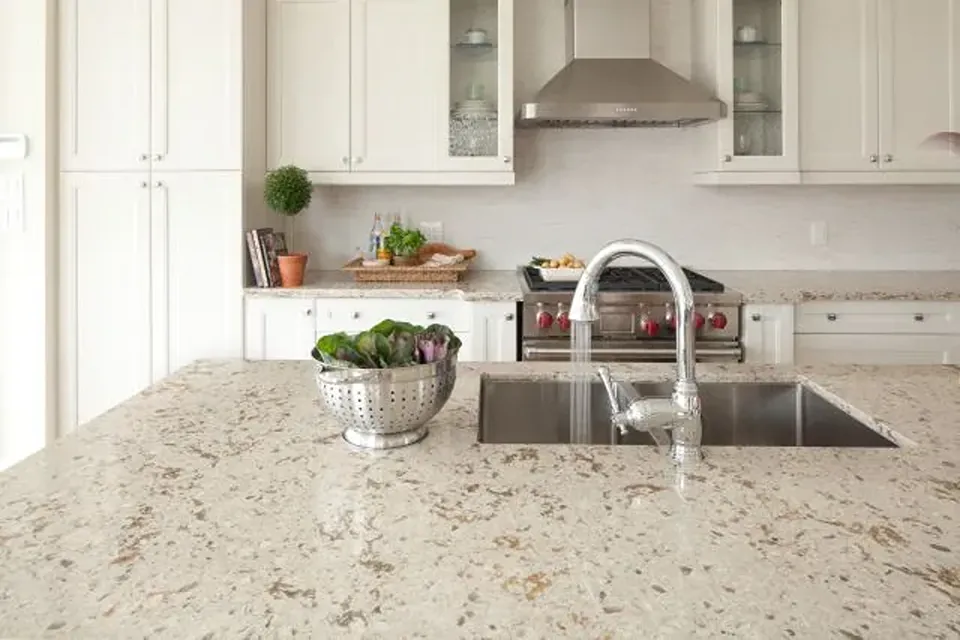
If you are drawn to the look of granite rather than marble, this is your group, and it is the practical choice for a hard-working family kitchen because flecking hides crumbs and daily use far better than a bright veined white. Seagrove carries heavy gray and white mottling. Whitney is a fine even speckle. Hollinsbrook goes dark with gold and tan movement through it. Windermere lands in warm beige.
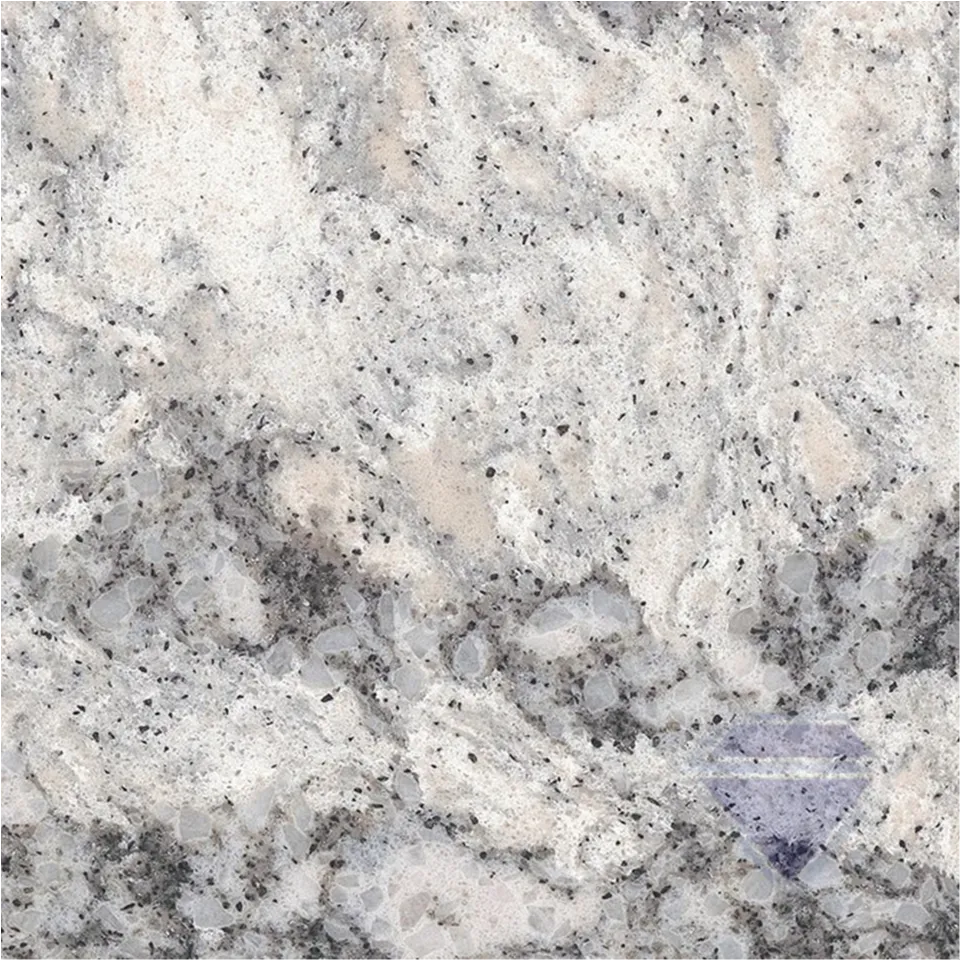
Deep and dramatic
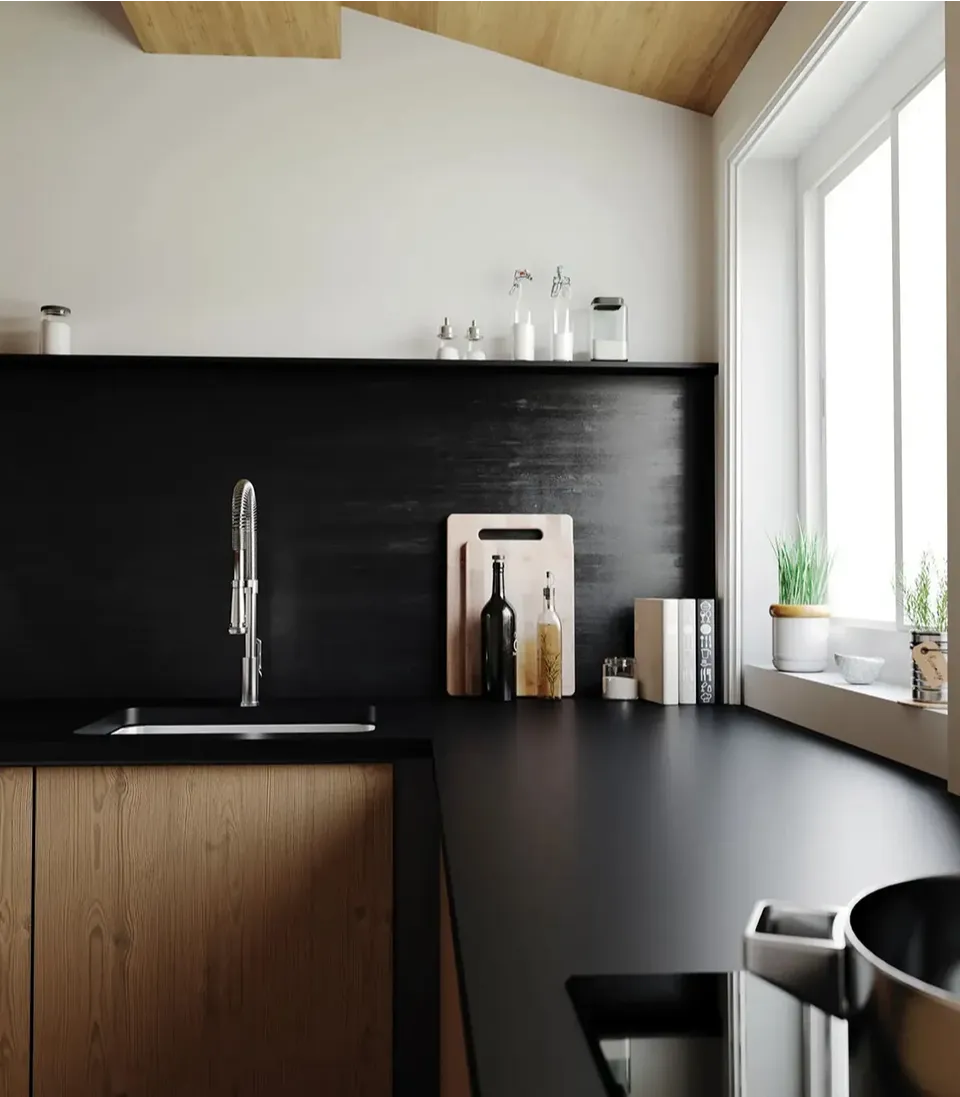
Dark counters are having a moment, particularly on islands and in wet bars where they anchor a bright room. Blackpool Matte is the reference point, and the matte finish is the detail worth understanding. It looks striking, and it also shows fingerprints and water spots more readily than a polished surface, which is a real consideration in a house with kids. See it in person under showroom light before you commit to it.
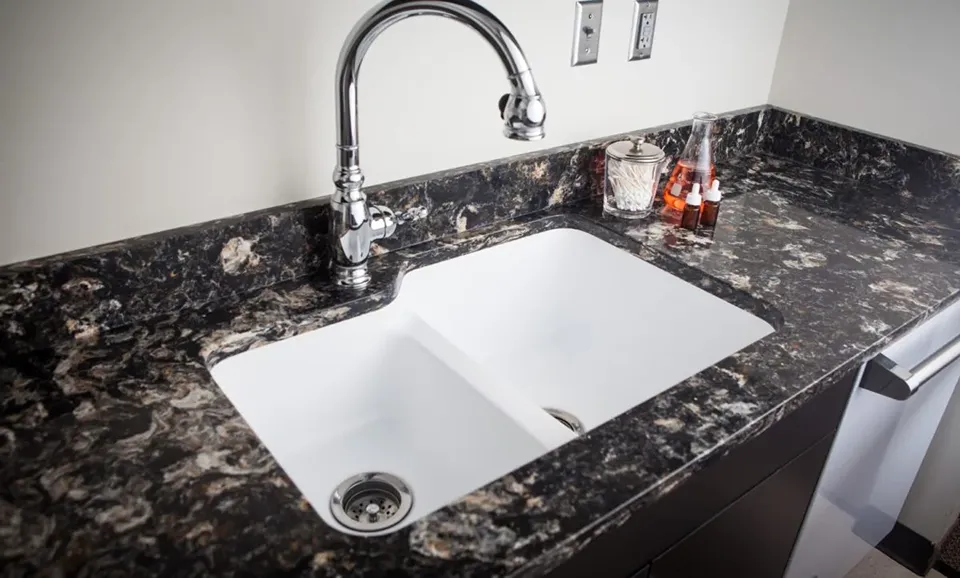
One caution on all of the above. Cambria rotates designs in and out of the palette, and availability varies by market. Treat these images as a guide to the kind of look each design delivers, then confirm current availability for your specific project. Cambria also introduces new designs regularly, most recently four inspired by organic textures and earthy tones: St. Isley, Traymore Bay, Claremont, and Kenwood.
Why a Cambria Sample Chip Will Mislead You
Every image above has the same limitation, and Cambria says so directly in its own documentation. A small sample cut cannot show you how a design behaves across an eight-foot run.
The design sample is a small select cut from a slab; it does not fully exhibit all the design characteristics of the final installed product. We recommend visiting a local gallery or slab showroom to see a full-size slab.
Cambria, product FAQ
This is the single most common source of countertop regret we see. A veining pattern that looks subtle and tasteful on a three-inch chip can read as far busier across a large island, and a design that looks flat on a chip often has movement that only becomes visible at full scale. The fix is simple: look at a full slab before you decide.
Already under contract and choosing your slab? Selections happen in our 4,000 square foot Design Studio, where full countertop slabs stand on a vertical display so you can judge veining and scale against your actual cabinet door and tile before anything is cut. If your project has not started yet, call (813) 379-2116 or request a consultation and we will walk you through how Cambria quartz countertops fit your kitchen and your budget.
Cambria Quartz Durability and Warranty, by the Numbers
Quartz content is one useful specification, and Cambria states that its surfaces contain 93 percent quartz, which is high for the category. It is not the whole story, though. Resin chemistry, pigment quality, the curing process, how evenly the aggregate is distributed, and plain manufacturing quality control all affect how a slab performs in a real kitchen. Two slabs with identical quartz percentages can behave differently.
Where Cambria’s numbers are most useful is hardness and consistency. Cambria reports a consistent 7 out of 10 on the Mohs hardness scale, and consistency is the actual argument for engineered quartz. With natural stone you get whatever that particular slab happens to be. With an engineered surface the performance is the same across every piece and every reorder, which matters when a kitchen needs three slabs to cover the perimeter and the island.
| What Cambria publishes | What this means for your kitchen |
|---|---|
| 93 percent natural quartz, combined with pigments and binders | High quartz content for the category, though resin quality and manufacturing control matter as much as the percentage |
| Mohs 7 hardness, consistent across every slab | Performance does not change slab to slab or between your original order and a later reorder |
| Nonporous, never needs sealing | No sealing at installation and no resealing schedule for the life of the counter, unlike porous natural stone |
| NSF-51 certified for food contact | Independently certified for food preparation surfaces |
| Transferable Full Lifetime Warranty | Coverage stays with the home when the material is fabricated and installed to manufacturer requirements |
| Interior applications only | Countertops, backsplashes, vanities, shower walls, fireplace surrounds, wet bars, and floor tile. Not lanais or outdoor kitchens |
| Not heat-proof | Cambria states the surface may not withstand direct heat transfer from pots, pans, and countertop appliances |
| Not chip-proof | Resists chipping well, but any stone can be damaged by force, with edges and cutouts most vulnerable |
If you are weighing quartz against natural stone rather than comparing quartz brands, that is a different question and it deserves its own treatment. Our guide to quartz versus granite versus quartzite for Tampa kitchens puts all three side by side on hardness, porosity, sealing, etching, and cost. For what Cambria specifically runs in this market, our breakdown of quartz countertop costs in Tampa covers pricing by tier.
Nonporous Performance in Florida Humidity
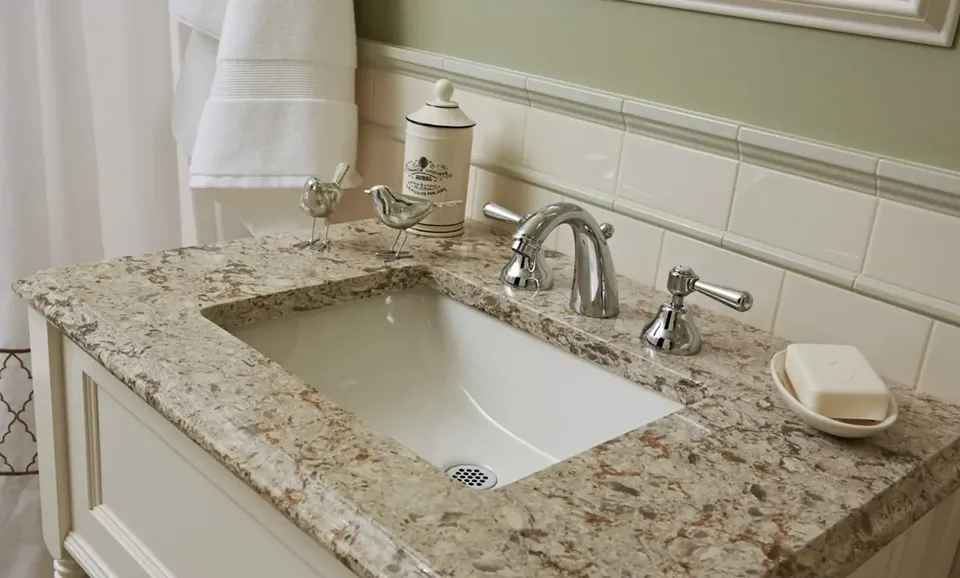
This is where the material separates itself for Gulf Coast homeowners, though not quite for the reason most articles claim. A nonporous slab does not absorb liquid and is easier to keep clean, which means spills do not become stains and the surface is less likely to hold moisture. In bathrooms that see daily shower steam and kitchens that run humid most of the year, that is a meaningful difference from a porous stone whose protection depends on a sealer film staying intact.
Sealing is the real trade-off. Porous natural stone is sealed at installation and needs resealing periodically, and what drives that cycle is use and cleaning practice rather than humidity itself. Florida kitchens tend to see heavy year-round use because entertaining does not stop for winter here, so the practical result is that resealing comes around on the busier end of the range. Cambria removes that maintenance item permanently, because there is nothing to seal.
The nuance we explain in the design studio is that in a Florida remodel the countertop is rarely what fails. What fails is everything around it. Moisture reaches particleboard cabinet boxes and swells them. The silicone joint at the backsplash discolors over time. A sink base that was never properly sealed at the plumbing penetration stays damp. A well-made slab set on a compromised substrate is still a compromised counter, which is why our licensed plumbers handle every sink and fixture reconnection and why we look hard at what sits underneath before the stone goes on.
Low Maintenance, Never Zero Maintenance
Plenty of pages, including Cambria’s own marketing, describe this surface as maintenance free. We would rather set an accurate expectation, because the difference between low maintenance and zero maintenance is where homeowner disappointment lives. Daily care genuinely is simple: warm water, a soft cotton cloth, and mild soap if you want it. No sealing, no polishing, no reconditioning, no specialty cleaners. That is a short list, and it stays short for the life of the counter. But it is not an empty list.
- Heat is the real limit. Cambria states that its surfaces may not withstand direct heat transfer from pots and pans and from appliances including electric frying pans, griddles, air fryers, slow cookers, roaster ovens, and heat lamps, and that sudden temperature change is hardest on the surface near edges. Countertop appliances live on Florida counters year-round, so decide now where the air fryer sits and put a trivet under it.
- Harsh chemicals should not linger. Abrasive and corrosive products can damage the surface. In a coastal household that also means being deliberate about sunscreen, insect repellent, and pool chemicals, which end up on kitchen and bath counters here in a way they do not up north. Wipe them promptly rather than leaving them to sit.
- No stone is chip-proof. Cambria says this plainly, and so do we. The material resists chips well, but any stone can be damaged by force, and edges and cutouts are the vulnerable spots.
- Seams are a craft item, not a defect. Slabs come in finite sizes, so most kitchens need at least one seam. What matters is where it lands and how it is made, which is decided during templating rather than after.
- Caulk and silicone joints still need attention. The slab itself will not stain or discolor. The flexible joint where it meets a backsplash or wall eventually will, and replacing that bead is a normal maintenance item in a humid climate.
- Matte finishes ask a little more. A matte surface shows fingerprints and water spots more than a polished one. Worth knowing before you fall for a dark matte island.
Mistakes People Make Choosing Cambria
After enough selection appointments you start to see the same handful of missteps, and every one of them is avoidable with a question asked at the right time.
- Choosing from a chip and never seeing the slab. The most expensive mistake on this list, and the one Cambria itself warns about. Veining scale is invisible on a three-inch sample.
- Falling for an edge profile before checking thickness. Thickness limits which profiles are available, and Cambria notes that some profiles are not offered in all markets. Ask what your fabricator actually runs before you specify one.
- Assuming a quartz slab can go on the lanai. Engineered quartz is an interior product. This is the single most common error we see repeated on dealer websites, and acting on it can put warranty coverage at risk.
- Picking a bright veined white for a heavy-use family island. It photographs beautifully and shows every crumb. Granular designs are the practical answer for an island that takes homework, groceries, and dinner prep.
- Choosing a matte finish without seeing it under real light. Matte hides less than people expect. Fingerprints and water spots read more clearly than on a polished surface.
- Locking the sink after templating. The cutout is fabricated to your specific sink. Changing the sink afterward is not a small revision.
- Assuming a jumbo slab solves a seam problem without checking access. A jumbo slab eliminates the island seam only if it can physically reach the space, which is a real constraint in Gulf-front high-rises.
- Treating “maintenance free” as literal. No sealing is true. No thought at all is not. Trivets and prompt cleanup still apply.
The Florida Detail Almost Every National Article Gets Wrong
Engineered quartz is an interior product. Cambria’s own list of applications covers countertops, backsplashes, vanities, shower walls, fireplace surrounds, wet bars, and floor tile, and every one of those is inside the house. We see outdoor use claimed incorrectly on dealer pages often enough that it deserves a direct statement, because it matters a great deal in a market where the lanai and the summer kitchen are part of how people actually live.
If your project includes an outdoor kitchen, a pool bar, or a pass-through counter that takes hard afternoon sun, plan a different material for that run and keep the quartz inside. Porcelain and natural stone are the usual answers, and which one depends on the exposure. If someone tells you an engineered quartz slab is fine outdoors, ask them to confirm in writing that the manufacturer’s warranty covers exterior installation. That one question settles it.
Cambria Slab Size, Thickness, and Edge Profiles
Cambria produces two slab formats, a standard slab at 122 by 55.5 inches and a jumbo slab at 132 by 65.5 inches, in 1, 2, and 3 centimeter thicknesses. Countertops are most often 2 or 3 centimeter, and Cambria confirms there is no performance difference between the two, so it is an aesthetic call. The 1 centimeter format exists for vertical work such as backsplashes, shower walls, and fireplace surrounds, which is how you get a quartz backsplash that continues the counter veining up the wall.
Slab format quietly drives seam planning, and in coastal condo work it drives logistics too. A jumbo slab lets a long island run without a seam, but it has to physically reach the space, and a Gulf-front high-rise with a service elevator and an HOA delivery window is a different problem than a single-story home inland. Cambria’s own guidance is to confirm the maximum piece size that can be produced from a slab with your fabricator, which is exactly right, and if you are planning a condo remodel it is one of the first things we check.
Edge profile is purely aesthetic and does not affect performance, though thickness limits which profiles are available. Cambria uses proprietary names alongside the familiar industry terms, which trips homeowners up in the showroom, so here is the translation for the profiles you are most likely to be offered.
| Cambria name | Industry term | Thicknesses |
|---|---|---|
| Seacliff | Eased edge, the most common choice | 1, 2, 3 cm |
| Ridgeline | Straight edge | 2, 3 cm |
| Piedmont | Half bullnose, also called demi bullnose | 2, 3 cm |
| Volcanic | Full bullnose, softest for young families | 2, 3 cm |
| Treeline | Bevel | 3 cm |
| Basin | Short ogee | 3 cm |
| Rimrock and Idris | Mitered, builds a thicker apparent edge | 1, 2, 3 cm |
| Moraine | Chiseled or rock face | 2, 3, 4 cm |
That last point is worth repeating, because it is a common source of showroom frustration. A profile you find online may not be available through your local fabricator, and the more elaborate profiles generally require a built-up or mitered edge rather than a single slab thickness. The 4 and 6 centimeter dimensions that appear in Cambria’s edge specifications are built-up constructions, not slabs you can order at that thickness.
How Cambria Fabrication and Installation Actually Run
Countertops are the one element measured off your finished kitchen rather than off the drawings, which is why they arrive late in a kitchen remodeling project and why the sequence is not negotiable. This matters more along the Gulf Coast than people expect, because much of the housing stock here sits on slab and older cabinet runs are rarely as level as a plan assumes.
- Selection. You choose design, thickness, and edge profile with a designer, looking at full slabs rather than chips.
- Templating. Once cabinets are set, shimmed, and level, your installed boxes are digitally templated so the stone matches your kitchen and not the drawing.
- Fabrication. The slab is cut at the fabrication shop, sink and cooktop openings are made, the edge is machined, and seam placement is planned to fall where it shows least. We coordinate this stage with the fabricator and review seam layout before anything is cut. It typically runs one to two weeks.
- Installation. The stone is set and seams are color-matched and joined, usually in a single day.
- Reconnection and walkthrough. Our licensed plumbers reconnect the sink and fixtures, then your project manager reviews the finished work with you.
The reason we push hard on templating discipline is that everything visible about a countertop installation, including whether the seam disappears and whether the backsplash line stays tight, is decided at that stage. CMK has completed more than 7,000 remodeling projects across the Tampa Bay and Sarasota markets since 2004, with an average rating of roughly 4.8 stars across our customer reviews, and countertop templating is one of the specific places where that repetition shows up in the finished result.
CMK Construction is a state-certified general contractor and state-certified plumbing contractor, with a registered electrical contractor and licensed plumbers on staff rather than rotating subcontractors. Stone fabrication is handled by fabrication partners who work primarily with us, and our project manager coordinates templating, seam layout, and installation scheduling so the countertop stage does not become the gap in the schedule where a project stalls.
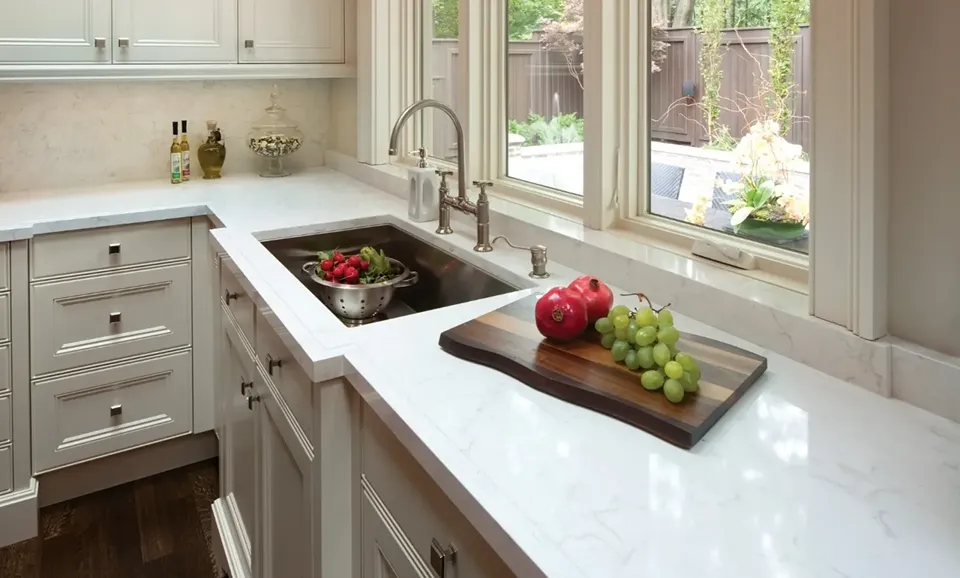
A recent Clearwater kitchen makes the point about slab format. The homeowners wanted a ten-foot island with no seam, which put the project past the standard slab length and into jumbo territory. Because the design studio caught it during selection rather than at templating, the jumbo slab was specified up front, the delivery route was confirmed, and the island came in as one continuous piece. Had that conversation happened two weeks later, the answer would have been a seam.
The pattern we see in the design studio is worth naming, because it is consistent. Homeowners who have been circling a countertop decision for weeks tend to settle it quickly once the slab, the cabinet door, and the tile are physically side by side under the same light. The indecision usually is not indecision at all. It is the difficulty of holding three finishes in your head at once from separate photographs.
Are Cambria Quartz Countertops Worth It for Florida Homes?
Yes, for the right homeowner. Cambria earns its cost in a Florida kitchen when low maintenance, stain resistance, consistent appearance across a large space, and a transferable lifetime warranty matter more to you than the one-of-a-kind character of natural stone or maximum heat tolerance. It is the surface we recommend most often for busy family kitchens and humid primary baths.
It is the wrong choice if you want genuine one-of-a-kind natural movement, if the counter needs to live outdoors, or if you intend to set hot pans directly on the surface. Where it lands against natural stone on cost and character is a longer conversation, and our kitchen countertops guide is the right starting point for that comparison.

For related planning, our guide to the best bathroom materials for Florida humidity covers vanity tops and wet areas in more depth. If cabinetry decisions are still open, our kitchen cabinet options pair directly with the designs above, and you can see finished work in our project gallery.
Cambria Quartz Countertops FAQ
Do Cambria quartz countertops need to be sealed in Florida’s humidity?
No. Cambria is nonporous, so it never needs sealing, polishing, or reconditioning regardless of climate. That is the practical advantage over porous natural stone, which is sealed at installation and resealed periodically. What drives that resealing cycle is use and cleaning practice more than humidity, and Florida kitchens tend to see heavy year-round use.
How is Cambria’s design palette organized?
Cambria’s website sorts designs by color, across white, gray, black, beige, gold, brown, blue, green, and red, and by visual feature, across solid, veined, wave, granular, and waterstone. Older collection names such as the Marble, Quarry, and Coastal Collections are still used by fabricators and distributors, so you may hear both frameworks describing the same slab. Availability varies by market, so confirm any specific design locally.
What is the Cambria quartz warranty?
Cambria backs its surfaces with a transferable Full Lifetime Warranty, which means coverage stays with the home rather than with the original buyer. Coverage applies when the material is fabricated and installed according to manufacturer requirements, which is one reason the fabricator matters as much as the brand. Confirm current terms with Cambria or your fabricator before you sign, since manufacturers do revise them.
Can I use Cambria on an outdoor kitchen or lanai counter?
No. Engineered quartz is an interior product, and every application Cambria lists is inside the house. For an outdoor kitchen, pool bar, or heavily sun-exposed pass-through, plan on porcelain or a suitable natural stone instead. Some dealer pages get this wrong, so if anyone tells you otherwise, ask them to confirm in writing that the manufacturer’s warranty covers exterior installation.
Is Cambria really maintenance free?
It is low maintenance, not zero maintenance. There is no sealing, polishing, or special cleaner required, and warm water with mild soap handles daily cleaning. What it does require is a trivet under anything hot, including air fryers and slow cookers, prompt cleanup of harsh or corrosive products, and normal attention to the caulk joints where the counter meets a wall.
What is the Cambria slab size?
Cambria produces a standard slab at 122 by 55.5 inches and a jumbo slab at 132 by 65.5 inches, in 1, 2, and 3 centimeter thicknesses. The jumbo format is what allows a long island to run without a seam, though it has to physically reach the space, which is a real constraint in high-rise condo work. Cambria recommends confirming the maximum producible piece size with your fabricator.
Will I be able to see the seams in my Cambria countertop?
Most kitchens need at least one seam, because slabs come in finite sizes and a long island or perimeter run exceeds them. What determines whether you notice it is placement and craftsmanship. Seam location is planned during templating so it falls in the least conspicuous spot, veining is matched across the joint where the design allows, and the epoxy is color-matched. On a well-planned installation you generally have to look for it.
Why does a Cambria sample chip look different from the finished countertop?
Because it is a small select cut from a much larger slab, and Cambria says directly that a sample does not fully exhibit all the design characteristics of the final installed product. Veining that looks subtle on a three-inch chip can read much busier across an island, and designs that look flat on a chip often have movement visible only at full scale. Cambria recommends viewing a full-size slab, which is what our vertical slab display is for.
What thickness should I choose for a kitchen island?
Most kitchen countertops are 2 or 3 centimeter, and Cambria confirms there is no performance difference between them, so it is an aesthetic and edge-profile decision. Three centimeter reads more substantial on its own, while a mitered edge on a thinner slab can create the appearance of a much heavier top. If you want a waterfall island, discuss the profile early, because it affects both fabrication and how much slab your project needs.
What kind of sink can I use with a Cambria countertop?
Cambria works with any undermount or drop-in sink, including stainless steel, cast iron, porcelain, solid surface, and composite, and farmhouse sinks can be used as well. The sink decision should be made before templating, because the cutout is fabricated to your specific sink and a change afterward is not a small revision.
See Cambria Quartz Countertops Before You Choose
Cambria’s own recommendation is to view a full-size slab before deciding, and that is what the selection appointment in our Design Studio is built around. Rather than handing you a sample chip and a catalog, we put the slab, the cabinet door, the tile, and the fixture finish in front of you at the same time, under the same light, so the decision gets made once and templating can proceed without a change order.
Call (813) 379-2116 or schedule a consultation to walk the slab display with a designer.