When planning a bathroom remodel in Tampa, choosing the right surface material involves more than just picking a beautiful color or pattern. The debate between porcelain vs ceramic tile often comes down to how well each material handles high moisture, daily wear, and the unique conditions of Florida homes. While both are made from clay and fired in a kiln, their technical differences determine where they perform best in your bathroom and how long they will last under real conditions.
Quick Answer
Porcelain tile is denser, harder, and absorbs less than 0.5 percent of water, making it the superior choice for a porcelain shower floor, main bathroom floors, and wet areas in Florida homes. Ceramic bathroom tile is slightly softer and more porous, making it an excellent, cost-effective option for bathroom walls, vanity backsplashes, and decorative niches where standing water is not a concern. Most successful bathroom remodels use both materials strategically in different areas of the same room.
At a Glance: Porcelain vs Ceramic Tile
If you are deciding between these two materials, here is a quick visual comparison of how they stack up for a bathroom remodel in Tampa.
| Feature | Porcelain Tile | Ceramic Tile |
|---|---|---|
| Water Resistance | ⭐⭐⭐⭐⭐ | ⭐⭐⭐ |
| Durability | ⭐⭐⭐⭐⭐ | ⭐⭐⭐⭐ |
| Shower Floor Safe | ✔ Yes | ✘ No |
| Bathroom Wall Safe | ✔ Yes | ✔ Yes |
| Material Cost | $$$ | $$ |
Understanding the Manufacturing Differences
To understand why porcelain vs ceramic tile behave differently in a wet bathroom, it helps to look at how each is made. Porcelain is technically a specialized type of ceramic, but the manufacturing process creates meaningful differences in performance.
Ceramic tile is crafted from a mixture of natural clay and sand, then fired at temperatures between 1,800 and 2,000 degrees Fahrenheit. This creates a relatively soft body that is easy to cut and shape. The surface is then finished with a protective glaze that provides its color, pattern, and a basic moisture barrier on the face of the tile.
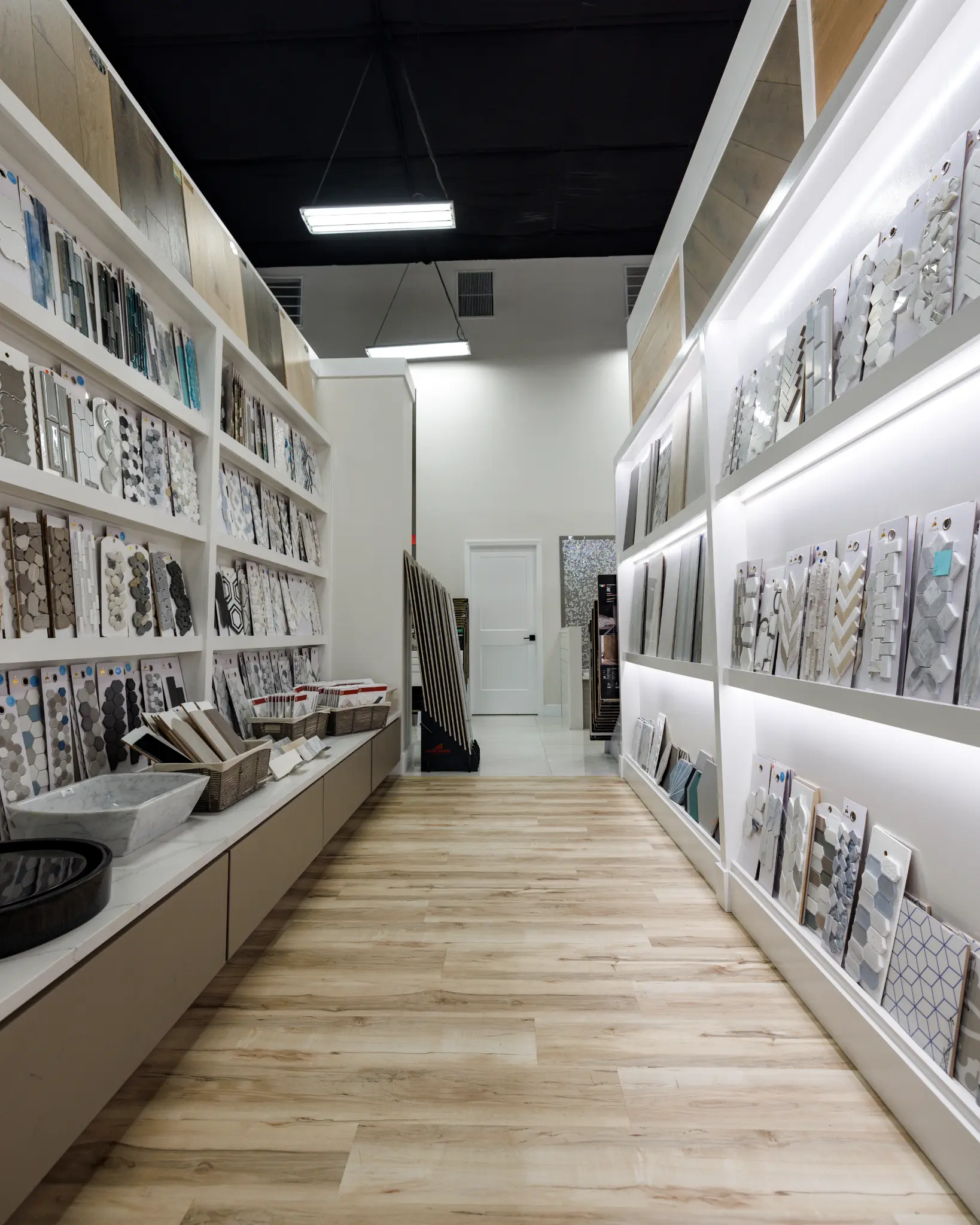
Porcelain tile is made from a much finer, more refined clay mixture and fired at extreme temperatures, often between 2,200 and 2,500 degrees Fahrenheit. This intense heat vitrifies the clay, creating a highly dense, heavy, and hard material with almost no internal air pockets. Porcelain can be glazed like ceramic, or it can be manufactured as “through-body” porcelain, meaning the color and pattern extend entirely through the tile. With through-body porcelain, any chips or scratches that occur over time are far less visible because the surface color matches the interior.
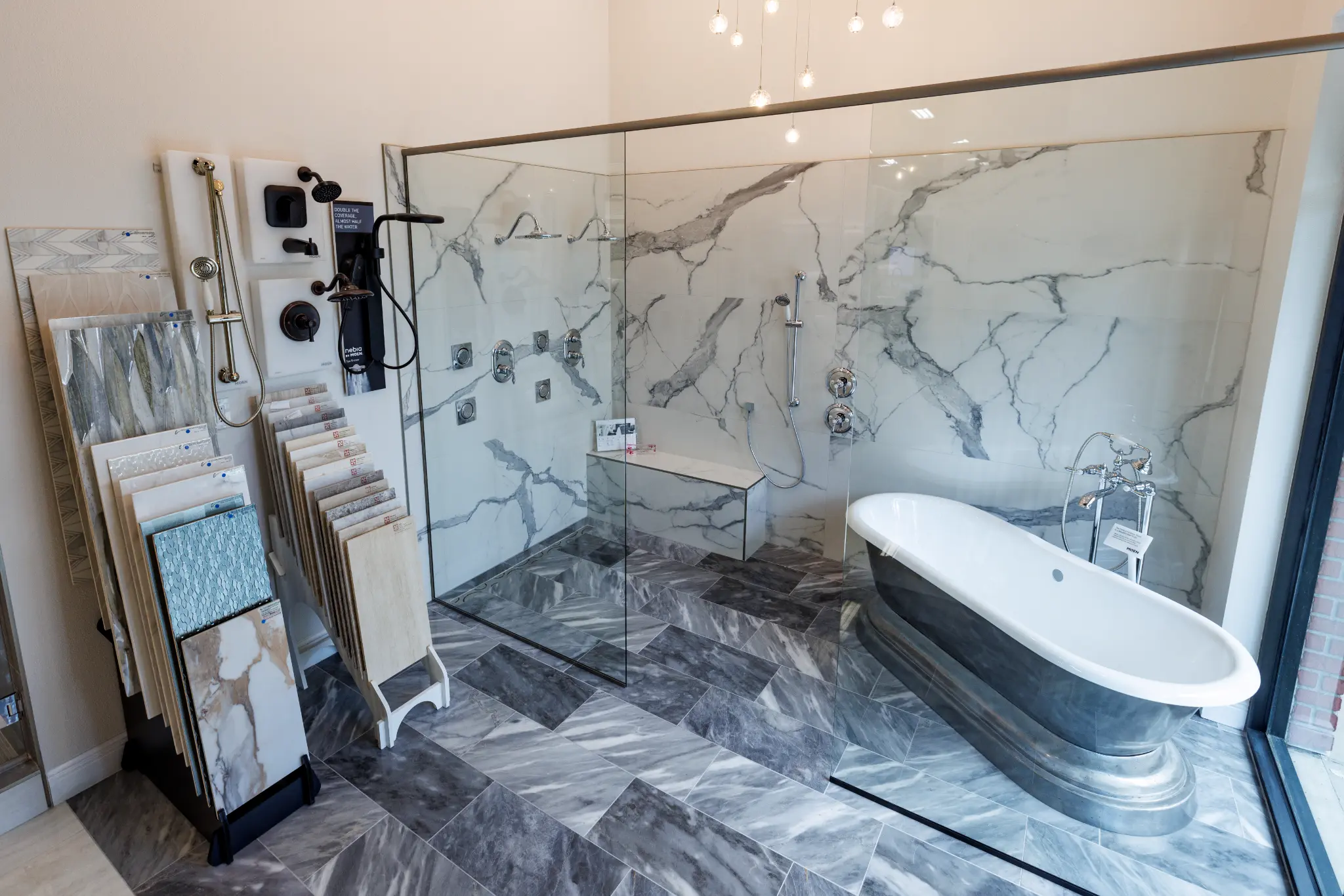
Water Absorption: Why It Matters in Florida
In a bathroom environment, a tile’s ability to resist water is its most critical performance factor. The industry standard for measuring this is the ASTM C373 water absorption test, which determines how much moisture a tile body can absorb under controlled conditions.
To be officially classified as porcelain by the Tile Council of North America, a tile must have a water absorption rate of less than 0.5 percent. This makes it virtually impervious to moisture. If water sits on a porcelain shower floor, it will not soak through the tile body, even over years of daily use.
Standard ceramic bathroom tiles typically have a water absorption rate between 3 and 7 percent. While the top glaze repels water effectively, the clay body underneath can absorb moisture if it finds a way through the grout lines, unglazed edges, or any small chip in the glaze. Over time in a humid Florida bathroom, this absorbed moisture can weaken the bond between the tile and the substrate, potentially leading to loose tiles or conditions that encourage mold growth behind the wall.
Durability and Wear: PEI Ratings Explained
The Porcelain Enamel Institute (PEI) rating system measures how well a glazed tile resists abrasion and surface wear over time. Understanding these ratings helps ensure you select a material that will hold up to the specific demands of each area in your bathroom.
PEI 0 and PEI 1 tiles are suitable for wall applications only, with no foot traffic. PEI 2 handles light traffic and is acceptable for residential bathroom floors where only bare feet or soft-soled shoes are common. PEI 3 is the standard recommendation for residential bathroom floors and countertops, handling light to moderate traffic. PEI 4 and PEI 5 tiles handle moderate to heavy traffic and are used in busy homes, entryways, and commercial spaces.
Most porcelain tiles achieve a PEI rating of 3, 4, or 5, making them resilient against scratches, scuffs, and daily wear. Ceramic tiles often fall into the PEI 1 to 3 range. For any porcelain bathroom floor, you should look for a PEI rating of at least 3. For a porcelain shower tile floor specifically, PEI 2 or higher is acceptable because the traffic is lighter, but the tile must also meet slip resistance requirements.
Safety First: DCOF and Slip Resistance
A beautiful bathroom floor is only successful if it is safe to walk on when wet. The Dynamic Coefficient of Friction (DCOF) measures a tile’s slip resistance under wet conditions. The ANSI A326.3 standard requires a minimum DCOF of 0.42 for level interior floors that will be walked on when wet.
Because porcelain is the standard choice for shower floors, manufacturers produce matte or textured porcelain tiles specifically designed to exceed the 0.42 DCOF requirement. Smaller mosaic tiles also tend to perform well on shower floors because the additional grout lines provide natural traction. High-gloss ceramic or polished porcelain tiles, while stunning on walls, can become dangerously slick on a bathroom floor and should be avoided in wet zones.
When selecting tile for a walk-in shower floor, always confirm the DCOF rating with the manufacturer or your designer. CMK’s accredited designers help homeowners navigate these specifications during the selection process in our showroom, where you can see and feel the actual texture of each option.
Want a real number? CMK can inspect your bathroom layout, plumbing, electrical, permit requirements, and tile selections, then give you a written estimate based on your actual home. Call (813) 379-2116 or request a consultation.
The Rise of Large-Format Porcelain Tile
If you look at almost any luxury bathroom built today, you will notice a major trend: large-format porcelain tile. Defined as any tile with at least one edge longer than 15 inches (such as 12×24 or 24×48 sizes), large-format porcelain is exploding in popularity for several reasons.
First, larger tiles mean fewer grout lines. This creates a seamless, modern aesthetic that makes small bathrooms feel larger and more open. Fewer grout lines also mean less scrubbing and maintenance over time. Because porcelain is so dense and strong, manufacturers can produce these massive tiles without them becoming too brittle to install. Ceramic is generally too soft to be produced in these extreme sizes without risking breakage during installation or daily use.
What Makes Florida Bathrooms Different
Choosing the best tile for a Florida bathroom requires understanding how our local climate and home construction methods affect both the tile and the installation process.
- Concrete slab foundations: Most Florida homes are built on concrete slabs rather than basements or crawl spaces. Moisture from the ground can slowly migrate up through the concrete via hydrostatic pressure, especially during our rainy season. Porcelain’s impervious nature makes it highly resistant to this rising moisture, protecting your floor from below.
- High humidity and thinset curing: Florida’s year-round humidity can slow down the curing process of thinset mortars and grouts. Professional porcelain tile installation requires managing ventilation and timing to ensure the tile bonds correctly and grout cures without developing weak spots.
- Slab flatness and large-format tile: Concrete slabs are rarely perfectly flat and can settle over time. Because porcelain is dense and rigid, the concrete subfloor must be prepped and leveled properly. Large-format porcelain tiles require the slab to be flat within one-quarter inch over ten feet. Without proper preparation, tiles can crack or develop lippage.
The Real Secret: Schluter Waterproofing Behind the Tile
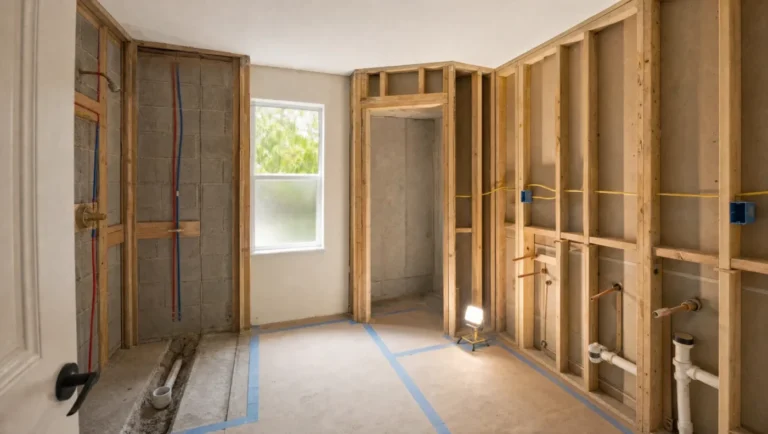
While the porcelain vs ceramic tile debate focuses on the visible surface, the most critical part of any Florida bathroom remodel happens behind the walls and under the floor. Neither porcelain nor ceramic tile is completely waterproof on its own, because grout lines will always allow some moisture to pass through over time.
With over 7,000 completed projects across Tampa Bay, CMK Construction uses the Schluter waterproofing system behind every bathroom project to prevent moisture failures. Schluter KERDI is a pliable, sheet-applied waterproofing membrane that creates a continuous barrier over the shower walls and floor substrate. When installed to specification, it ensures that any moisture that gets past the tile and grout stops at the membrane and drains away safely, rather than soaking into your home’s framing, causing mold and mildew concerns or costly structural repairs.
This is why the tile type alone does not determine whether your shower will last. A properly waterproofed shower with ceramic wall tile will outperform a poorly waterproofed shower with expensive porcelain every time. The system matters more than any single material.
Where to Use Each Tile in Your Bathroom
The most effective approach is to use both materials strategically in different areas of the same room, matching each tile’s strengths to the demands of each surface.
- Shower floors. Always use porcelain. Its low water absorption and availability in textured, high-DCOF finishes make it the safest and most durable choice for standing water.
- Main bathroom floors. Porcelain is highly recommended. It handles dropped items, heavy foot traffic, and moisture from the shower much better than ceramic. Choose a matte or textured finish for slip resistance.
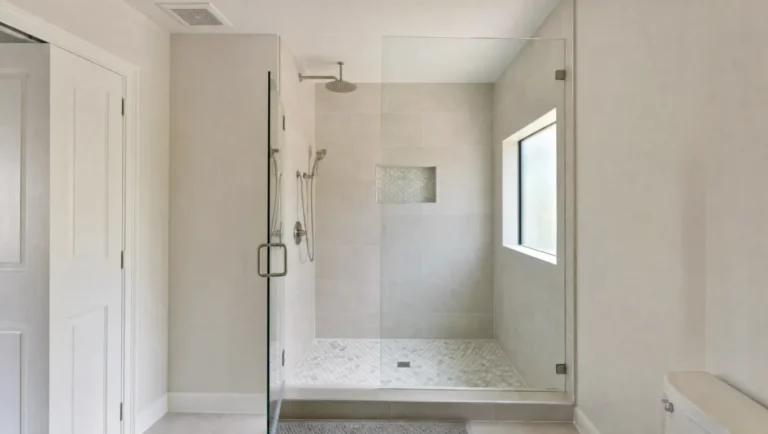
- Shower walls. Both porcelain and ceramic work well here. Since walls do not hold standing water or bear weight, a glazed porcelain wall tile or ceramic tile is a cost-effective and beautiful option, provided the Schluter waterproofing behind it is installed correctly.
- Vanity backsplashes and niches. Ceramic is perfect for these applications. It is easier to cut around outlets and plumbing, and it comes in a massive variety of decorative glazes, shapes, and patterns that add personality to the room.
Real CMK Project Examples
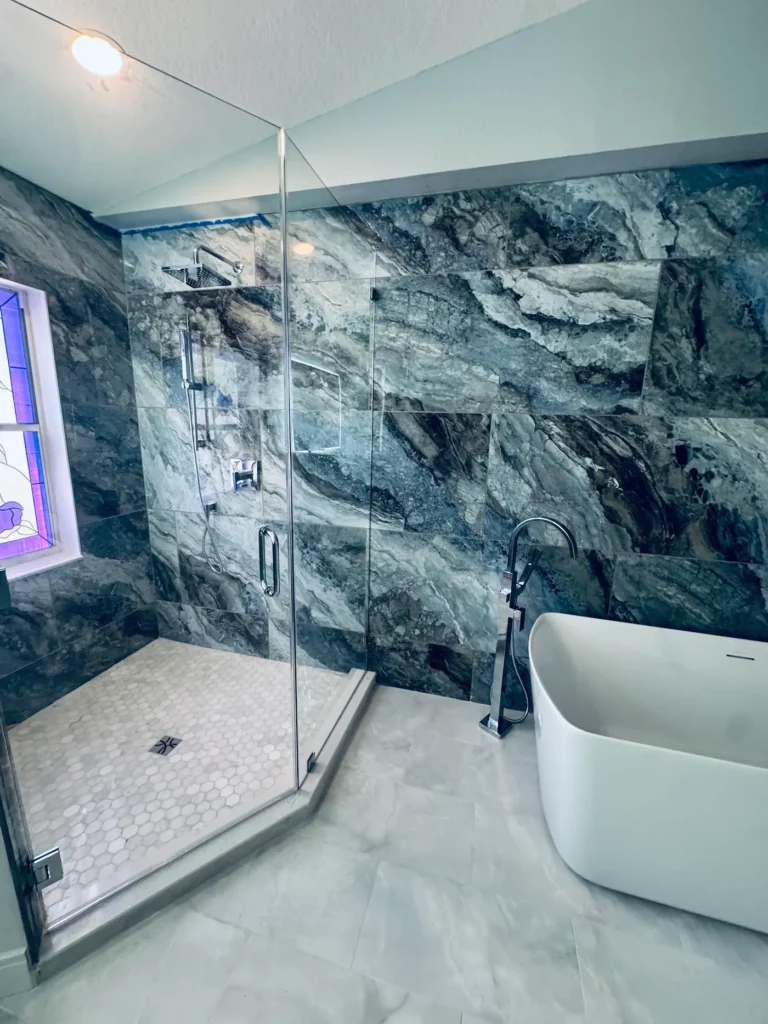
We do not just talk about these materials—we install them every day. In a recent Clearwater remodel, we used 24×48 large-format porcelain on the shower walls to minimize grout lines, paired with a textured 2×2 mosaic porcelain on the shower floor for safety. The result was a stunning, modern aesthetic that is incredibly easy for the homeowner to clean.
In another South Tampa project, the homeowner wanted a specific artisan look. We installed a beautiful glazed ceramic subway tile on the vanity backsplash and shower walls, but insisted on a high-DCOF matte porcelain for the main bathroom floor to handle the daily traffic and humidity.
How CMK Construction Approaches Your Project
CMK is a design-build company, so the people planning your project and the people building it stay connected through the same accountable process.
- Consultation. We look at the space, talk through what is not working, and discuss realistic budget direction.
- Design and proposal. We develop a plan and written proposal so you can see what work and materials are included.
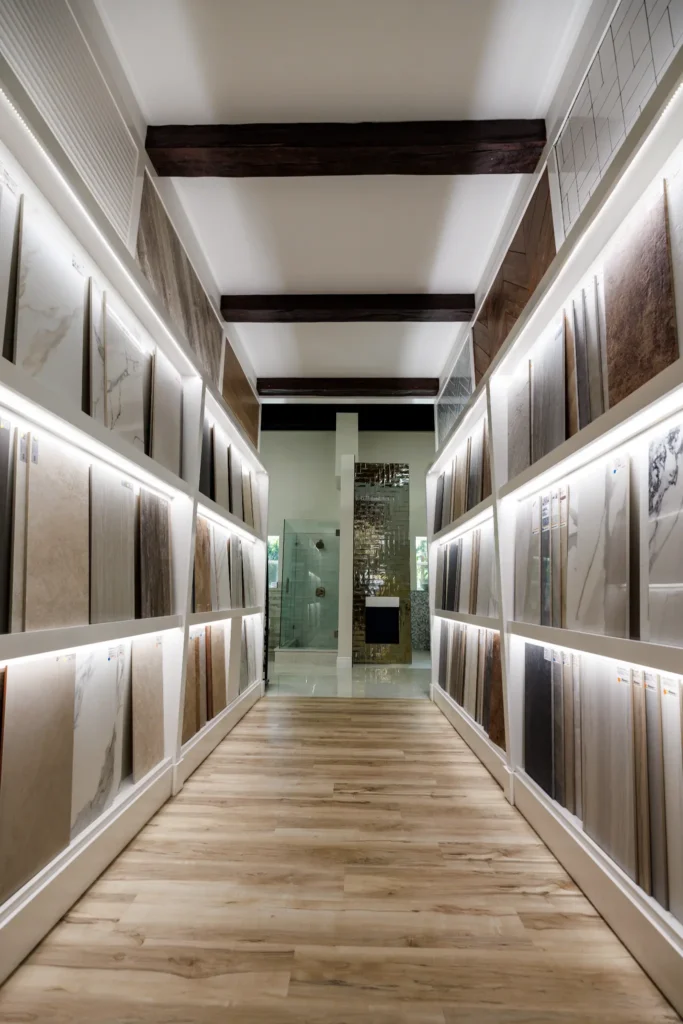
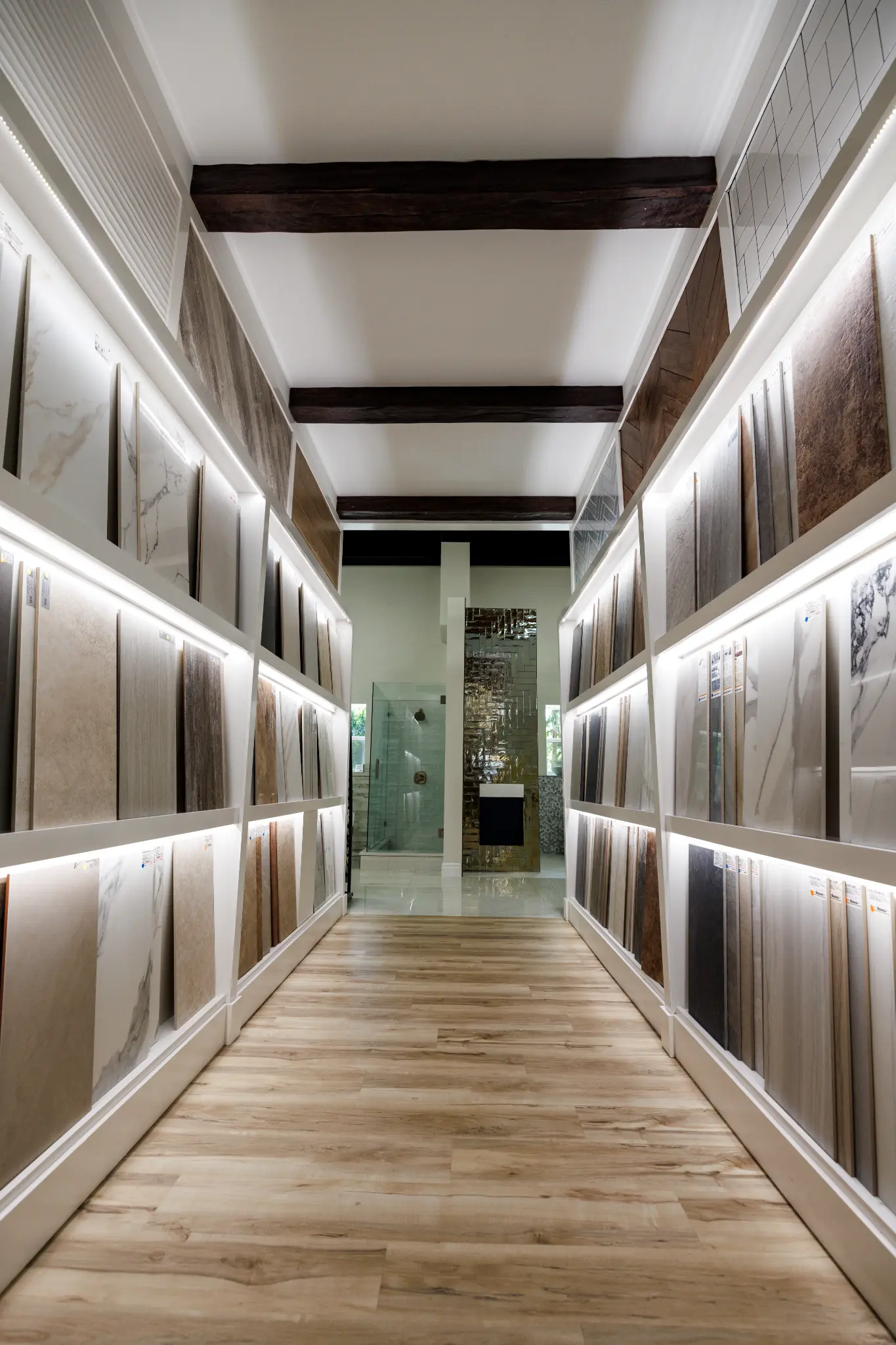
- Selections. After moving forward, you choose your tile, cabinets, counters, fixtures, and finishes with guidance from accredited designers in our 4,000-square-foot showroom. You can see and touch porcelain and ceramic samples side by side.
- Permitting and construction. CMK coordinates permits, our in-house licensed plumbers and electricians, inspections, and dedicated project management.
- Final walkthrough. We review the finished project with you and confirm the details before closeout.
For related planning, see our bathroom remodeling services, read about bathroom materials for Florida humidity, explore our bathroom flooring tips, or learn about choosing the right backsplash material.
Making the Right Investment
The right tile isn’t just about appearance. It’s about building a bathroom that looks as good in 20 years as it does on move-in day. Choosing the correct material—and installing it with a complete Schluter waterproofing system—is one of the smartest investments you can make in your home. When you are ready to build a bathroom that lasts, our team is here to guide you through every detail.
FAQ
Is porcelain tile more expensive than ceramic?
Generally, porcelain tile has a higher upfront material cost due to the refined clay and high-temperature firing process required to produce it. However, because of its superior durability and moisture resistance, it often requires fewer repairs or replacements over time. Many homeowners find that using porcelain on floors and ceramic on walls balances performance with budget.
Can I use ceramic tile on a shower floor?
It is not recommended. Ceramic tile has a higher water absorption rate than porcelain, meaning it can absorb standing water through unglazed edges and grout lines over time. Additionally, ceramic is softer and may not have the necessary slip resistance (DCOF rating) required for a safe, long-lasting shower floor.
Does porcelain tile require sealing?
Glazed porcelain tile does not require sealing, as the glaze protects the surface. Through-body (unglazed) porcelain is highly dense but may benefit from a sealer depending on the manufacturer’s recommendations. The grout lines between tiles should always be sealed unless you use an epoxy grout, which is naturally moisture-resistant.
Why does waterproofing matter if porcelain is already water-resistant?
While porcelain tile resists water absorption, the grout joints between tiles are not waterproof. Over time, moisture can pass through grout lines and reach the substrate behind the tile. A dedicated waterproofing membrane like Schluter KERDI ensures that any moisture that gets past the grout is stopped and directed to the drain, protecting the framing and preventing mold growth.