Last updated September 2026
Quick answer: In Florida, porcelain tile carries the least risk in bathrooms, laundry rooms and ground floors that could see water. Luxury vinyl plank (LVP) gives you the look of wood without real timber in living areas and bedrooms. Hardwood suits dry, air-conditioned rooms, and engineered wood is the more stable construction. Humidity drives most of these decisions: normal annual relative humidity in Tampa is 75 percent, yet the National Wood Flooring Association (NWFA) recommends that owners of wood floors keep indoor humidity between 30 and 50 percent year-round. FEMA’s flood-resistance table rates mortar-set ceramic and porcelain tile acceptable and every kind of wood floor covering unacceptable.
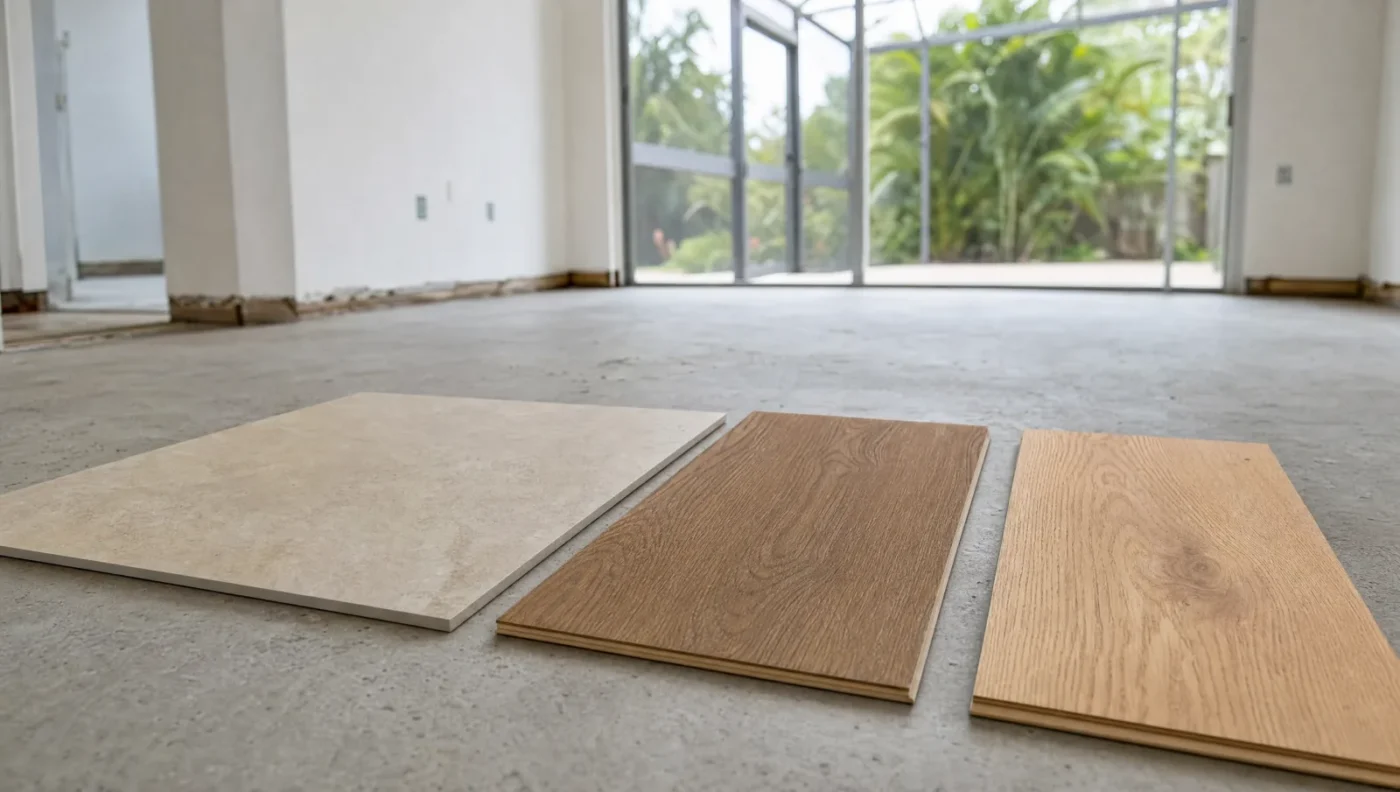
Florida puts flooring through things a showroom sample never sees: damp air, concrete slabs that need a moisture test before wood goes down, flood risk in low-lying areas, and noise rules in condos. This guide measures LVP, tile and hardwood against each one, and covers what to check before you pull up an old vinyl floor. Every figure comes from a government agency, code body or industry association listed under Sources at the end of this guide, checked in September 2026.
How Do LVP, Tile and Hardwood Compare in Florida?
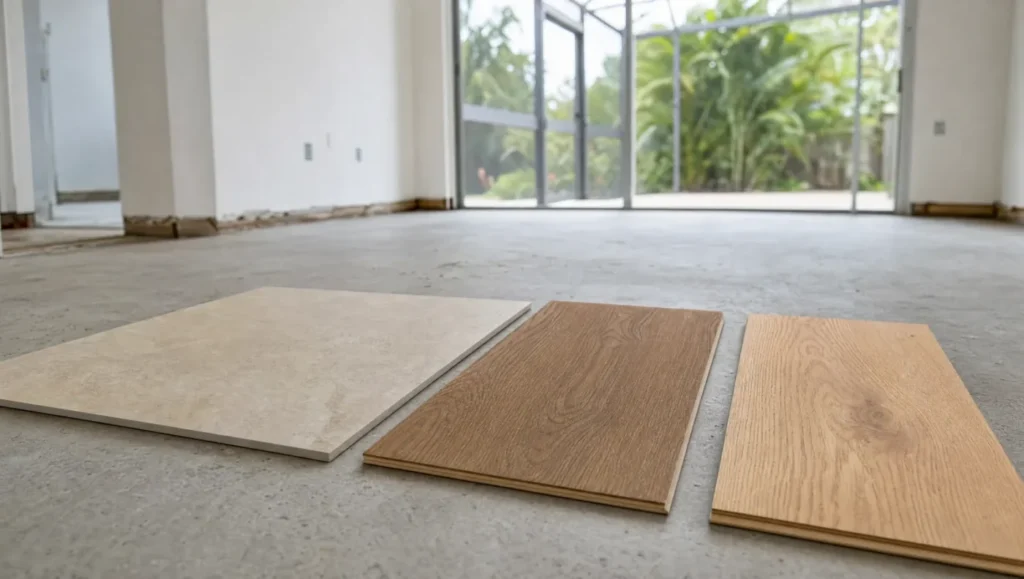
Of the three, porcelain tile faces the lowest risk from water and flooding. LVP sits in the middle, depending on how it’s built and installed, and hardwood asks the most of the house around it. The flood column shows the closest entry in FEMA’s Technical Bulletin 2.
| Material | What it is | FEMA flood rating | Best fit in a Florida home |
|---|---|---|---|
| Porcelain tile |
Ceramic tile with water absorption of 0.5% or less | Acceptable when set in mortar; unacceptable with organic adhesives | Bathrooms, kitchens, laundry rooms, entries and ground floors in flood-prone areas |
| Luxury vinyl plank |
Resilient vinyl planks; rigid-core versions have a rigid polymeric core and an optional pre-attached underlayment | Closest entry is homogeneous vinyl sheets or tiles: acceptable with chemical-set adhesives, unacceptable in all other applications | Living areas, bedrooms and condo units above flood risk |
| Engineered hardwood |
Real wood in layers; expands and contracts less than solid wood | Unacceptable | Dry, air-conditioned living areas, including over a concrete slab that tests dry |
| Solid hardwood |
One piece of wood from top to bottom; can be sanded and refinished many times | Unacceptable | Dry, air-conditioned rooms away from wet areas and flood risk |
Why Does Florida Humidity Matter So Much for Flooring?
Wood moves with moisture, and Florida air holds a lot of it. At Tampa International Airport, normal relative humidity is 88 percent at 7 a.m. and 59 percent at 1 p.m. local standard time, with an annual average of 75 percent. The NWFA notes that wood takes on moisture in humid conditions and can swell, which can make a floor cup: the edges of each board rise higher than the center. To protect a wood floor, the NWFA recommends keeping indoor temperatures between 60 and 80 degrees Fahrenheit and relative humidity between 30 and 50 percent year-round. The EPA’s guidance for mold control points the same way: keep indoor humidity below 60 percent, ideally between 30 and 50 percent.
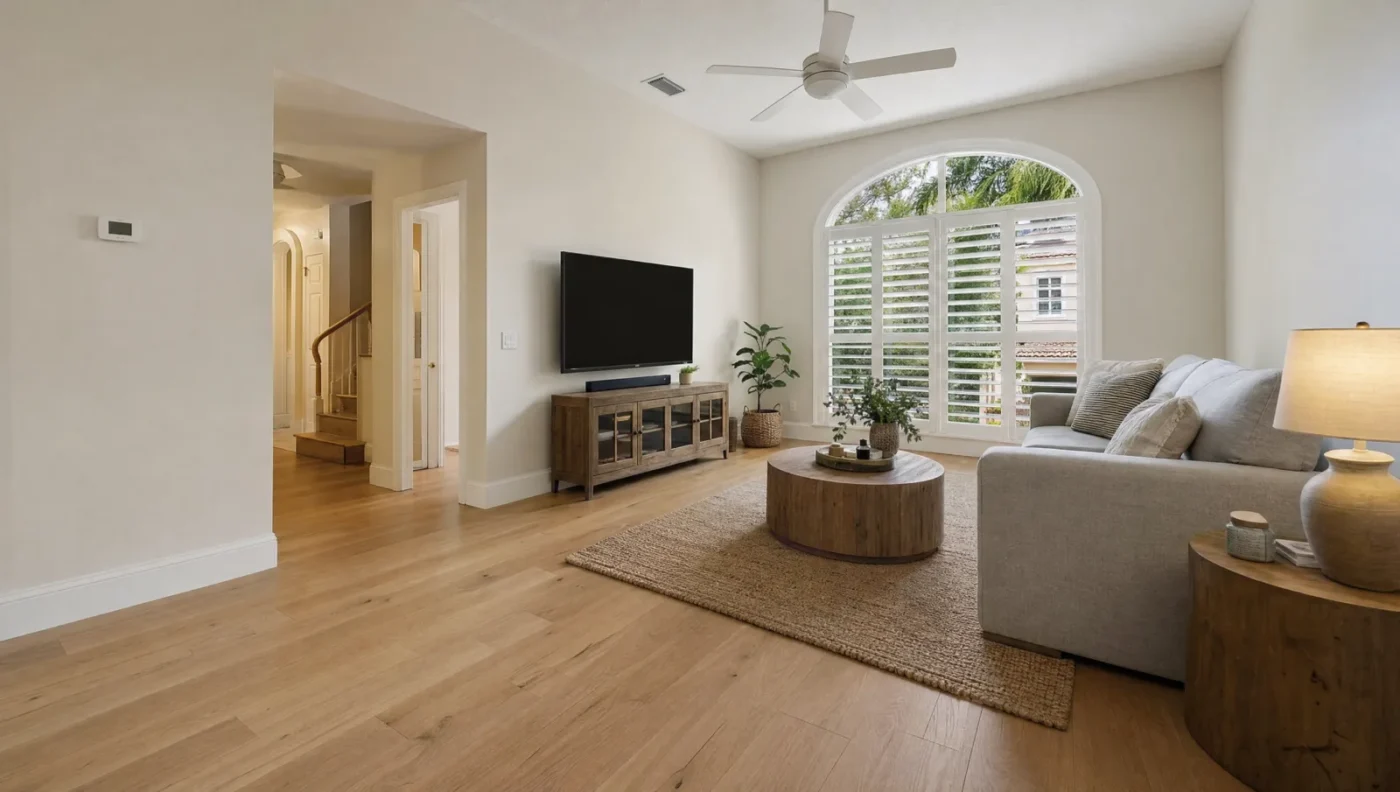
In practice, a hardwood floor in Florida depends on air conditioning or a dehumidifier running all year. A seasonal home that’s closed up for the summer without active climate control is the hardest place for wood, and tile or LVP is the safer choice there.
Which Floor Handles a Concrete Slab Best?
When wood goes over concrete, engineered hardwood is the more stable construction. The NWFA notes that engineered floors expand and contract less than solid wood, which is why it calls them ideal for basements, and it recommends only engineered hardwood over below-grade concrete slabs.
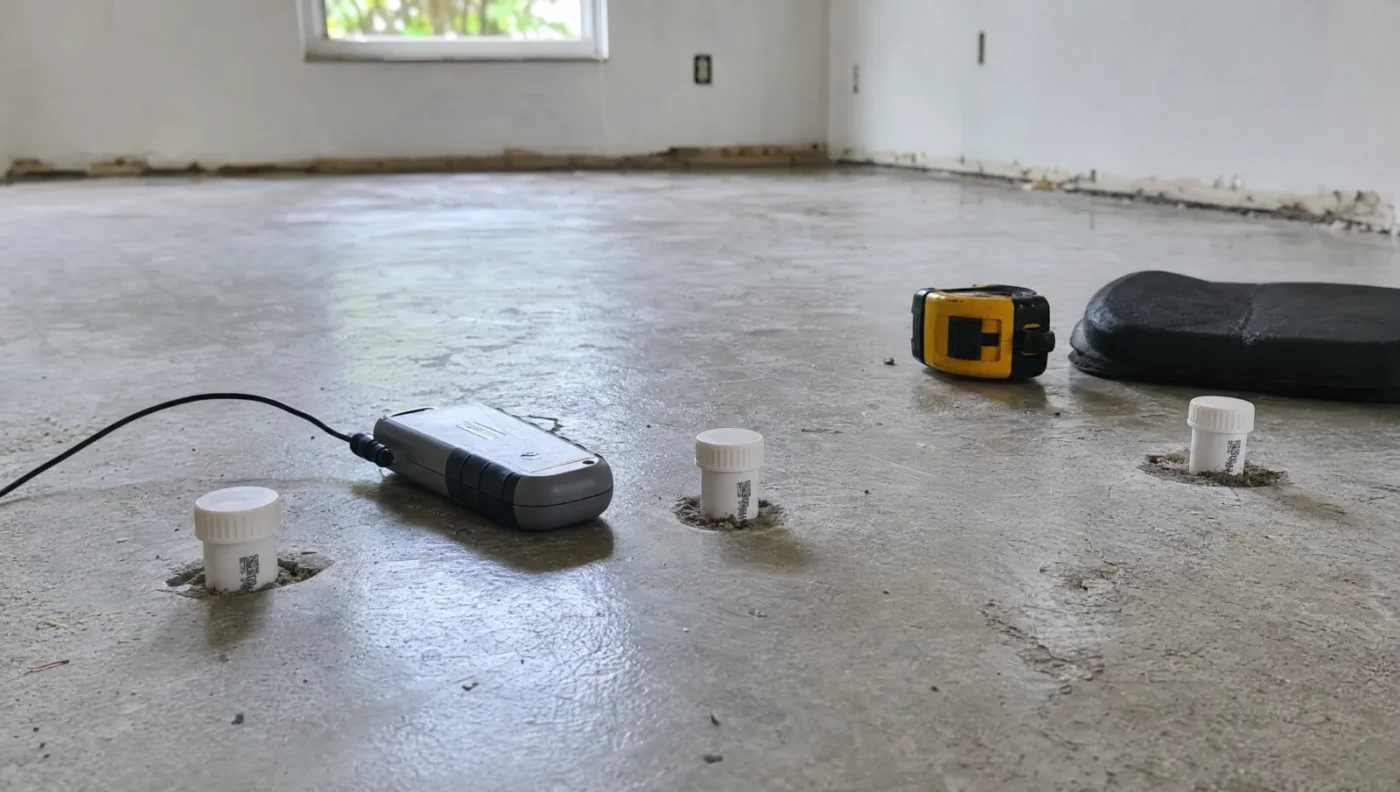
Test the slab instead of guessing. Too much moisture in a slab can damage a wood subfloor and, from there, an engineered wood floor. A commonly specified method is the ASTM F2170 relative humidity test, which measures moisture at a set depth inside the concrete. The NWFA Installation Guidelines call for the HVAC system to run for at least five days before a wood floor goes in, holding 60 to 80 degrees Fahrenheit and 30 to 50 percent relative humidity before, during and after installation. For LVP and tile, follow the manufacturer’s slab moisture limits and the moisture barrier or underlayment it specifies.
Which Flooring Survives a Flood?
Of the three, FEMA rates only ceramic and porcelain tile set in mortar as acceptable for flood exposure. Every type of wood floor is rated unacceptable, and vinyl is acceptable only in a glued-down homogeneous form.
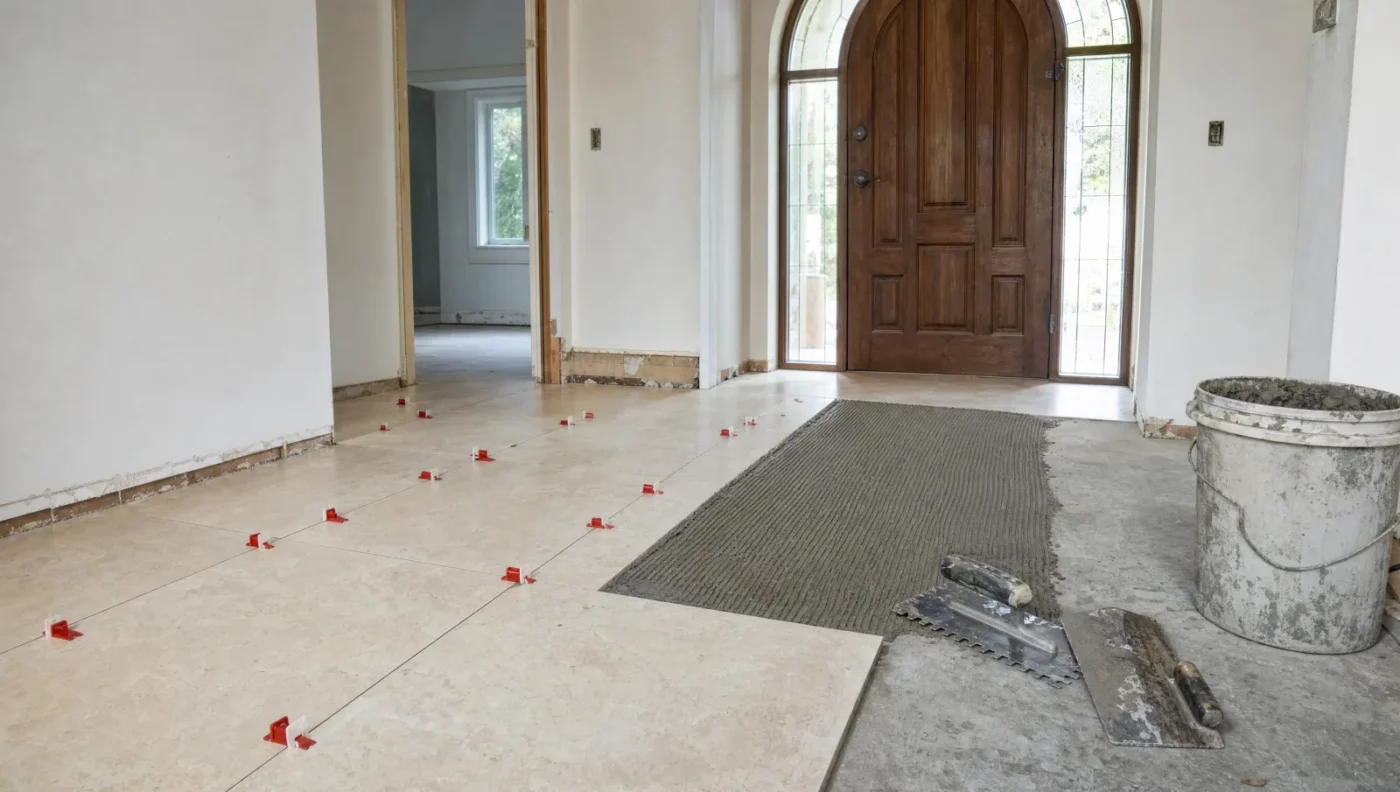
- What “flood damage-resistant” means. FEMA uses the term for materials that can take direct, prolonged contact with floodwater (at least 72 hours) without damage that needs more than cosmetic repair.
- How FEMA rates the three floors. Technical Bulletin 2 lists ceramic and porcelain tile as acceptable when set in mortar and unacceptable with organic adhesives. It rates homogeneous vinyl sheets or tiles acceptable only with chemical-set adhesives, such as epoxy-polyamide adhesives or latex-hydraulic cement, and unacceptable in all other applications. Engineered wood flooring, plastic laminate flooring and solid wood are all rated unacceptable.
- Why the layer underneath counts. FEMA rates vinyl tile with chemical-set adhesives acceptable on a concrete structural floor but not on a plywood structural floor, because the vinyl has to come off for the plywood to dry.
- When flood-resistant materials are required. Federal floodplain rules require communities to make sure new construction and substantial improvements on flood-prone sites, including mapped Zone A areas, use flood damage-resistant materials. A substantial improvement is work that costs 50 percent or more of the structure’s market value before the work starts. In special flood hazard areas, the NFIP requires flood damage-resistant materials below the base flood elevation, and FEMA recommends them for repairs and renovations even in flood-prone areas the NFIP rules don’t cover.
- What happens after water gets in. The EPA says water-damaged areas and items should be dried within 24 to 48 hours to keep mold from growing. A floor you can clean and dry in place gives you the best chance after a flood. If a storm has already put water in the house, start with storm restoration, then choose the new floor.
What Do Florida Condo Sound Rules Mean for Hard Floors?
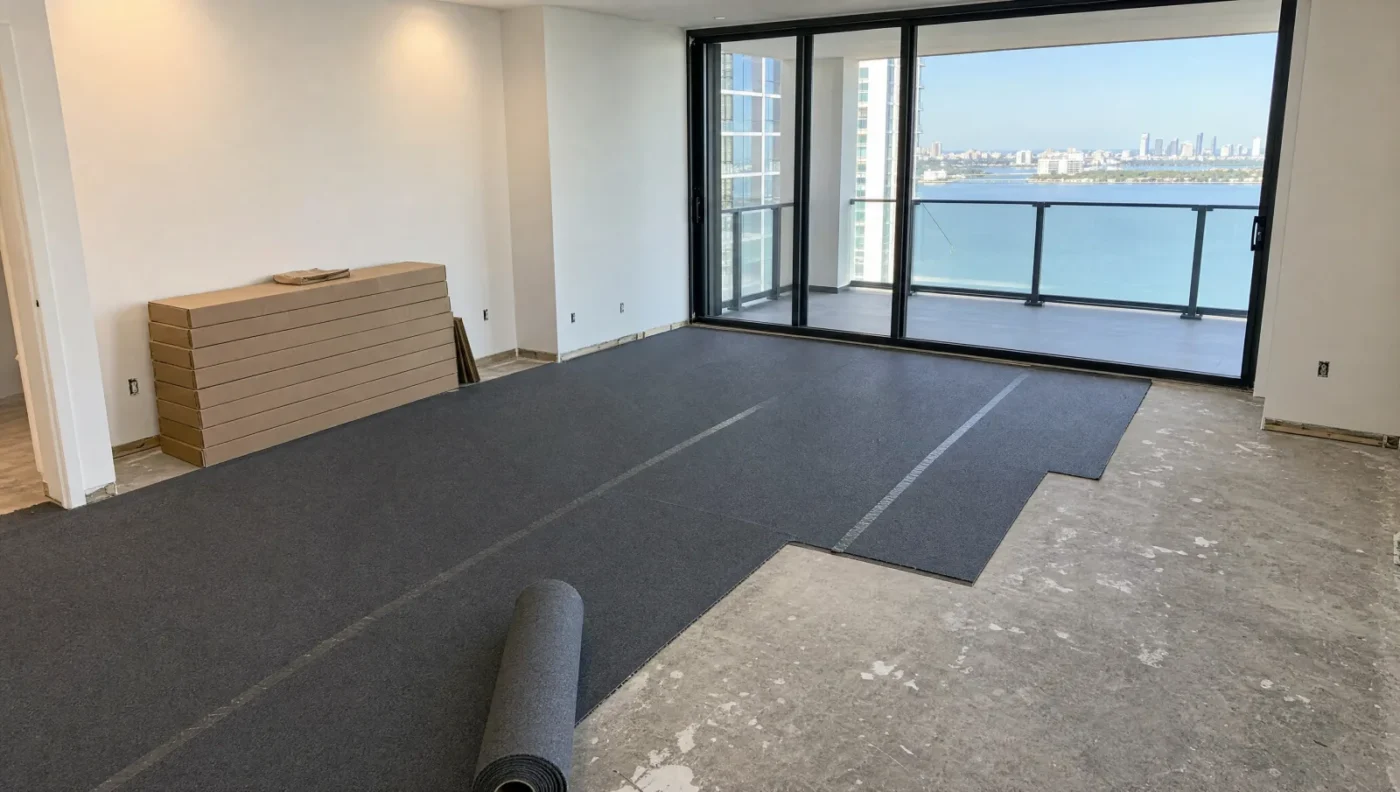
In a Florida condo, a hard floor is part of a sound-rated assembly, not just a finish. Under the 2023 Florida Building Code, floor and ceiling assemblies between dwelling units need an impact insulation class (IIC) of at least 50 when lab-tested to ASTM E492, or an apparent impact insulation class (AIIC) of at least 45 when field-tested to ASTM E1007. The same chapter requires a sound transmission class (STC) of at least 50 when tested to ASTM E90, or a normalized noise isolation class (NNIC) of at least 45 in field tests. Condo associations often set their own flooring rules on top of the code, so confirm the association’s requirement and get the product’s rated assembly in writing before you choose tile, LVP or wood.
Is It Safe to Pull Up Old Vinyl Flooring?
Not until it has been checked. The EPA lists vinyl floor tiles, the backing on vinyl sheet flooring and adhesives among the places asbestos may be found.
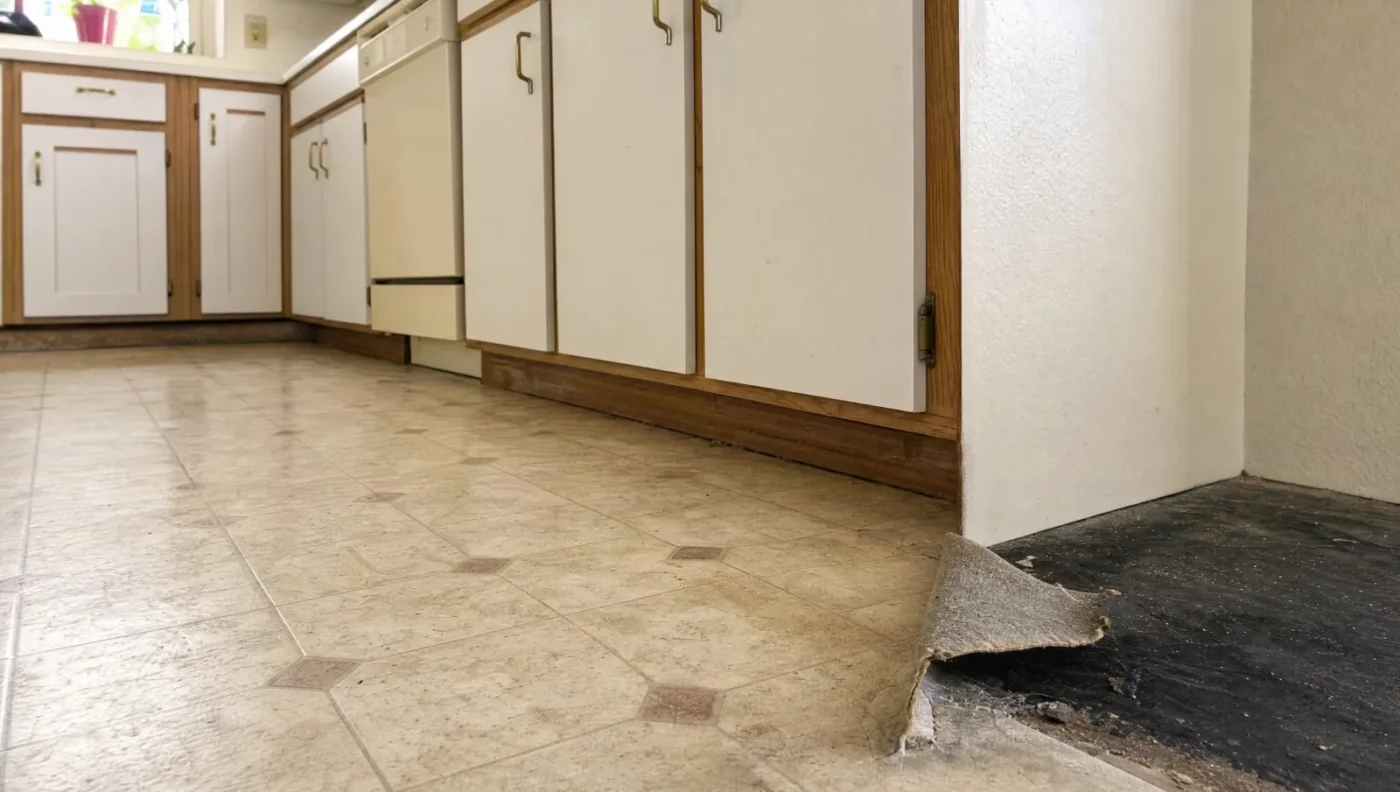
- Looking is not enough. The EPA says you usually can’t tell whether a material contains asbestos by looking at it unless it’s labeled, and recommends having a trained, accredited asbestos professional assess it when a renovation is planned.
- Some removal methods are off the table. The EPA warns against using a power stripper on flooring that may contain asbestos, and against sanding or trying to level asbestos flooring or its backing.
- Covering can beat removing. When asbestos flooring needs replacing, the EPA recommends installing the new floor over the old material when possible. A floating LVP floor or a new tile assembly can do that over a sound, flat existing floor, as long as it meets the new product’s substrate requirements.
So Which Floor Should You Choose for Each Room?
Choose flooring by each room’s exposure to water, humidity and flooding instead of running one material through the whole house.
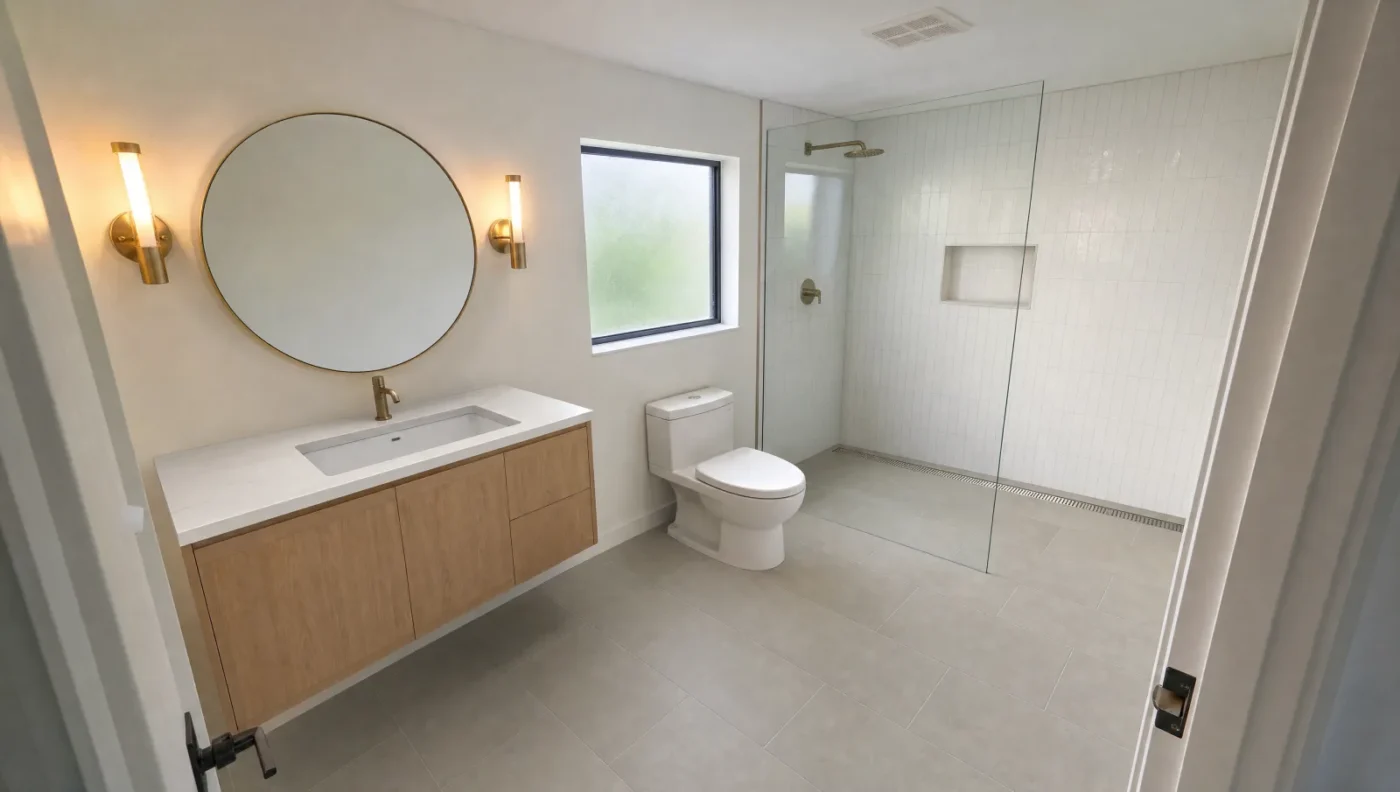
- Bathrooms and laundry rooms. Porcelain tile over proper waterproofing; porcelain has a water absorption rate of 0.5% or less. For the bigger picture, see which bathroom materials last in Florida humidity.
- Kitchens. Tile for the lowest water risk, or engineered hardwood if you want real wood and can keep the house at 30 to 50 percent humidity year-round.
- Living areas and bedrooms. LVP, tile and engineered hardwood all work above flood risk. Printing and embossing give vinyl plank the look of natural wood and stone, while hardwood needs steady humidity control.
- Ground floors in flood-prone areas. Tile set in mortar, which FEMA rates acceptable for flood exposure.
- Condo units. Any of the three can work over an assembly that meets the building’s rating, as long as the floor between units meets the Florida Building Code’s lab-tested IIC 50.
- Seasonal homes. Tile or LVP if the air conditioning or dehumidifier is off while the home sits empty.
Where CMK Construction Fits
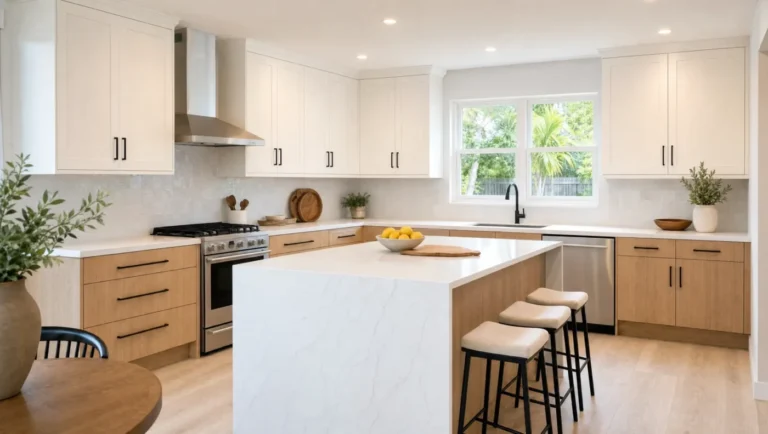
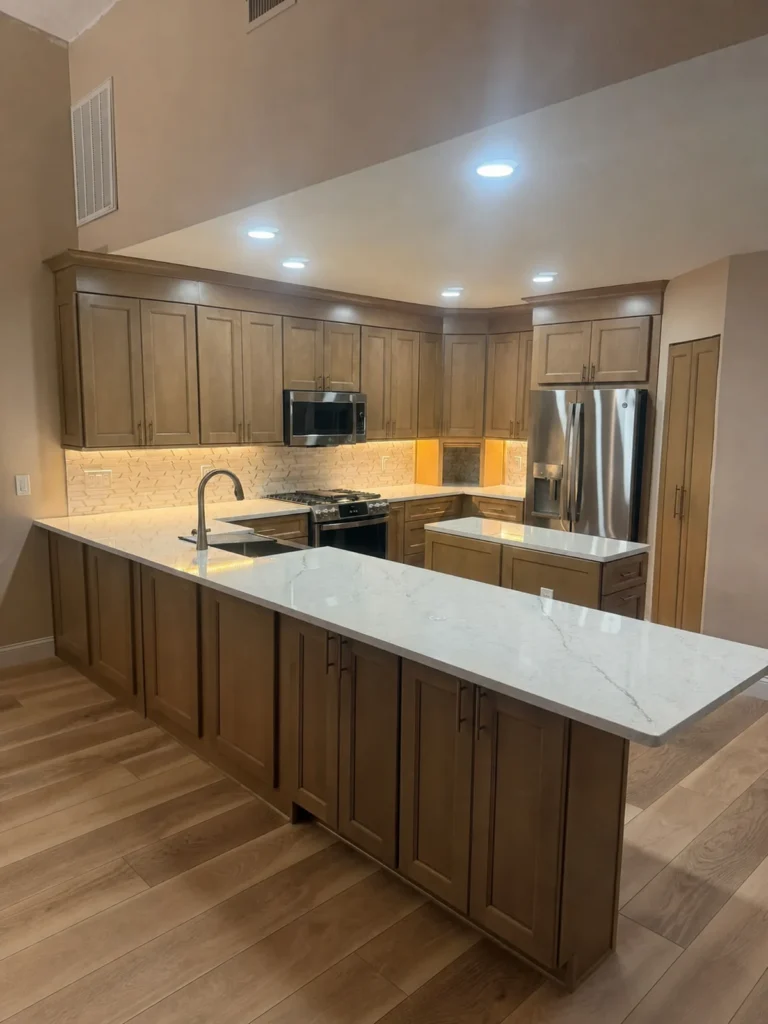
CMK Construction installs tile and hardwood flooring as part of kitchen remodels and bathroom remodels. Kitchens get tile backsplashes and hardwood flooring, bathrooms get heated tile floors, and every bathroom gets a Schluter waterproofing system from the substrate up.
For condo owners: where a building sets a sound rating, tile, wood-look plank and stone don’t go directly on the slab. They need a rated acoustic underlayment. CMK builds the floor assembly to the building’s exact requirement, keeps the product cut sheets that prove the rating, and includes them in the board packet. On full-unit condo remodels, one accountable team handles the kitchen, baths, flooring and finishes as one project. See how CMK handles condo remodeling and flooring sound rules.
Schedule a free consultation or call (813) 379-2116.
Related reading:
- Flooring Tips for Your Bathroom Renovation in Tampa
- How to Plan a Whole-Home Renovation
- Whole-Home Renovation Cost per Square Foot in Florida
Florida flooring FAQ
What is the best flooring for a Florida home?
It depends on the room. Porcelain tile set in mortar suits wet rooms and ground floors that could flood, because FEMA rates mortar-set ceramic and porcelain tile acceptable for flood exposure. LVP and engineered hardwood suit dry living areas, though hardwood needs indoor humidity held at 30 to 50 percent year-round.
Is LVP a good choice in Florida?
Yes, for dry living areas and bedrooms, with two checks. Rigid-core LVP has a rigid polymeric core, but FEMA rates vinyl flooring acceptable for flood exposure only as homogeneous vinyl with chemical-set adhesives, so check the product’s water, slab moisture and flood guidance before installing it on a ground floor that could flood.
Can you put hardwood floors in a Florida house?
Yes, if the house stays air-conditioned all year. Tampa’s normal annual relative humidity is 75 percent, while the NWFA calls for 30 to 50 percent indoors year-round. Engineered wood also expands and contracts less than solid wood.
What flooring is best for a Florida flood zone?
Tile set in mortar. FEMA’s Technical Bulletin 2 rates mortar-set ceramic and porcelain tile acceptable and engineered wood, laminate and solid wood flooring unacceptable. Federal floodplain rules also require flood damage-resistant materials for new construction and substantial improvements on flood-prone sites.
Do condo floors in Florida need a sound rating?
Yes, between units. The 2023 Florida Building Code requires floor and ceiling assemblies between dwelling units to reach IIC 50 and STC 50 in lab tests, or 45 in field tests. Condo associations may also set their own flooring rules.
Sources
- Resilient Floor Covering Institute, Resilient Flooring Types
- NOAA National Centers for Environmental Information, 2023 Local Climatological Data Annual Summary with Comparative Data, Tampa, Florida (KTPA)
- National Wood Flooring Association, Problem Prevention
- FEMA, NFIP Technical Bulletin 2, Flood Damage-Resistant Materials Requirements (2025)
- ANSI Blog, The Eminence of Porcelain Tile (ANSI A137.1:2022)
- National Wood Flooring Association, Types of Wood Floors
- U.S. EPA, A Brief Guide to Mold, Moisture and Your Home
- Hardwood Floors Magazine (NWFA), Engineered Flooring Installation on Concrete, Part 2
- eCFR, 44 CFR 60.3, Flood plain management criteria for flood-prone areas
- eCFR, 44 CFR 59.1, Definitions
- ICC, 2023 Florida Building Code, Building, Eighth Edition, Chapter 12 Interior Environment
- U.S. EPA, Learn About Asbestos
- U.S. EPA, Protect Your Family from Exposures to Asbestos
- CMK Construction, Kitchen and Bath Remodeling
- CMK Construction, Condo Remodeling