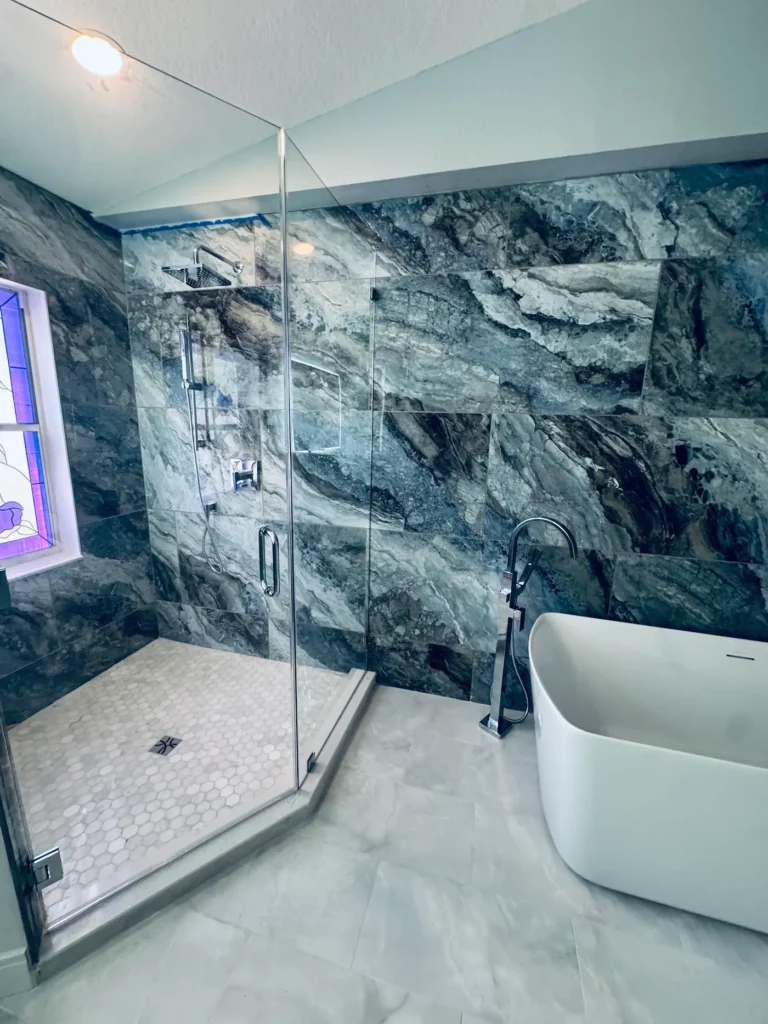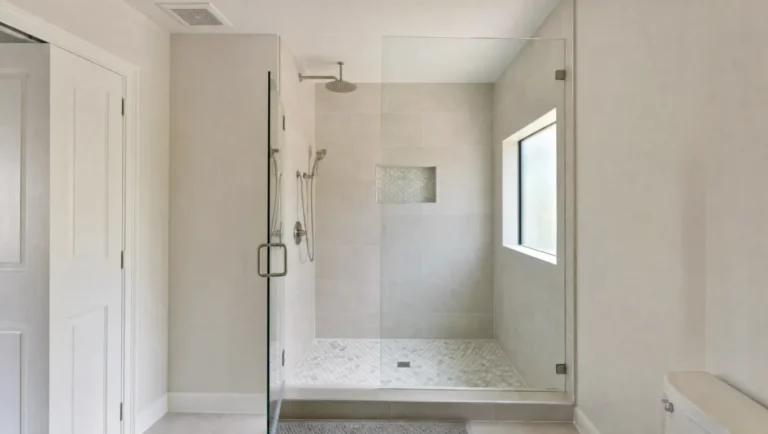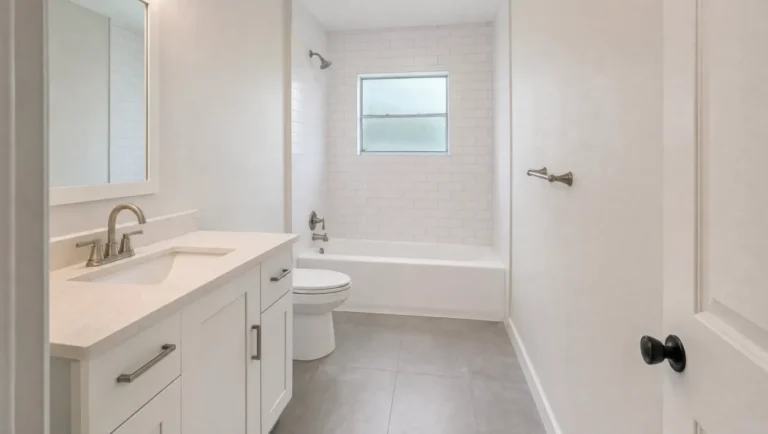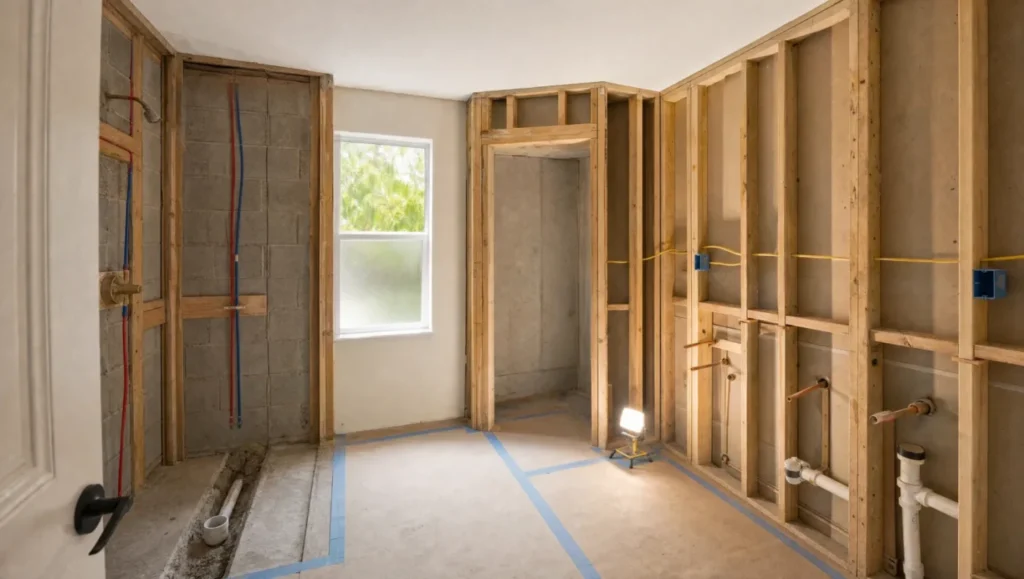
Short answer: if the remodel touches plumbing, electrical, ventilation, gas, walls, or windows, yes. If it is paint, tile, flooring, and cabinets only, usually no.
The longer answer depends on what the work is, whether the house sits in a flood zone, and which building department has jurisdiction over your address. Florida has one statewide building code, but it is enforced by dozens of county and city offices, each with its own guidance, portal, and fees. A national article can’t tell you what Hillsborough County says about a tile-and-cabinet bathroom, or which Pinellas beach towns are permitted by the county instead of a city office. This guide does, for the four counties where we build.
Jump to your county: Hillsborough | Pinellas | Sarasota | Manatee
Which bathroom projects need a permit in Florida
Start here, then confirm with the building department for your address. “Usually” is doing real work in this table, because the local office has the final say. The sections below explain the state rule behind it, the 2026 exemption, and what each county adds.
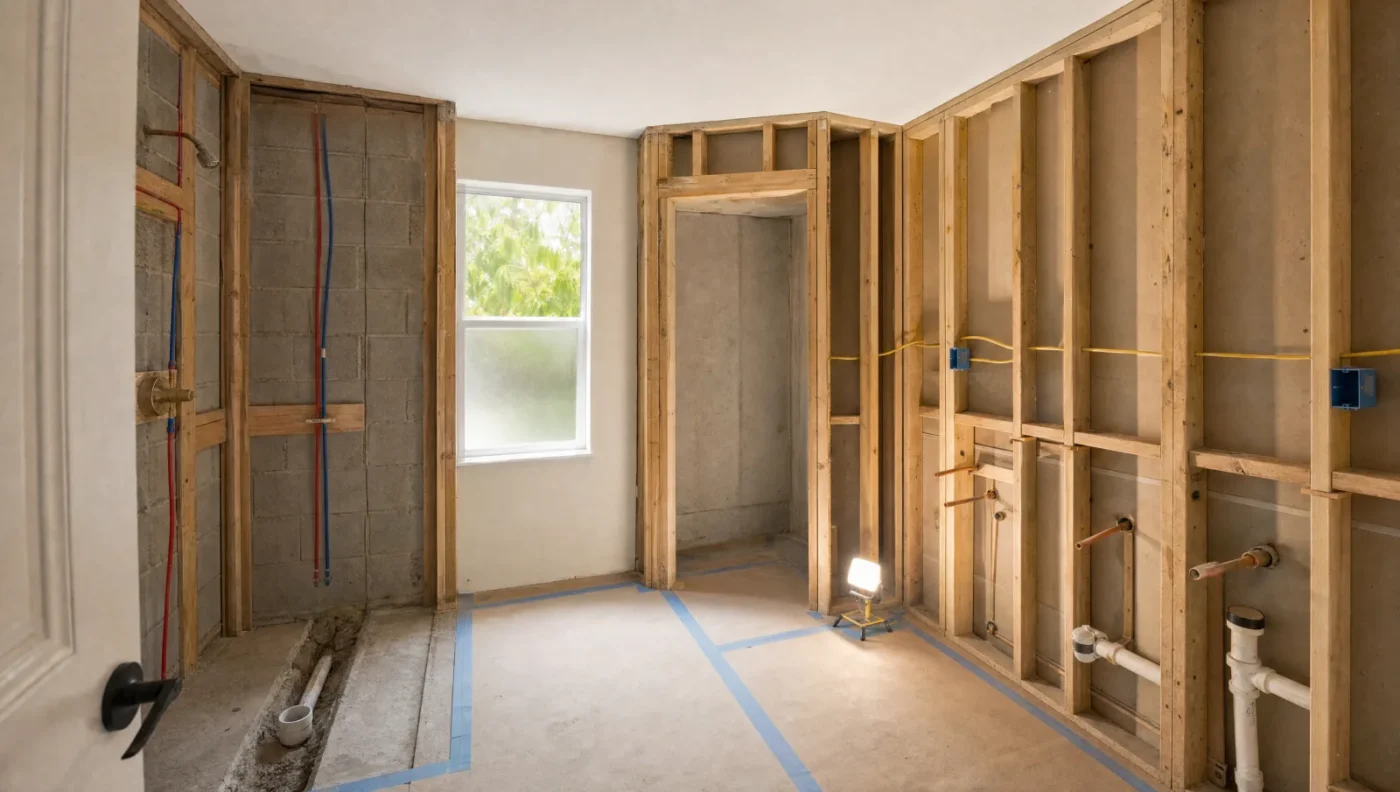
| Work | Permit? | Why |
|---|---|---|
| Paint, tile |
No | Finish work is exempt under the Florida Building Code, including floor and wall tile. |
| New cabinets |
No | A vanity cabinet or countertop in the same spot is finish work, as long as the plumbing behind it doesn’t change. |
| Toilet, faucet |
Usually no | A like-for-like swap with no change to the rough plumbing is generally treated as a repair. Some offices read this more strictly, so ask. |
| Tub-to-shower conversion |
Yes | The drain, the valve, and the waterproofing all change. This is plumbing work plus a building alteration. |
| Moved fixtures |
Yes | Relocating a toilet, sink, or shower means new drain and supply lines, often under a slab. |
| New wiring |
Yes | New circuits, added outlets, relocated lighting, and heated floors are electrical alterations. |
| Exhaust fan |
Usually yes | A new fan with new wiring or a new duct to the exterior is electrical and mechanical work. Repairing an existing fan is not. |
| Wall changes |
Yes | Removing, moving, or framing a wall is a building alteration, and a structural one if the wall carries load. Replacing damaged drywall on an existing wall, with no plumbing or wiring involved, is generally treated as a repair. |
| Window replacement |
Yes | Windows and exterior doors are permitted work statewide because of wind and impact requirements. |
| Water heater |
Usually yes | Most offices require one. Manatee County exempts an electric-to-electric swap of the same size in the same location. |
| Flood zone |
Expect yes | The $7,500 exemption doesn’t apply, and the value of the work may be tracked against FEMA’s substantial improvement limit. |
A good rule of thumb: if the finished bathroom has new pipe, wire, duct, or framing behind the wall or under the floor, plan on a permit.
The statewide rule: what the Florida Building Code requires
Every county and city in Florida enforces the same Florida Building Code. Under it, a permit is required before anyone constructs, alters, repairs, or demolishes part of a building, or installs or changes an electrical, gas, mechanical, or plumbing system.
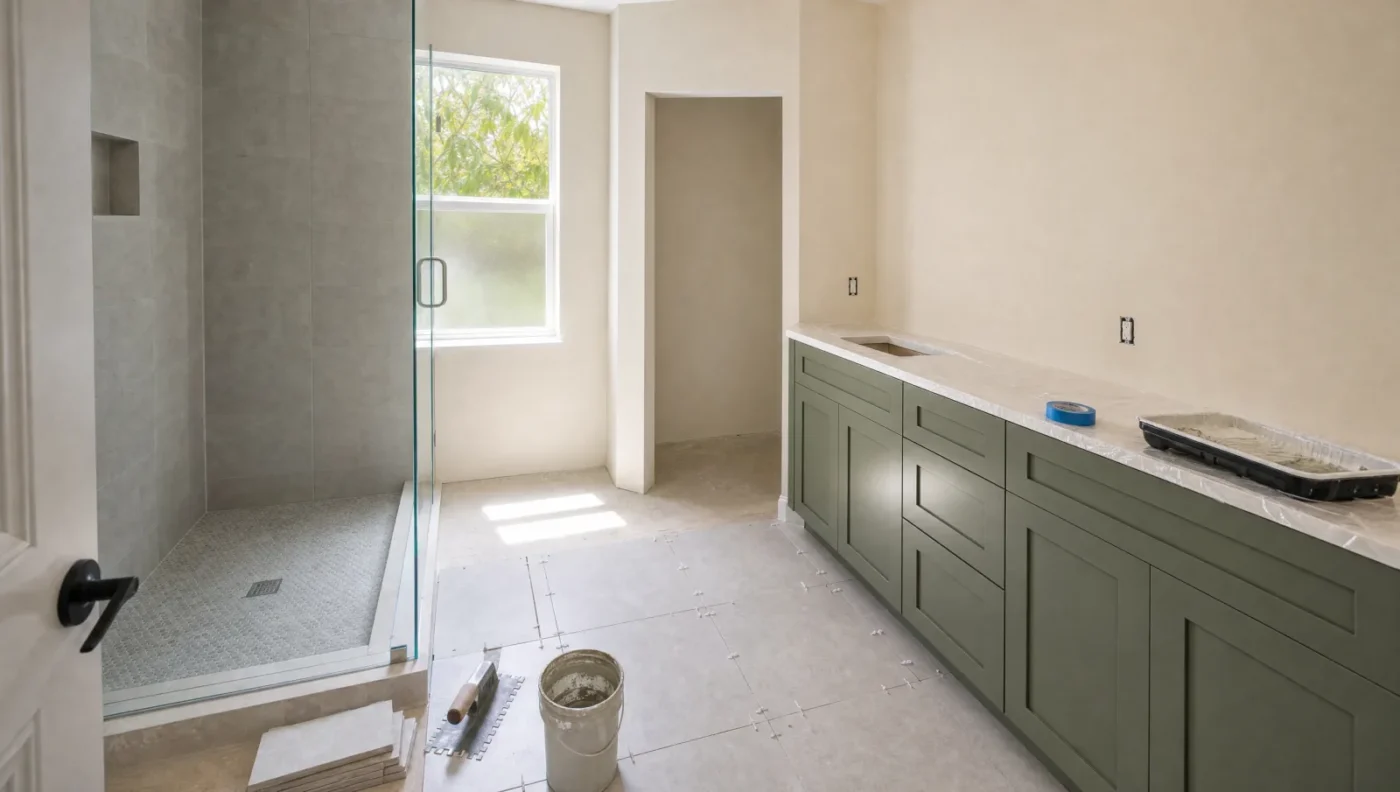
The code also lists work that is exempt. For a bathroom, the important exemptions are:
- Painting, wallpaper, tile, carpet, cabinets, countertops, and similar finish work
- Stopping leaks and clearing stoppages in drains and pipes
- Removing and reinstalling a toilet, as long as the repair doesn’t replace or rearrange valves, pipes, or fixtures
- Minor electrical repairs, such as swapping a standard switch or receptacle
Notice where the line sits. Finishes are exempt. Systems are not. Once a project involves rerouting a drain or supply line, adding a circuit, running a new exhaust duct, or removing or moving a wall, it is permitted work. Cutting open drywall to make a repair isn’t what triggers the permit; what you change behind it is.
Do I need a permit to remodel my bathroom in Florida if I do the work myself?
The permit requirement doesn’t change based on who does the work. What changes is who pulls it. Florida’s owner-builder exemption (Florida Statutes 489.103) lets you act as your own contractor on a home you own and occupy, as long as it isn’t built or improved for sale or lease. If you sell or lease within one year of finishing, the law presumes you violated the exemption. You also take on the contractor’s responsibilities: code compliance, inspections, and liability for anyone you hire.
The 2026 change: Florida’s $7,500 permit exemption (HB 803)
On July 1, 2026, House Bill 803 took effect. It requires local governments to exempt certain work on single-family dwellings from permitting when the total value is under $7,500. It is already causing confusion, so here is what it does and doesn’t do for a bathroom:
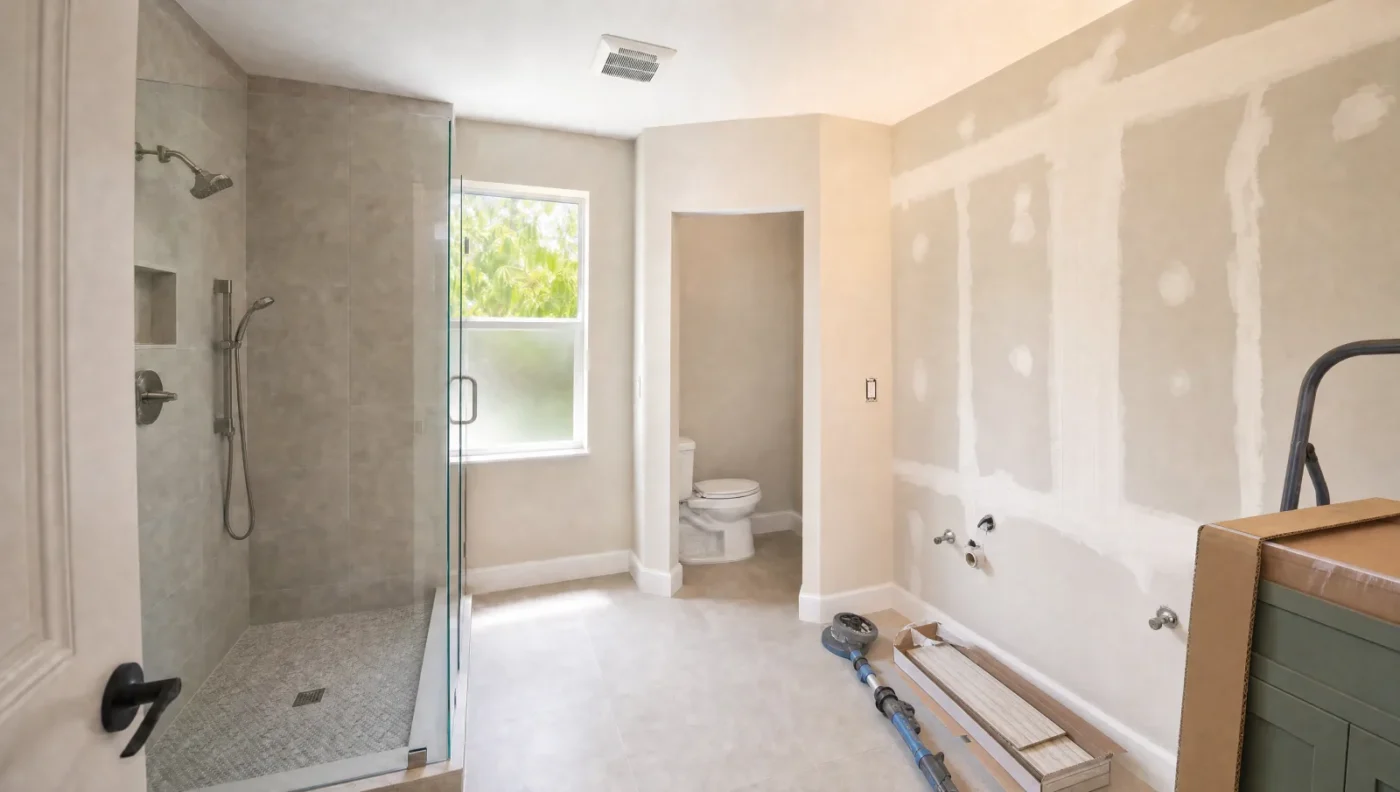
- It does not cover plumbing, electrical, mechanical, gas, or structural work. Those still need a permit at any dollar amount.
- It does not apply in flood hazard areas. If any part of the property is in one, the exemption is off the table.
- It is written for single-family dwellings. Condo units are a different conversation.
- You can’t split a project to get under the number. The total value of the whole job is what counts.
- It isn’t automatic. Building departments have set up exemption forms and documentation steps. Sarasota County published a bulletin on how to qualify, and St. Petersburg created a permit exemption form.
In practice, the work HB 803 exempts (flooring, cabinetry, paint, drywall finishing) was mostly exempt already. A bathroom remodel that replaces a tub with a shower, moves a vanity, or adds lighting still goes through permitting exactly as it did before.
Hillsborough County bathroom remodel permits
Hillsborough County Building Services handles the unincorporated county, which covers a lot of ground: Brandon, Riverview, Valrico, Lutz, Carrollwood, Westchase, FishHawk, and Apollo Beach all fall under it.
The county’s guidance for homeowners is unusually direct on this exact question. It says a bathroom remodel where plumbing work is involved would likely require a permit, while a bathroom remodel involving only tile installation and cabinet work would likely not. Its list of work exempt from permits includes painting, tile, floor coverings, shelving, cabinet work, and wallpaper.
What to know before you start:
- Portal: applications go through HillsGovHub. A bathroom typically falls under the Residential Alterations (Renovations) record type, with trade permits for plumbing and electrical attached.
- Inside city limits is a different office. The City of Tampa issues its own permits through its Construction Services division and its Accela portal. Temple Terrace and Plant City run their own building departments too. A South Tampa bungalow and a Brandon ranch are in the same county and answer to different offices.
- Working without a permit is expensive. The county warns that unpermitted work can draw a citation of up to $500 per violation, and that fixing it afterward costs considerably more than permitting it up front.
- Licensing still applies to exempt work. You don’t need a permit for tile, but anyone you pay to install it still has to be properly licensed.
We covered one Hillsborough community in more detail in our Brandon bathroom remodel guide, including how permitting fits into the timeline.
Pinellas County bathroom remodel permits
Pinellas is the most fragmented of the four. It has 24 municipalities packed into a small peninsula, and most of the larger ones (St. Petersburg, Clearwater, Largo, Dunedin, Pinellas Park, Tarpon Springs) run their own building departments.
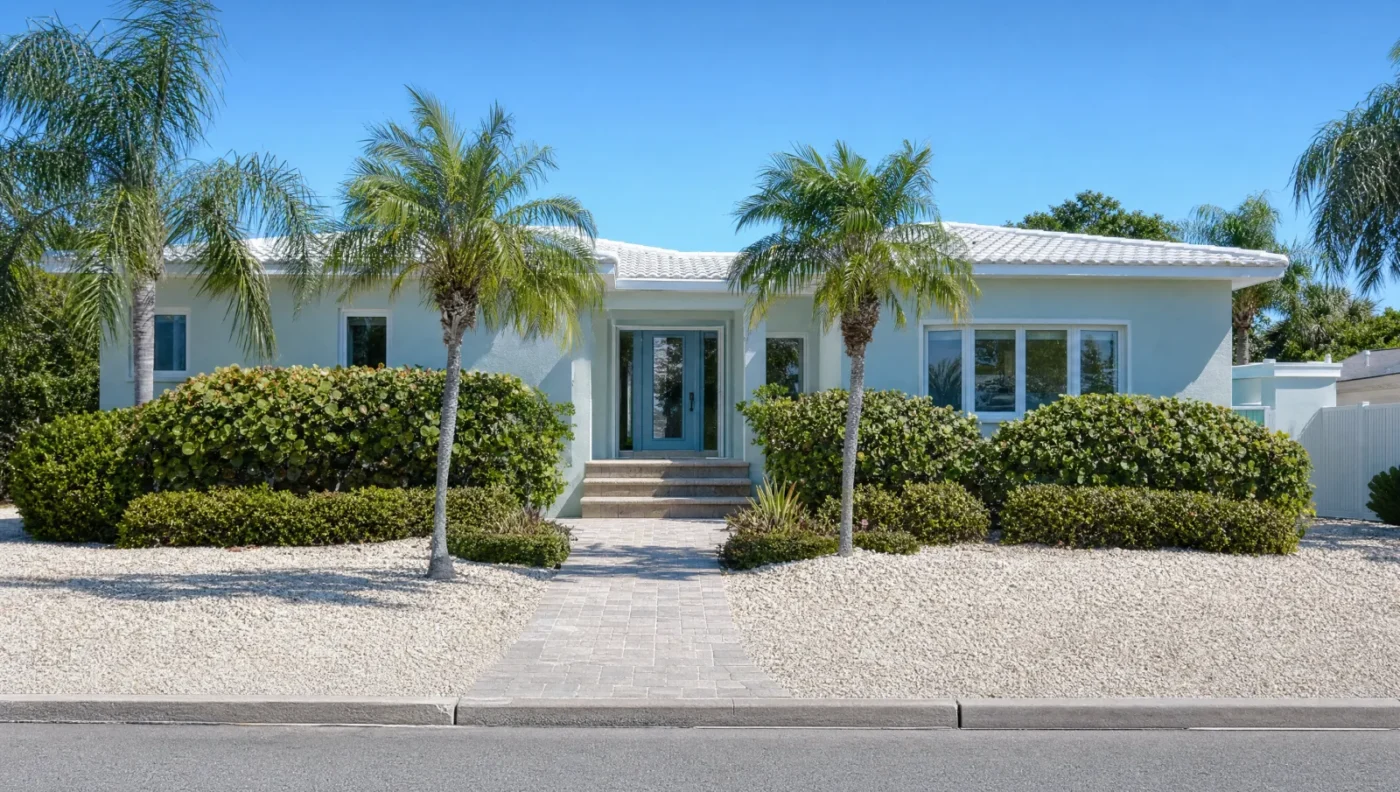
Pinellas County Building and Development Review Services covers the unincorporated areas, such as Palm Harbor, East Lake, and Crystal Beach. It also handles permitting for six municipalities by agreement: Belleair Beach, Belleair Shore, Indian Rocks Beach, Kenneth City, Oldsmar, and Safety Harbor. So an Oldsmar homeowner applies to the county, and a Dunedin homeowner a few miles away applies to the city.
The county’s position is that most jobs that change the structure, electrical, plumbing, or mechanical systems of a home require a permit, while minor repairs and cosmetic updates like painting, wallpaper, and trim do not.
What to know before you start:
- Portal: the Pinellas County Access Portal, which runs on Accela. Simple standalone projects can qualify for an express review of zero to two business days.
- Flood zones change everything here. A large share of Pinellas homes sit in a flood hazard area, especially on the barrier islands and along the bay. Those properties can’t use the $7,500 exemption, and the cost of a remodel may be counted toward FEMA’s substantial improvement limit. If the work reaches roughly half of the structure’s market value, the whole building can be required to meet current flood rules. St. Petersburg refers to this as the 49% rule. We explain how it plays out in our guide to bathroom remodeling in Clearwater flood zones.
- Condos add a second approval. Beach condos need the association’s sign-off on top of the city or county permit. The association can’t make a building permit a precondition of its architectural review, but it can set its own rules for work hours, water shutoffs, and flooring underlayment. See our Gulf Coast condo remodeling rules guide.
Sarasota County bathroom remodel permits
Sarasota County’s Planning and Development Services department permits the unincorporated county, including Siesta Key, Osprey, Nokomis, and most of Englewood. The City of Sarasota, Venice, North Port, and the Town of Longboat Key each issue their own permits.

The county’s permit guidelines follow the state pattern. Tile, carpet, paint, and wall coverings don’t need a permit. Replacing cabinets doesn’t either, as long as the layout stays the same and nothing changes in the electrical, plumbing, or mechanical systems. Once those systems change, the project needs a building permit with the matching trade permits.
What to know before you start:
- Portal: applications are filed online through the county’s Accela permitting system. In-person services moved to the PDS One Stop at 870 Apex Road in Sarasota.
- HB 803 guidance is published. The county issued Bulletin 2026-0002 explaining who qualifies for the under-$7,500 exemption and how to document it. It also notes that permits for work under $15,000 on an existing single-family home receive expedited review, which helps a typical hall bathroom.
- Some inspections are virtual. The county offers live video inspections for certain items, including plumbing water and sewer inspections, which can shorten the wait between rough-in and closing up the walls.
- Flood maps were updated. New FEMA flood maps took effect in Sarasota County in March 2024. If you haven’t checked your zone since then, check before you budget. It determines whether the exemption applies and whether substantial improvement rules come into play.
For what a permitted remodel costs in this market, see our Sarasota bathroom remodel cost guide.
Manatee County bathroom remodel permits
Manatee County’s Building Division permits the unincorporated county, which includes most of Lakewood Ranch, Parrish, and Ellenton. The cities of Bradenton, Palmetto, Anna Maria, Holmes Beach, and Bradenton Beach issue their own, and so does Longboat Key, which straddles the Manatee and Sarasota county line.
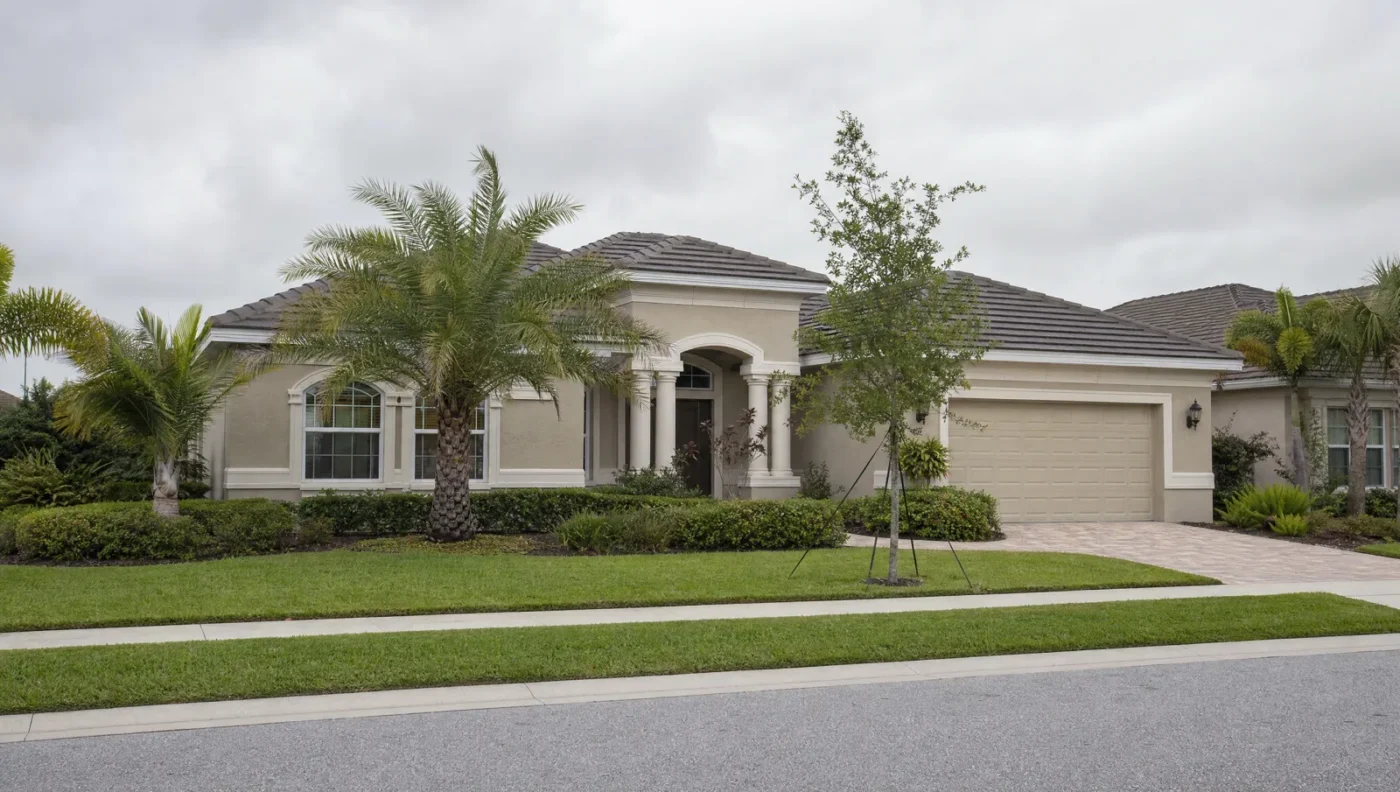
Manatee publishes one of the clearest lists of what does and doesn’t need a permit, and several items speak directly to bathrooms.
No permit, per the county’s guidance:
- Painting, wallpaper, trim carpentry, and flooring of any type, tile included
- Cabinet installation
- Replacing plumbing fixtures such as toilets and faucets, provided no rough plumbing is changed
- Replacing standard wall switches and receptacles
- Replacing old drywall with new, if the job doesn’t involve load-bearing walls or any plumbing, electrical, or air conditioning work
- An electric water heater swapped for another electric unit of the same size in the same location
Permit required:
- Any alteration of electrical
- A re-pipe, a new water service, or sewer replacement
- Windows and doors
- Drywall work below the base flood elevation, or drywall tied to plumbing, electrical, or air conditioning changes
- Renovation of existing structures generally, and remodels that add or alter electrical, plumbing, or walls
What to know before you start:
- Portal: the county’s Accela Online Services Portal. Development Services moved to 9000 Town Center Parkway in Lakewood Ranch.
- Contractor registration matters. Manatee requires contractors to have a qualification file with the county before performing work, and it doesn’t reciprocate locally registered licenses from other counties. A state-certified contractor can work statewide, which is one reason the license type matters.
- The islands are flood zones. On Anna Maria Island, expect flood rules to apply to nearly every project, and expect the city (not the county) to be your building department.
What the permit process looks like for a bathroom
When a licensed contractor runs the job, permitting is mostly invisible to you. The sequence:
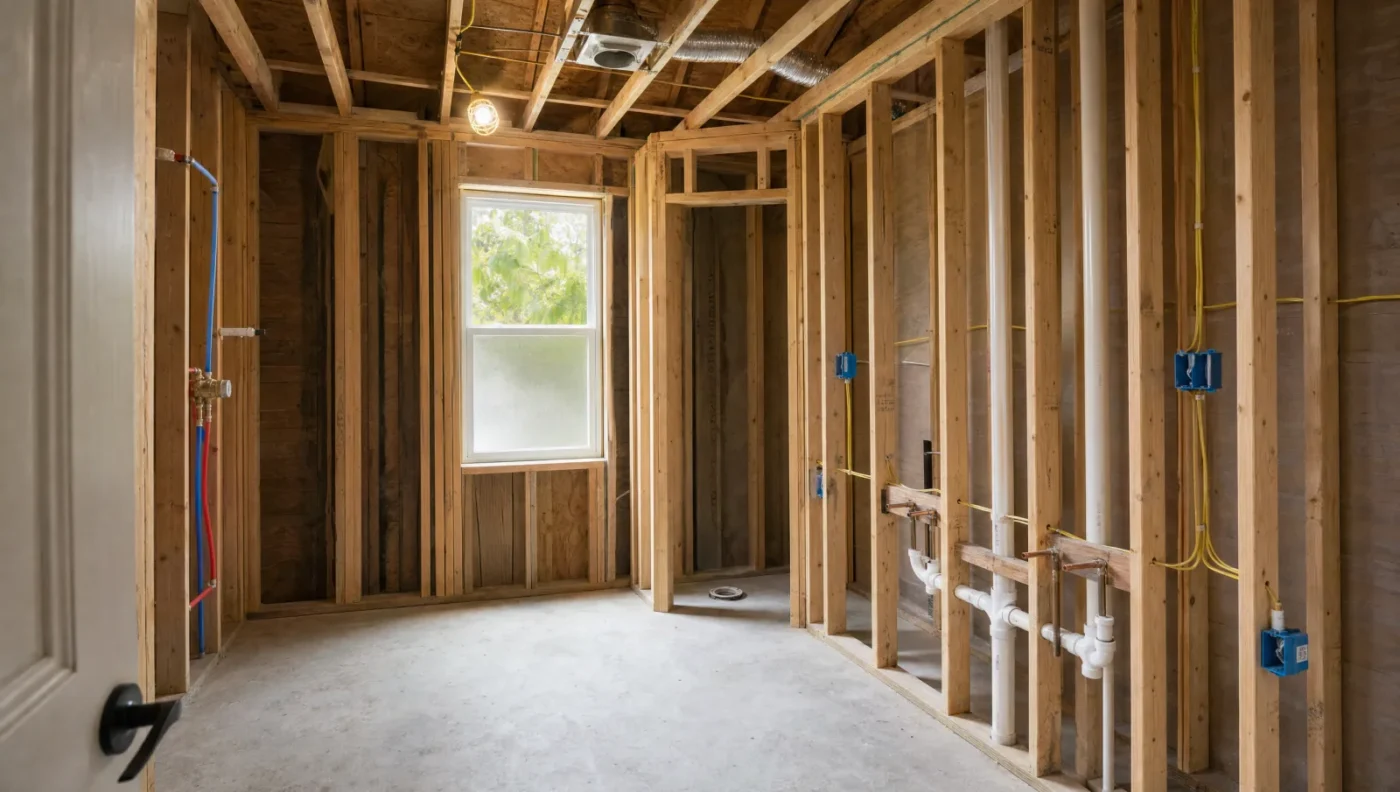
- Scope and drawings. The contractor defines the work and prepares whatever the building department requires for a residential alteration.
- Application. The contractor applies through the local portal, along with the plumbing and electrical trade permits.
- Notice of Commencement. For jobs over a dollar threshold set by state law (Florida Statutes 713.135), a Notice of Commencement is recorded with the county clerk before the first inspection. It protects you under Florida’s lien law, so don’t skip it.
- Rough inspections. Plumbing and electrical are inspected while the walls are open. Nothing gets covered until they pass.
- Final inspection. The inspector signs off on the finished room and the permit is closed.
Step five is the one homeowners forget. An open permit that never received a final inspection can surface years later during a sale. Ask your contractor for confirmation that the permit was closed.
Permit review is also part of your schedule. It is one of the variables in how long a bathroom remodel takes, and it runs in parallel with material ordering when the project is planned well.
What happens if you remodel without a permit
People skip permits to save time or money. It rarely works out that way.
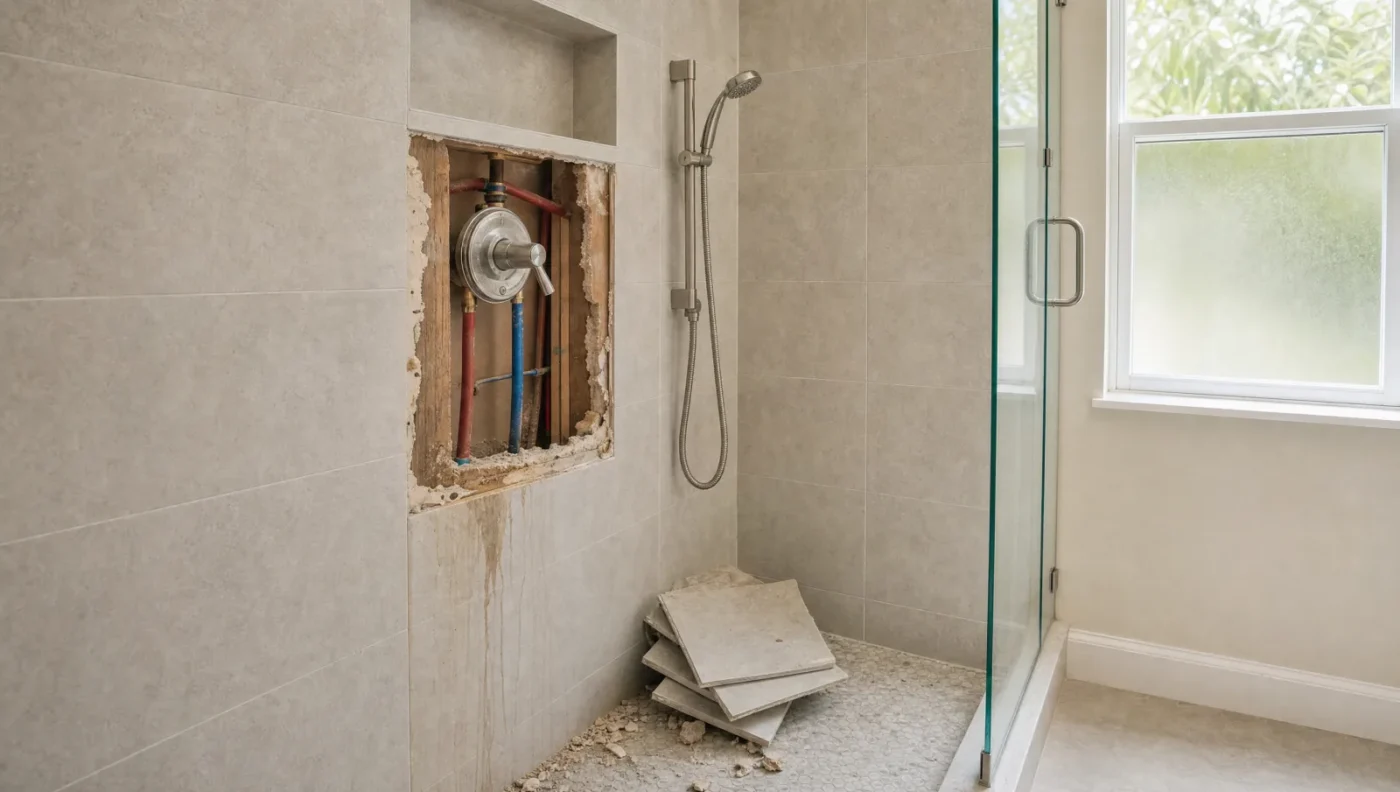
- Fines and stop-work orders. Hillsborough County cites up to $500 per violation. Most departments also charge increased fees for an after-the-fact permit.
- Opening finished walls. An inspector can’t approve plumbing or wiring that is already covered. Getting a permit after the fact can mean cutting into new tile.
- Trouble at resale. Buyers, inspectors, and title companies check permit history. Unpermitted work can stall a closing or come off the price.
- Insurance questions. If a leak or fire traces back to unpermitted work, expect the claim to get a harder look.
- No second set of eyes. The inspection is the only independent check on the work you will never see again: the drain slope, the valve, the wiring, the waterproofing behind the tile.
There is also a pattern worth knowing. A contractor who suggests skipping the permit, or asks you to pull an owner-builder permit on their behalf, is often telling you they can’t pull one themselves. We wrote about that in the true cost of unlicensed bathroom contractors.
Who pulls the permit?
On a professionally run remodel, the contractor does. The permit is issued under the contractor’s license, and the contractor is responsible for calling inspections and closing it out.
CMK Construction holds Florida Certified General Contractor license CGC 1516665, Certified Plumbing Contractor license CFC 1430533, and Electrical Contractor license ER 13016498. Because our plumbers and electricians are in-house, the building, plumbing, and electrical permits on a bathroom are all pulled and managed by one company across Hillsborough, Pinellas, Sarasota, and Manatee counties.
When you compare estimates, ask each contractor three questions. Will this scope need a permit? Who is pulling it, and under which license? Is the permit fee in the price?
Plan your bathroom remodel with CMK Construction
We have been remodeling bathrooms on Florida’s Gulf Coast since 2004. Every project gets a written scope, a dedicated project manager, and permits handled from application to final inspection.
If you aren’t sure whether your project needs one, that is a five-minute conversation. Call our Tampa office at (813) 379-2116 or our Sarasota office at (941) 207-2957, or schedule a free consultation.
See what we build: bathroom remodeling services, including tub-to-shower conversions and accessible bathrooms, across our Tampa Bay and Sarasota service areas.
This guide is general information, not legal advice. Permit rules and fees change, and the building department with jurisdiction over your address has the final word on what your project requires.
Related reading:
- Bathroom Remodel Cost in Tampa
- Gutting a Bathroom: What to Expect in Your Renovation
- How to Choose a Bathroom Remodeling Contractor in Tampa
Florida bathroom remodel permit FAQ
Do you need a permit to remodel a bathroom in Florida?
Yes, if the remodel changes plumbing, electrical, mechanical ventilation, gas, walls, or windows. The Florida Building Code exempts finish work such as painting, tile, flooring, cabinets, and countertops. Most full bathroom remodels include at least one permitted trade, so plan on a permit unless the project is purely cosmetic.
Do I need a permit to replace a bathtub with a shower in Florida?
Yes. A tub-to-shower conversion changes the drain, the valve, and the waterproofing, which makes it plumbing work and a building alteration. That is true in Hillsborough, Pinellas, Sarasota, and Manatee counties, and the 2026 exemption for work under $7,500 doesn’t cover it because plumbing is excluded.
Does Florida’s new $7,500 permit exemption cover a bathroom remodel?
Only a cosmetic one. House Bill 803, effective July 1, 2026, exempts some work under $7,500 on single-family dwellings, but it excludes plumbing, electrical, mechanical, gas, and structural work and every property in a flood hazard area. A project can’t be split into pieces to get under the threshold, and building departments require an exemption request with documentation.
Do I need a permit to replace a toilet, faucet, or vanity in Florida?
Usually not, when it is a like-for-like swap in the same location and the rough plumbing in the wall or floor doesn’t change. Manatee County’s published guidance says exactly that for toilets and faucets. If the swap involves moving a drain, adding a shutoff in a new spot, or changing supply lines, it becomes permitted plumbing work. Ask your building department when in doubt.
Can a homeowner pull their own bathroom remodel permit in Florida?
Yes, under the owner-builder exemption, if you own and occupy the home and it isn’t being improved for sale or lease. Selling or leasing within one year of completion creates a legal presumption that you violated the exemption. You are also responsible for code compliance, inspections, and supervising the work, and any trades you hire still have to be licensed.
How much does a bathroom remodel permit cost in Florida?
It varies by building department and by scope. Each office publishes its own fee schedule, and a bathroom often carries separate building, plumbing, and electrical permits, plus a small recording fee at the clerk for the Notice of Commencement. Fees are usually calculated from the declared value of the work or set as a flat per-trade amount. To get your number, use the City of Tampa fee estimator or the Hillsborough County fee schedule for Tampa Bay addresses, or the Pinellas, Sarasota, or Manatee schedule for yours. Sarasota County notes that as of July 2026 its inspection fees are no longer based on the value of the work. For most bathrooms the total is a small fraction of the project cost, so ask your contractor to show it as a line item in the estimate.
What happens if I remodel my bathroom without a permit in Florida?
You risk a stop-work order, fines, and higher after-the-fact permit fees. Hillsborough County cites up to $500 per violation. An inspector may also require finished walls or tile to be opened so the plumbing and wiring can be inspected, and unpermitted work can complicate a future sale or an insurance claim.