Plumbing decides two things in a bathroom remodel: how much of the layout can change, and where the surprises come from. In most Tampa Bay homes the bathroom sits on a concrete slab, so keeping the toilet, shower and tub drains where they are is the least expensive path, and moving them means cutting concrete. Before you design, find out what kind of pipe your house has, because a remodel is the cheapest time you’ll ever have to replace it. And any change to the drains, supply lines or shower valve needs a permit and a licensed plumber.
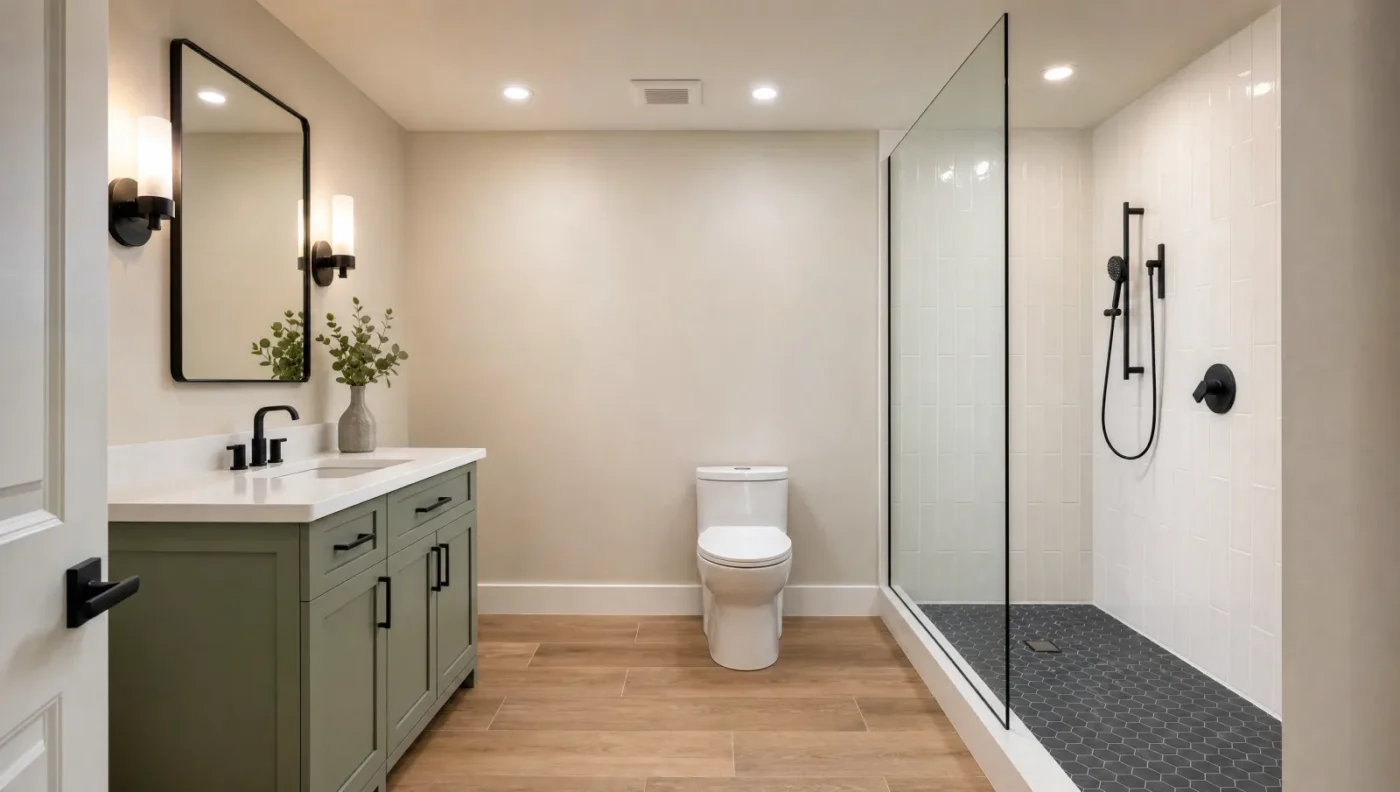
CMK Construction has been remodeling bathrooms across Tampa Bay and Sarasota since 2004, and our plumbers work for us under our own plumbing contractor license, CFC 1430533. This guide covers how bathroom plumbing works, what drives the cost, what it takes to move a fixture on a slab, the old pipe we find in local homes, and the code rules that shape a layout.
How bathroom plumbing works
Every bathroom runs on three connected systems, and they don’t move with the same ease.
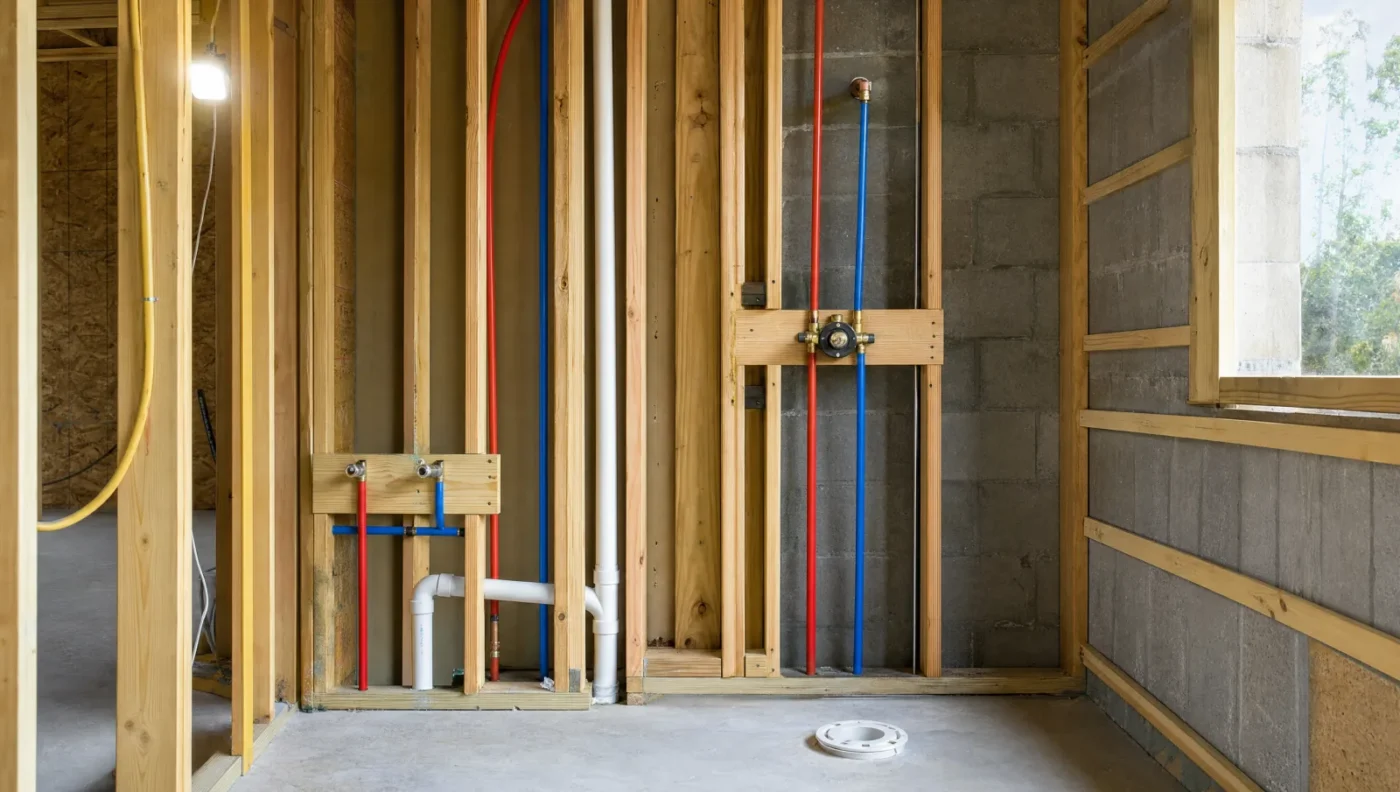
- Supply lines bring pressurized hot and cold water to the sink, toilet, tub and shower. Because the water is under pressure, supply lines can run up, down and around corners. They are the easiest part to relocate.
- Drain lines carry wastewater away by gravity, so every run has to slope continuously downhill to the main line. A quarter inch per foot is the standard slope for shower and sink drains, and a toilet needs a 3-inch drain. That slope requirement is why drains are hard to move.
- Vents let air into the drain system so water flows freely and the traps under each fixture keep their water seal, which is what blocks sewer gas. Vents usually run up through the walls to the roof. A fixture that moves often needs a new vent connection too.
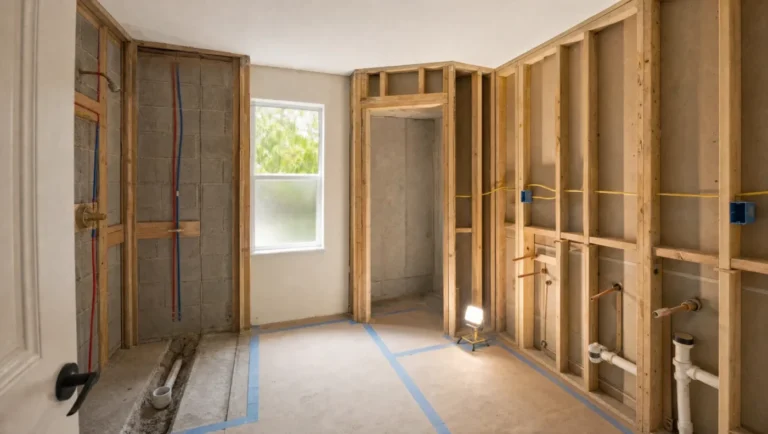
Most bathrooms group their fixtures along one or two walls that hold the pipes, called the wet wall. Keeping fixtures on the wet wall keeps the pipe runs short. Moving a fixture across the room means new drain, vent and supply runs to reach it.
What bathroom remodel plumbing costs
The biggest plumbing cost decision is whether the fixtures stay where they are. Here’s how the common changes compare:
| Plumbing change | What’s involved | Permit? | Cost impact |
|---|---|---|---|
| Same-spot swap |
A new toilet, faucet or vanity on the existing pipes, with new shutoff valves and supply hoses. | Usually no, if the rough plumbing doesn’t change. | Lowest. Mostly the fixture itself. |
| New shower valve |
Opening the wall to replace the valve body with a pressure-balancing or thermostatic valve. | Yes. | Moderate, and best done with the tile work. |
| Tub-to-shower conversion |
Adapting the tub drain for a shower, a new valve, and a waterproofing system under the tile. | Yes. | Moderate when the drain stays in roughly the same spot. |
| Moving a shower drain |
Cutting the slab, running a new drain at the right slope, and patching the concrete. | Yes, with a rough-in inspection. | Roughly $1,000 to $3,000 to move the drain or water lines. |
| Moving a toilet |
A new 3-inch drain run through the slab, a vent connection in most cases, an inspection, then concrete. | Yes, with a rough-in inspection. | Higher. Distance and the vent path set the price. |
| Replacing old pipe |
Swapping corroded drains or failing supply lines while the walls and floor are open. | Yes. | Varies with what demolition or a camera inspection finds. |
The dollar figures in this guide come from CMK’s own projects in Tampa Bay and Sarasota, not national averages. For the whole project, most CMK bathroom remodels in Tampa Bay run $15,000 to $30,000 for a guest or hall bath in the existing footprint, and $30,000 to $55,000 for a primary bath with a custom tiled shower. Relocated plumbing is one of the things that pushes a primary suite past that, into the $55,000 to $90,000 range. Our bathroom remodeling costs page breaks down each tier.
Most of the plumbing bill is labor, not pipe. The material difference between PEX, CPVC and copper is small next to the cost of cutting concrete, opening walls and passing inspections, which is why the layout matters more than the pipe you pick.
Moving plumbing on a concrete slab
Most single-family homes in Tampa Bay and Sarasota are built on a slab, with the bathroom drains cast in or running underneath it. Moving a drain there follows the same sequence every time:
- The floor is cut with a concrete saw and the trench is dug out by hand.
- A new drain is run to the main line at the correct slope, with a new vent connection where the fixture needs one.
- The new plumbing is inspected before anything is covered.
- The trench is backfilled and patched with new concrete, which has to cure before waterproofing and tile go down.
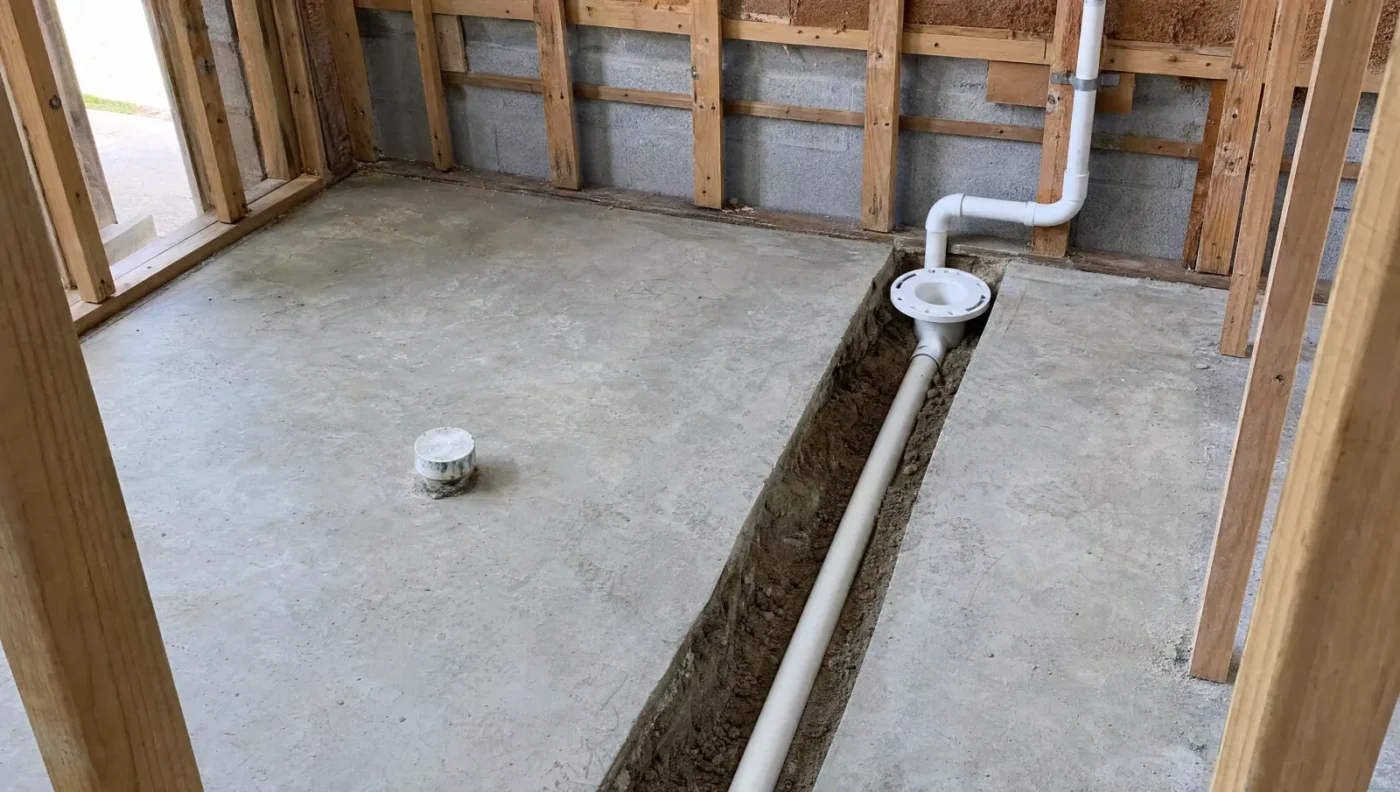
The farther a fixture moves from its old drain, the longer and deeper the trench gets, because the slope has to hold the whole way. A shower drain that shifts a couple of feet is a contained job. A toilet moving to the other side of the room is a much larger one.
That doesn’t mean everything should stay put. In late-1990s and 2000s homes like the ones in Lakewood Ranch, a primary bath remodel usually means taking out the corner garden tub and building an oversized walk-in shower in its place, and that move is worth the slab work. A curbless shower also needs slab work, because the floor under the shower has to be recessed so it can slope to the drain. The mistake is paying for a relocation without knowing what it buys you. We cover how to weigh that in bathroom remodeling mistakes to avoid: ask for one plan that keeps the main plumbing and one that changes it, then compare.
Second-floor bathrooms are different. Upstairs, the drains run through the floor framing instead of a slab. Joist direction and depth limit where a drain can go, and joists can only be notched or drilled so much before they lose strength. A move that runs with the joists is usually simpler than one that has to cross them.
What pipe is in your house, and what to do about it
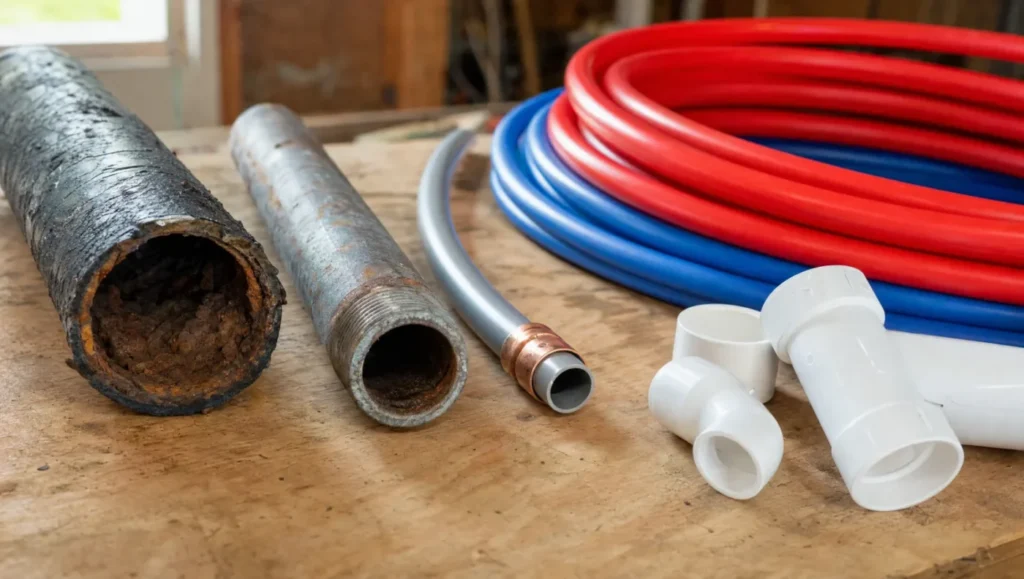
A bathroom remodel opens the walls and sometimes the floor, which makes it the cheapest moment to replace pipe that’s near the end of its life. The pipe in a Tampa Bay home usually tracks with when the house was built:
| Pipe | Where you’ll find it | What to do during a remodel |
|---|---|---|
| Cast iron |
Drain lines in homes built before the mid-1970s, often under the slab. | Camera the drain before the design is final. Corroded sections in the work area get replaced. |
| Galvanized steel |
Supply lines in older homes. Rust narrows the pipe from the inside. | Replace the lines you expose. Low pressure and rusty water are the warning signs. |
| Polybutylene | Gray plastic supply lines installed from about 1978 to 1995. | Plan to replace it. It’s prone to failure and causes insurance problems. |
| CPVC | Cream or tan plastic supply lines, common in Florida homes from the 1980s on. | Usually fine, but old CPVC can get brittle, so fittings near the work get handled with care or replaced. |
| Copper | Supply lines in homes of every age. | Long lasting. Check for green staining or pinhole leaks at old joints. |
| PEX | Flexible plastic supply lines in newer homes and recent repipes. | A common choice for new supply lines, with fewer joints inside the wall. |
Cast iron and galvanized in older neighborhoods
Cast iron drains corrode from the inside, so a line can look solid from the outside while it’s scaling, cracking or sagging underneath. Older homes are where we find it most, whether that’s a bungalow in Seminole Heights or a 1950s to 1970s ranch in Temple Terrace. The same goes for the mid-century concrete block homes in Largo. A camera inspection of the drain before the layout is final tells you whether you’re reusing the line or replacing it, so the answer is in the plan and not a change order. Our South Tampa remodeling guide covers what we find behind the walls in Hyde Park and Palma Ceia.
Polybutylene and your insurance
Polybutylene is a gray plastic supply pipe that was installed in millions of homes from about 1978 to 1995, and it’s prone to cracking and sudden leaks. In Florida it’s also an insurance problem. Older homes usually need a four-point inspection (roof, electrical, plumbing and HVAC) before a policy is written, and polybutylene gets flagged. Citizens Property Insurance, the state’s insurer of last resort, won’t write a new policy on a home more than 20 years old with polybutylene piping, and every home plumbed with it is now past that age. If yours has it, replacing it during the remodel solves the plumbing and the insurance question at once. Look for gray pipe at the water heater, under sinks or near the meter, often stamped “PB2110.”
Water pressure
Low pressure is usually a symptom of old pipe or a failing valve. High pressure is the quieter problem: it wears out valve cartridges, toilet fill valves and supply hoses early. The plumbing code limits static pressure inside the house to 80 psi and calls for a pressure-reducing valve where the street pressure is higher. A gauge on an outdoor spigot tells you where you stand in a minute.
Code rules that shape a bathroom layout
Florida’s building code sets minimums that decide what fits in a bathroom before style enters the conversation. The ones that come up most:
- Toilet clearances. At least 15 inches from the center of the toilet to a side wall or fixture, and 21 inches of clear space in front of it.
- Minimum shower size. A shower needs at least 900 square inches of floor and room for a 30-inch circle, so 30 by 30 inches is the floor.
- Anti-scald valves. Shower valves must be pressure-balancing or thermostatic and limit the water to 120°F. When an old two-handle valve comes out, a compliant valve goes in.
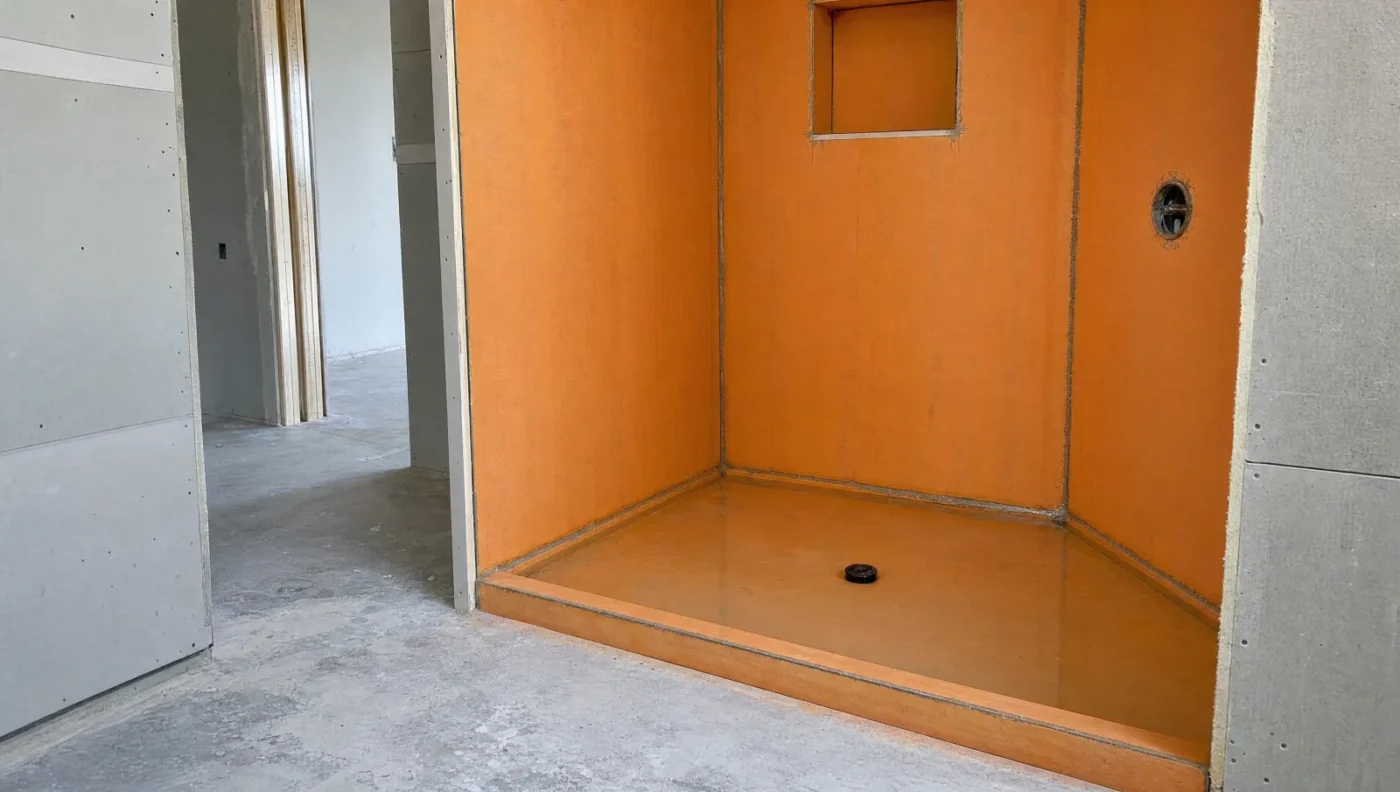
- A tested shower pan. A site-built shower pan should be flood-tested before tile goes on: the drain is plugged, the pan is filled with a couple of inches of water, and nothing can leak. Ask how your contractor tests the waterproofing. We explain the bonded system we use in every shower in Schluter waterproofing for Tampa Bay bathrooms.
- Flow rates. Federal rules cap showerheads at 2.5 gallons per minute, and WaterSense-labeled models use 2.0 or less. A WaterSense toilet uses 1.28 gallons per flush or less. A shower with several heads or body sprays can need a larger drain and more hot water than the house has, so plan the water heater along with the fixtures.
These rules are also why some layouts that look good in a photo don’t work in a 5-by-8 hall bath. If the room is tight, our tub-to-shower conversions usually keep the drain close to where the tub’s was and gain space with the walk-in entry instead.
Condos, septic and adding a bathroom
- Condos. In most condo buildings, the vertical drain stacks and water risers are shared and belong to the association. You can usually update the plumbing inside your unit, but anything tied to the stacks needs approval, and moving a toilet or shower is often limited. In 1970s and 1980s buildings, like many of the Treasure Island condos we remodel, the original cast iron and galvanized pipe is near the end of its life. Our guide to condo remodeling rules on the Gulf Coast covers the approvals.
- Well and septic. Homes in rural areas like Thonotosassa are often on well and septic. Adding a bathroom can add load to the septic system, so its capacity needs to be checked, and the county health department may need to review it.
- Adding a bathroom. Whether your sewer line can take another bathroom is really two questions. Capacity is a sizing question: a plumber adds up the fixture load the new bathroom brings and checks it against the line’s diameter and slope, and in many single-family homes the main line has room to spare. Condition is the other question, and that’s what a camera inspection shows: cracks, sags, scale or root intrusion that are cheaper to fix now than to dig up later.
Permits and inspections for bathroom plumbing
In Florida, changing drains, supply lines or a shower valve takes a permit. A like-for-like toilet or faucet swap usually doesn’t. Florida’s 2026 exemption for small jobs under $7,500 doesn’t help here, because it excludes plumbing. On a permitted job, the plumbing is inspected at rough-in, before the walls are closed or the slab is patched, and again at final. Skipped permits tend to surface when you sell, since buyers and their lenders can ask for permit records.
Who issues the permit depends on whether your address is inside city limits, not on the city in your mailing address. Tampa, Temple Terrace, St. Petersburg, Clearwater, Largo and Sarasota each run their own building department. Unincorporated areas are permitted by the county, which is why homes in Brandon and Carrollwood go through Hillsborough County even though Carrollwood homes have Tampa addresses. Most of Lakewood Ranch is permitted by Manatee County. Our guide to bathroom remodel permits in Florida breaks it down by county.
Plumbing checklist: what to settle before demolition
Bring these questions to every contractor you’re comparing. The answers belong in the written plan and the quote, not in a phone call after the walls are open.
- Who does the plumbing? Your contractor’s own licensed plumbers or a subcontractor, and what’s the plumbing license number?
- What pipe is in my house? And what do you recommend replacing while the walls are open?
- Will you camera the drain before the design is final?
- Are any fixtures moving? If so, what would the plan cost if they stayed put?
- What does the plumbing line in the quote include? Fixtures and valves, shutoffs and supply lines, concrete cutting and patching, and permit fees should each be clear.
- Which shower valve are you installing, and will there be a way to reach it later without cutting tile?
- Should we plan for accessibility now? Blocking for future grab bars and a curbless or low-threshold entry cost far less while the walls and floor are open.
- How will the shower waterproofing be tested before tile goes on?
- How long will the water be off, and will the rest of the house have water during the work?
- If you find damaged pipe during demolition, how is it priced and approved?
- Who pulls the permit and schedules the inspections?
How CMK handles bathroom plumbing
CMK Construction is a Florida Certified General Contractor (CGC 1516665) and a certified plumbing contractor (CFC 1430533), with plumbers and electricians on our own payroll. That matters most in the plumbing: we can price a keep-it plan and a move-it plan from the same drawing, the team that plans the rough-in is the team that installs it, and we pull the permits and schedule the inspections. We explain why we built the company that way in why our in-house plumbers and electricians protect your remodel.
We remodel bathrooms across Tampa Bay and Sarasota. In a free consultation, a CMK project consultant walks the bathroom with you, talks through what you want to change, and tells you which parts of the plan touch the plumbing. Schedule a free bathroom consultation or call (813) 379-2116.
Related reading:
- Gutting a Bathroom: What to Expect in Your Renovation
- Shower Waterproofing Membranes: Liquid vs Sheet for Florida Bathrooms
- Small Bathroom Layouts That Actually Work (With Dimensions)
Bathroom remodel plumbing FAQ
How much does plumbing cost in a bathroom remodel?
It depends mostly on whether the fixtures stay where they are. Keeping the toilet, shower and sink in place keeps plumbing a modest part of the budget. In CMK projects, moving a shower drain or water lines typically adds roughly $1,000 to $3,000, and moving a toilet on a slab or replacing old drain lines costs more. Whole bathroom remodels in Tampa Bay usually run $15,000 to $30,000 for a guest bath and $30,000 to $55,000 for a primary bath.
Can you move a toilet during a bathroom remodel?
Yes. On a slab, it means cutting the concrete, running a new 3-inch drain to the main line at the correct slope, usually tying in a vent, passing a rough-in inspection and patching the floor. The new spot also has to leave 15 inches from the center of the toilet to the side walls and 21 inches of clear space in front.
Can plumbing be moved on a concrete slab?
Yes, and it’s routine work in Florida, but it costs more than keeping fixtures in place. The slab is saw-cut, the new drain is run at a continuous slope, the work is inspected, and the trench is patched with concrete that has to cure before tile. The farther the fixture moves, the bigger the job.
Do I need a permit for bathroom plumbing in Florida?
Yes for any change to drains, supply lines or the shower valve, including a tub-to-shower conversion. A like-for-like toilet or faucet swap usually doesn’t need one. Florida’s 2026 exemption for work under $7,500 excludes plumbing, so it doesn’t apply.
Should I replace old pipes during a bathroom remodel?
Usually, if they’re cast iron, galvanized or polybutylene, or if they show corrosion or leaks. The walls and floor are already open, so replacing the pipe now costs far less than opening finished tile later. Copper, CPVC and PEX in good condition can often stay.
How do I know if my house has polybutylene pipe?
Look for gray plastic supply pipe at the water heater, under sinks or near the water meter, often stamped “PB2110.” It was installed in homes from about 1978 to 1995. A four-point inspection for insurance will also flag it, and Citizens Property Insurance won’t write a new policy on a home more than 20 years old with polybutylene piping.
What is a wet wall in a bathroom?
It’s the wall that holds the bathroom’s supply, drain and vent pipes. Lining up the toilet, sink and shower or tub on the wet wall keeps the pipe runs short, which lowers the cost and makes future repairs easier.
What water pressure is too high for a house?
The plumbing code limits static water pressure inside the house to 80 psi and calls for a pressure-reducing valve where the supply is higher. Pressure above that wears out valves, fill valves and supply hoses early. An inexpensive gauge on an outdoor spigot will show your pressure.
Can I add a bathroom without replacing my main sewer line?
Often, yes. A plumber checks capacity by comparing the new bathroom’s fixture load with the sewer line’s diameter and slope, and many single-family lines have room to spare. A camera inspection checks condition: cracks, sags or root intrusion that should be fixed first. Homes on septic also need the system’s capacity checked.
Who should do the plumbing in a bathroom remodel?
A licensed plumbing contractor, under a permit. Ask whether the plumbers work for your remodeling company or for a subcontractor, and get the license number. CMK’s plumbers work under our own plumbing license, CFC 1430533.
Sources
- Citizens Property Insurance Corporation, Will Citizens insure dwellings with polybutylene pipes?
- International Code Council, Florida Building Code, Residential, 8th Edition (2023)
- International Code Council, Florida Building Code, Plumbing, 8th Edition (2023)
- U.S. Environmental Protection Agency, WaterSense: Showerheads
- U.S. Environmental Protection Agency, WaterSense: Residential Toilets